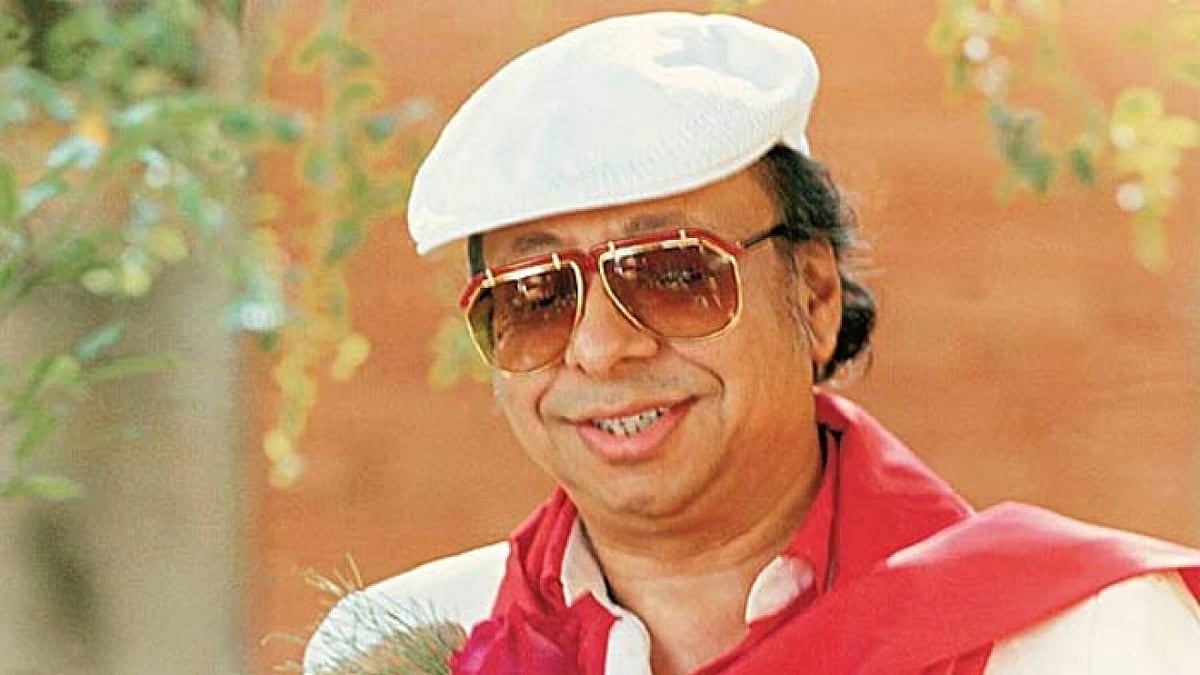
Indian films and their music reached new heights when Naatu Naatu won an Oscar and Golden Globe. Pancham would have been extremely happy even though he was not the receiver. He was one rare kind who sought happiness in others’ achievements as well. Anand-Milind, the music director duo often reminisces about how Pancham had predicted that their music for Qayamat Se Qayamat Tak would be a hit and change the trend, when most distributors were very unhappy with the music.
Was that the only thing that made Pancham different from his peers — the aptitude to appreciate others with an unbiased mind? Or was it the ability to employ anything to create music — anything from sandpaper to glass of water?
What makes me think of Pancham out of the blue? Well… nothing except that it was his birth anniversary two days ago and most radio channels were playing his music, sharing anecdotes while it poured outside. Couldn’t think of a more romantic setting while I was stranded in traffic thanks to the rains. On any other day, I would have probably spent time mentally cursing the system for the jam… but Pancham made it bearable. While I say Pancham’s music was/is romantic, some numbers (especially those penned by Gulzar) are soulful and can make eyes moist.
Hindi film music has seen many ups, downs, trends, and twists. However, music of the ’70s to ’90s is the most popular even today and the number of remixes we see from that era is proof enough. The ’70s was primarily Pancham with little Laxmikant-Pyarelal and Shankar-Jaikishen thrown in. The ’80s saw the rise of Anand-Milind, Nadeem-Shravan and others while the veterans did give occasional hits. The late ’80s were not so good for Pancham except for songs from Gulzar’s films. Unfortunately, he didn’t live to see the success of his last film in the early ’90s.
Pancham had an uncanny habit of lifting tunes, instruments, rhythms from every moment of life. And he could create music, beats or realistic effects from any instrument or object. Sholay’s horse hooves throughout the film were created on tabla by Anna Joshi on Pancham’s instructions. Sandpaper is used to create the train track friction sound in the song Hum dono do premi… in the film Ajnabee.
Some signature tunes of popular songs were also created on a whim. For example, the song Chura liya hai… from Yaadon Ki Baaraat starts with a unique ‘ting’ that was created by hitting a spoon on a glass of water. Most important thing here was the quantity of water in the glass. Legend goes that Pancham experimented with different levels of water for almost one hour till he got the right ‘ting’. The song Jab andhera hota hai… from Raja Rani starts with a distinct piece of tabla that stumped most musicians including Pancham’s guru of initial days, the tabla maestro Samta Prasad. Pt Samta Prasad went on record to say that he never expected Pancham to reach any heights because of his restlessness, but this use of tabla to begin the song floored him as it was near impossible for anyone to achieve that excellence.
It was this restlessness that made Pancham the creator he was. He used to immerse himself in his creation. In an era where music was created before words, he didn’t mind some lyricists dictating to him to work the other way round. He respected the wordsmiths and sometimes even wondered if he would be able to do justice to the words by song writers like Gulzar and Anand Bakshi. He used to be edgy till the song was complete and approved by all stakeholders.
With friends like Gulzar he went a step ahead and made him listen to the tunes at any odd hour. Gulzar and Pancham’s friendship dated back to the times when both assisted Bimal Roy and SD Burman respectively. Gulzar had promised that Pancham will be music director of his first film and he kept his word. Parichay was the first film of the duo together and they worked together till Pancham’s last breath.
It was with Gulzar that Pancham experimented most. Take these two songs — Musafir hoon yaaron… from Parichay or Raah pe rahte hain… from Namkeen. The commonality in these songs is that the background rhythm (taal) of the song is faster than that of the lyrics sung (lay). As in, Kishore Kumar sings the songs a little slower than the background rhythm. It was in Gulzar’s films that this rhythm king gave two songs that didn’t have any rhythm instrument — Do nainon mein… from Khushboo and Ek hi khwaab… from Kinara.
Given that Pancham was one of the most versatile and or creative music directors, but he was ‘inspired’ by quite a few Bengali and international songs. Once when he was questioned about picking up Puja song tunes by his father for Hindi films, he said, “Baap ka maal hai, main ne liya to kya bura kiya…”
It was ironic that in the ’80s the songs by Pancham were hits but the films flopped miserably, labelling Pancham a flop music director. He was, probably, the only one who delivered disco songs and Indian classical-based songs with equal ease and finesse.
Gulzar once said after his death that Pancham was too progressive for his time… would it have made a difference if he had been born a little later?
I leave you with this thought.
Shruti Pandit is Consulting Editor, Features, The Free Press Journal

Hindi film music has seen many ups, downs, trends, and twists. However, music of the 70s to 90s is the most popular even today and the number of remixes we see from that era is proof enough. 70s was primarily Pancham with little Laxmikant-Pyarelal and Shankar-Jaikishen thrown in. 80s saw the rise of Anand-Milind, Nadeem-Shravan and others while the veterans did give occasional hits. The late 80s were not so good for Pancham except for songs from Gulzar’s films. Unfortunately, he didn’t live to see the success of his last film in the early 90s.
Pancham had an uncanny habit of lifting tunes, instruments, rhythms from every moment of life. And he could create music, beats or realistic effects from any instrument or thing. Sholay’s horse hooves throughout the film were created on tabla by Anna Joshi on Pancham’s instructions. Sandpaper for used to create the train track friction sound in the song Hum dono do premi… in the film Ajnabee.
Some signature tunes of popular songs were also created on a whim. For example, the song Chura liye hai… from Yaadon Ki Baarat starts with a unique ‘ting’ that was created by hitting a spoon on a glass of water. Most important thing here was the quantity of water in the glass. Legend goes that Pancham experimented with different levels of water for almost one hour till he got the right ‘ting’. The song Jab andhera hota hai… from Raja Rani starts with a distinct piece of tabla that stumped most musicians including Pancham’s guru of initial days, the tabla maestro Samta Prasad. Pt. Samta Prasad went on record to say that he never expected Pancham to reach any heights because of his restlessness, but this use of table to begin the song floored him as it was near impossible for anyone to achieve that excellence.

It was this restlessness that made Pancham the creator he was. He used to immerse himself in his creation. In an era where music was created before words, he didn’t mind some lyricists dictating him to work the other way round. He respected the wordsmiths and sometimes even wondered if he would be able to do justice to the words by song writers like Gulzar and Anand Bakshi. He used to be edgy till the song was complete and approved by all stakeholders.
With friends like Gulzar he went a step ahead and made him listen to the tunes at any odd hour. Gulzar and Pancham’s friendship dated back to the times when both assisted Bimal Roy and SD Burman respectively. Gulzar had promised that Pancham will be music director of his first film and he kept his word. Parichay was the first film of the duo together and they worked together till Pancham’s last breath.
It was with Gulzar that Pancham experimented most. Take these two songs – Musfair hoon yaaron… from Parichay or Rah pe rahte hain… from Namkeen. The commonality in these songs is that the background rhythm (taal) of the song is faster than that of the singer’s lay. As in the Kishore Kumar sings the songs a little slower than the background rhythm. The result is amazing. It was in Gulzar’s films that this rhythm king gave two songs that didn’t have any rhythm instrument – Do nainon mein… from Khushboo and Ek hi khwab… from Kinara.
Given that Pancham was one of the most versatile and or creative music directors, but he was ‘inspired’ by quite a few Bengali and international songs. Once when he was questioned about picking up Puja Song tunes by his father for Hindi films, he said, “Baap ka maal hai, main ne liya to kya bura kiya…”
It was ironic that in 80s the songs by Pancham were hit but films flopped miserably labeling Pancham a flop music director. What’s more ironic is the fact that he almost predicted his fall. He had mentioned to Amit Kumar when Kishore Kumar died in 1984 – “meri innings khatam ho gayi….”
Pancham was, probably, the only one who delivered disco songs and Indian classical music based songs with equal ease and finesse. His portfolio includes romance, sorrow and fun.
Gulzar has once said after his death that Pancham was too progressive for his time… would it have made a difference if he was born a little later?
I leave you with this thought.
Shruti Pandit is Consulting Editor, Features, The Free Press Journal

