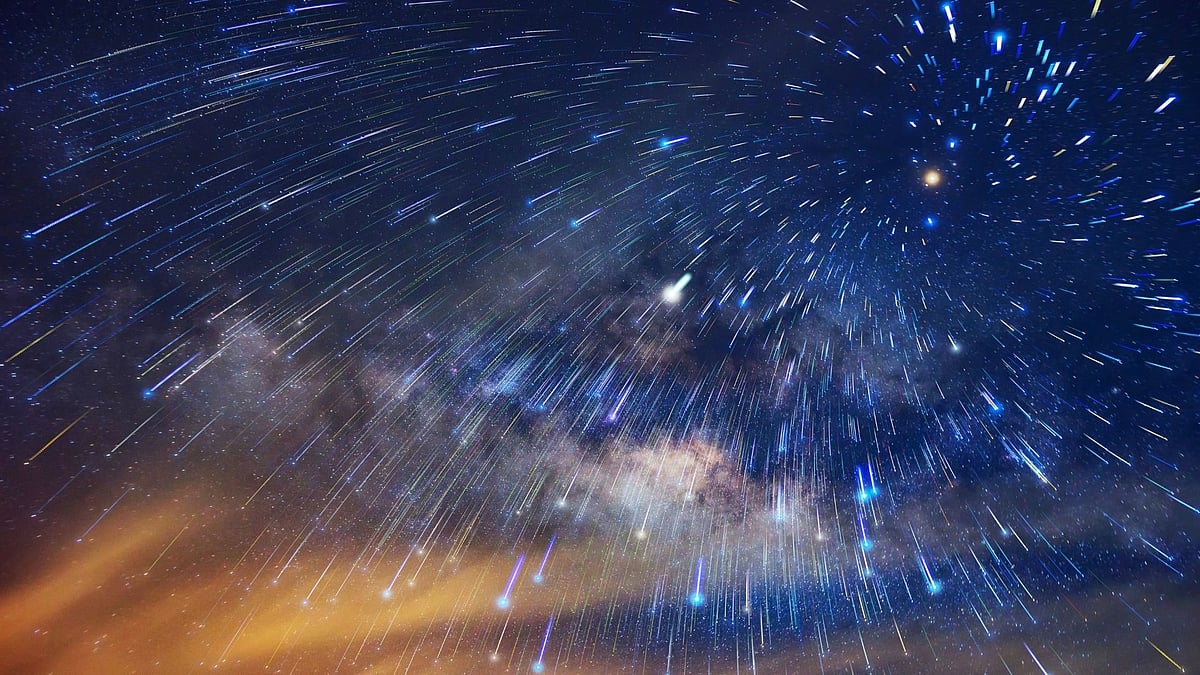
The Geminids meteor shower, one of the brightest and most reliable annual sky events, is set to put on a dazzling show in December 2025. Known for its vibrant, fast-moving meteors, the Geminids consistently offer a breathtaking performance, making them a favourite among skywatchers and astronomy enthusiasts worldwide.
When to watch the Geminids in 2025
The peak activity of the Geminids will take place on the nights of 13 and 14 December 2025. This year’s viewing conditions are exceptionally favourable. With the last quarter moon occurring on 11 December, the sky will feature a waning crescent during the peak, resulting in darker skies and minimal lunar interference.
During ideal conditions, observers may witness 60 to 120 meteors per hour, making 2025 one of the most promising years to enjoy this cosmic spectacle.
Where the Geminids will be visible
Although the Geminids are best seen from the Northern Hemisphere, stargazers in the Southern Hemisphere can also catch a beautiful display under clear, dark skies. This meteor shower will be visible from India too. Dark, rural locations far from city lights provide the best viewing conditions. Some of the top-recommended spots include Coorg, Sambhar Lake, Corbett National Park, anywhere far from the city lights.
How to watch this Meteor shower?
No telescope or binoculars are needed as this meteor shower will be bright and widespread. Lie back, face dark open sky and give your eyes 20–30 minutes to adjust. Check local weather forecasts and moonrise timings.
Reach at your viewing location at least an hour before midnight. Avoid bright lights once you begin watching. Whether you travel to distant hills or simply step onto a rooftop away from city lights, this meteor shower deserves your gaze.
How to find the radiant point
The meteors seem to emerge from the Gemini constellation, which rises in the mid-evening hours. To locate Gemini:
-Look northeast of Orion, the easily recognizable hunter-shaped constellation.
-Spot Taurus on one side and Cancer on the other.
-Identify Gemini’s brightest stars, Castor and Pollux, which mark the heads of the twin figures.
Once the radiant climbs higher into the sky, meteor activity becomes more frequent, especially after midnight.

