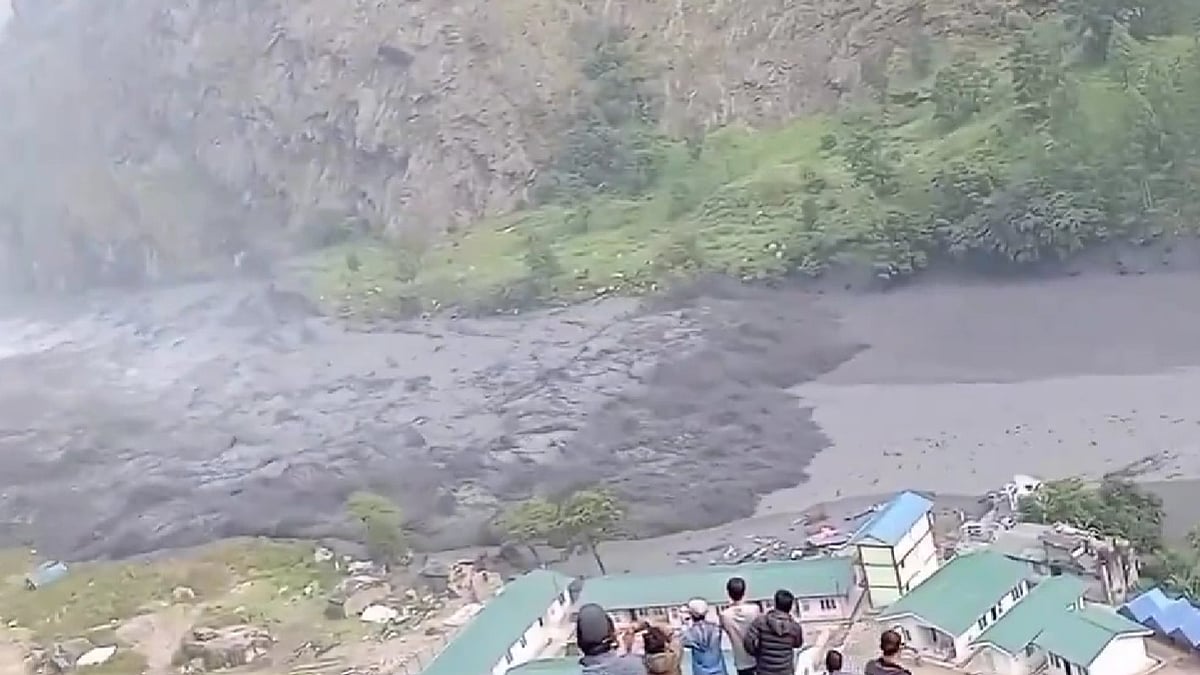
Lucknow: A landslide blocked a river in Nepal's Gorkha district. Water accumulated behind the obstruction before a sudden release sent mud, sediment and debris rushing downstream, damaging houses, bridges and infrastructure. Five people were reported missing as rescue and evacuation operations continued.
The flash flood in the Budhi Gandaki river system on October 11 was not simply a story of a river overflowing its banks. It was an example of how hazards in the Himalayas can combine to produce a disaster within hours, leaving communities and infrastructure exposed to forces that are difficult to predict.
The International Centre for Integrated Mountain Development (ICIMOD), in its preliminary assessment, said the flood may have been triggered by the failure of a temporary river blockage created by a landslide near Chumchet. The precise sequence of events remains under investigation.
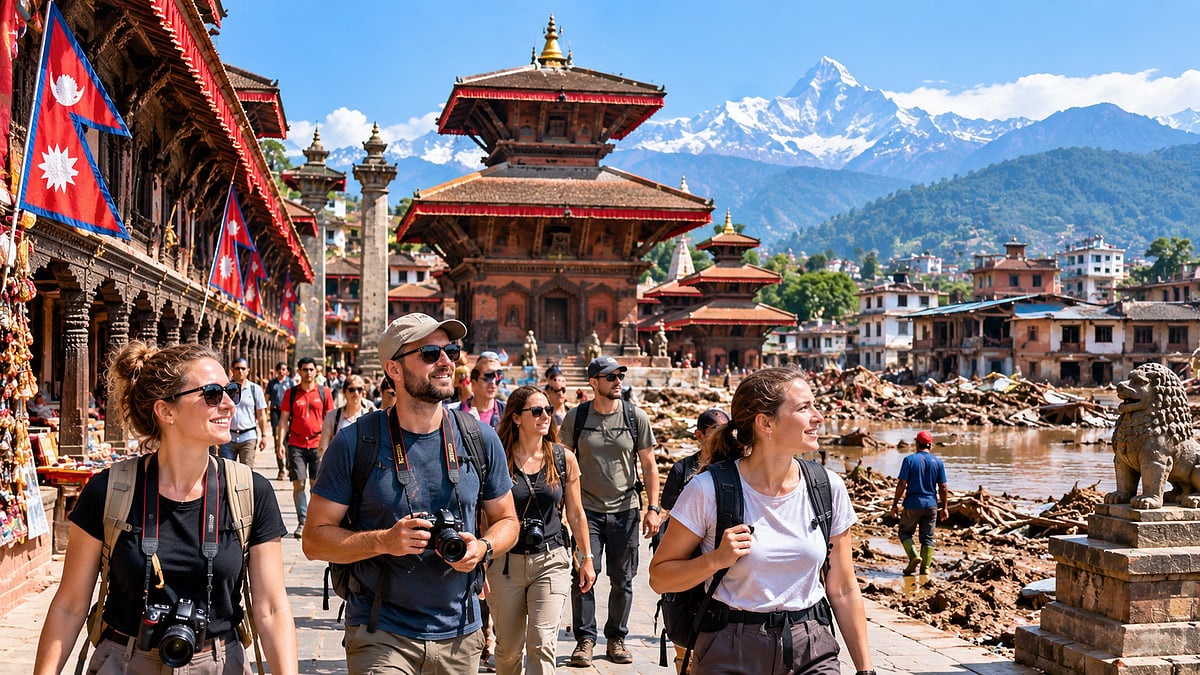
The incident came barely seven weeks after another major flood-generating disaster in the Himalayan region, raising fresh concerns about the exposure of mountain communities to cascading hazards. ICIMOD said the latest event underscored the need to assess unstable slopes, river systems and downstream settlements together rather than treating each hazard in isolation.
The bigger question is whether a warming climate is making the conditions behind such disasters more dangerous.
Scientists caution that climate change cannot be declared the cause of an individual flood without detailed attribution studies. Landslides, steep terrain, river obstruction and the sudden release of water can trigger flash floods independently of long-term climatic trends. But rising temperatures and changing precipitation patterns can alter the background conditions in which these events occur.
When weather systems interact
Meteorologists have pointed to the role of Western Disturbances, weather systems that travel eastwards across the region and bring precipitation to the Himalayas, particularly during the winter months.
Mahesh Palawat, vice-president of meteorology and climate change at Skymet Weather, said an active Western Disturbance was passing through the Himalayas when widespread rainfall occurred. Rising temperatures increase the atmosphere's capacity to hold moisture, potentially making heavy rainfall more intense.
Palawat said each 1°C rise in atmospheric temperature increases the air's capacity to hold water vapour by about 7 per cent.
The interaction between Western Disturbances and moisture from the Arabian Sea is another factor that scientists are examining. When moisture-laden air is forced upwards by the Himalayan terrain, it cools and condenses, producing precipitation. Changes in the strength and movement of weather systems can alter where and how heavily that precipitation falls.
A study published in Weather and Climate Dynamics in 2024 found that Western Disturbances had become more frequent over the western and central Himalayas and the Hindu Kush during the winter months over the preceding seven decades. It also found that their season had lengthened, with such systems becoming more common in May, June and July.
The study linked these changes to a strengthening subtropical jet and its delayed northward retreat. It did not establish that climate change caused the October 11 Nepal flood, but it adds to evidence that the behaviour and seasonal reach of weather systems affecting the Himalayas are changing.
A chain reaction in the mountains
The danger in the Himalayas lies not only in the intensity of rainfall but also in the interaction between geology, water and human settlements.
A landslide can temporarily dam a river, creating a natural barrier that has not been engineered to withstand sustained water pressure. If the obstruction collapses, the accumulated water can surge downstream with enormous quantities of sediment and debris.
ICIMOD has described such events as cascading mountain hazards, in which one process rapidly triggers another. The impact can extend well beyond the original landslide, threatening settlements, roads, bridges, hydropower facilities and essential services along river corridors.
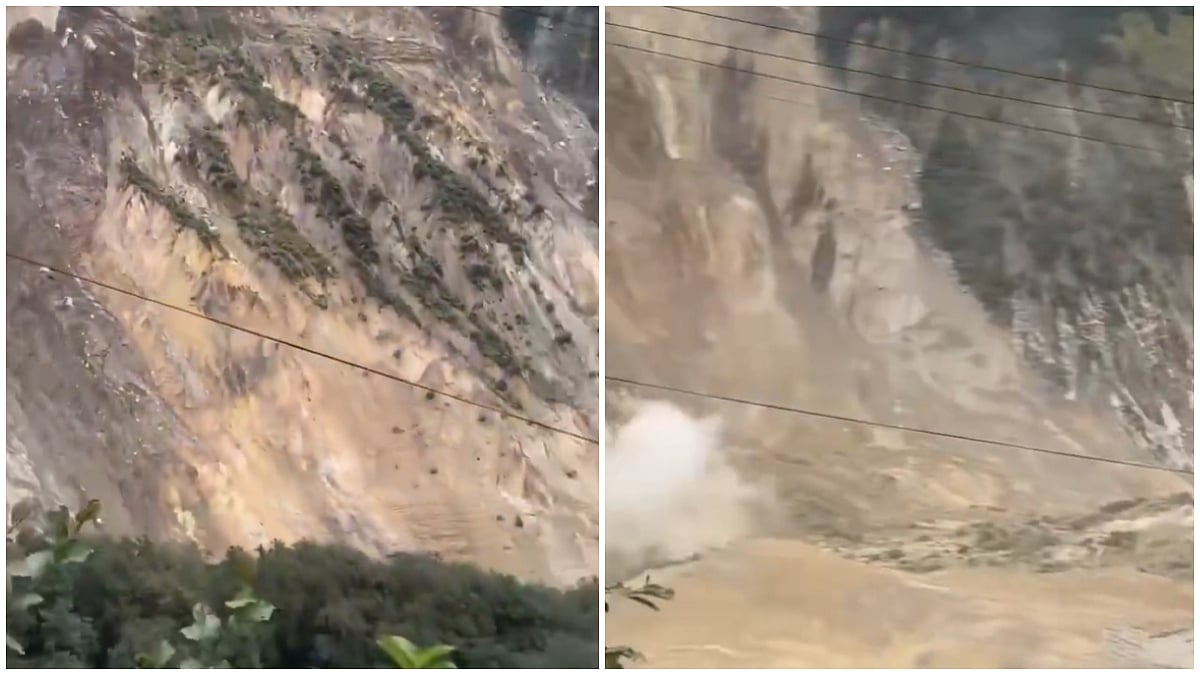
In the latest Nepal flood, the reported damage included houses, bridges and hydropower infrastructure. The scale of destruction also highlights the vulnerability of communities that depend on narrow mountain valleys for transport, livelihoods and access to public services.
Climate change adds another layer of uncertainty. Warming can affect snow and ice, alter the timing of meltwater flows and influence the stability of mountain environments. However, the contribution of each factor varies by location and event, making local monitoring and scientific investigation essential.
Warnings must reach vulnerable communities
The Nepal disaster also raises questions about how quickly authorities can detect a landslide-induced river blockage and warn people living downstream.
Rainfall forecasts alone may not be sufficient when a flood is triggered by a sudden obstruction of a river. Satellite observations, ground-based monitoring of unstable slopes, river-level sensors and rapid communication systems can help authorities identify emerging threats and issue warnings before a blockage gives way.
ICIMOD has called for risk assessments and infrastructure planning that account for multiple hazards and their downstream consequences. The challenge is to turn such recommendations into practical systems that work in remote mountain settlements, where monitoring and emergency access can be difficult.
Infrastructure planning is equally important. Roads, bridges, power projects and settlements located close to rivers may face risks from landslides, erosion and sudden surges of water and debris. Disaster preparedness must therefore extend beyond the immediate flood zone.
A warning for the wider Himalayas
The implications extend beyond Nepal. The Himalayan region is a shared mountain system in which extreme rainfall, landslides, glacial processes and river flows can affect communities across national boundaries.
For India, the lesson is not that every flood in the Himalayas is caused by global warming. It is that disaster planning must account for the possibility of interacting hazards under changing climatic conditions.
The Budhi Gandaki flood demonstrates how quickly a local geological event can become a wider humanitarian and infrastructure emergency. Establishing the exact contribution of climate change will require further evidence, but the immediate need for stronger monitoring, reliable early warnings and risk-sensitive development is clear.
As the Himalayas warm and weather patterns evolve, the cost of treating landslides, floods and extreme rainfall as separate problems could become increasingly high.

