Mumbai: Larsen & Toubro (L&T) is placing greater emphasis on cash generation and balance-sheet strength rather than pursuing revenue growth alone, even as the engineering major expands its global presence and builds a record order book.
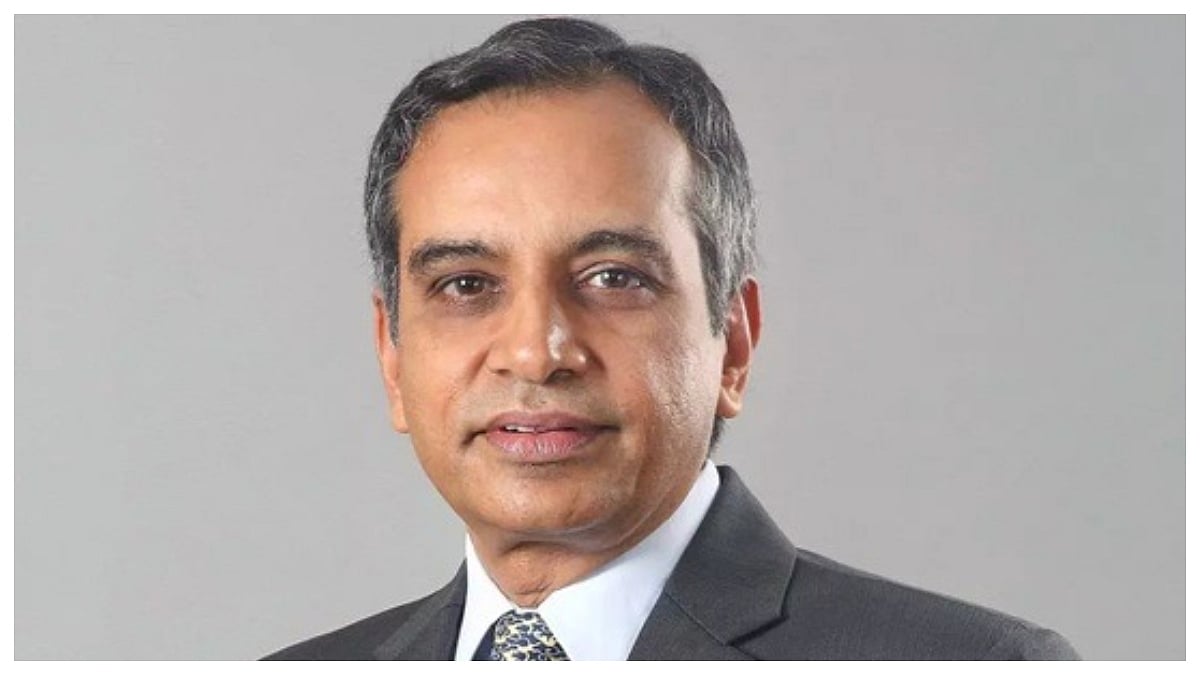
L&T President and Whole-time Director (Finance) R Shankar Raman said the company would continue executing projects only as long as they remained cash-flow positive, highlighting its growing focus on capital efficiency and timely payments.
“Cash is primary to our metric,” Raman said, adding that L&T was prepared to slow project execution if cash flows turned negative. “I am not in the business of financing the project sponsor. I am in the business of executing.”
His remarks come after L&T reported strong financial results for the second quarter of FY27. Consolidated revenue for the quarter ended September 30, 2026, increased 16 percent year-on-year to Rs 78,750 crore, while consolidated profit after tax rose 33 percent to Rs 5,202 crore. International revenue reached Rs 45,870 crore, representing 58 percent of total revenue.
The company also registered its highest-ever quarterly order inflow of Rs 1.48 lakh crore, an increase of 28 percent year-on-year. Its consolidated order book stood at Rs 8.54 lakh crore as of September 30, with international orders contributing 54 percent of the total backlog.
From India-Heavy Operations To A Global Business
Raman said L&T's business composition has undergone a significant transformation over the past five years. Domestic and international operations are now broadly divided equally, compared with an estimated 75:25 India-to-overseas ratio five years earlier.

He expects this geographical diversification to increase further by 2031. According to his assessment, India could contribute around 40 percent of the company's business, the Middle East another 40 percent, and emerging international markets the remaining 20 percent. However, he clarified that these figures represented his assessment rather than an official company forecast.
The Middle East continues to be L&T's largest international market. The company has approximately $30 billion worth of international orders in the region, with Saudi Arabia accounting for the largest share, followed by the UAE, Qatar and Kuwait.
Raman pointed to a key difference between projects in India and the Middle East — their working-capital requirements. L&T's Middle Eastern projects currently operate with negative working capital, helping reduce the group's working capital to approximately 1.7 percent of revenue, compared with nearly 30 percent when its operations were predominantly India-focused.
Although operating margins in the Middle East are generally lower at around 5-6 percent, compared with 8-9 percent in India, Raman said returns on funds employed could be considerably higher because projects are better funded and payments are more predictable.
“P&L is like age, youth, it will come and go. Balance sheet stays,” he said, emphasising the management's focus on long-term financial strength.
Europe Emerges As The Next Growth Engine
Europe is expected to play an increasingly important role in L&T's international expansion. Raman said the company has nearly Rs 50,000 crore worth of backlog in European wind projects, including assignments linked to a state developer operating in the Netherlands and Germany.
L&T is collaborating with Hitachi on offshore wind platforms in the North Sea. These platforms will be manufactured in India and exported to Europe, allowing the company to earn dollar-denominated revenue while maintaining a significant portion of its costs in rupees.
Raman said L&T expects $5-6 billion of its European order book to translate into revenue by 2031. Central Asia, where the company currently holds an order book of approximately $5 billion, is another market expected to contribute more substantially as projects enter the execution phase.
Australia is also among the markets being explored. L&T has already exported modules manufactured in Chennai for a fertiliser project in Australia, demonstrating its ability to use India's engineering expertise and cost advantages to serve international customers.
Why L&T Is Willing To Sacrifice Some Margin For Better Cash Flow
The company's strategy is also visible in its latest quarterly financial performance.
At the consolidated level, L&T's EBITDA margin declined to 8.7 percent in Q2 FY27 from 10 percent in the corresponding quarter last year, mainly because of lower margins across its portfolio and changes in the revenue mix.
Despite the margin decline, consolidated profit after tax increased 33 percent to Rs 5,202 crore, supported by lower finance costs, higher other income and increased activity in the Projects, Products & Manufacturing portfolio.
Certain business segments also reported improved profitability. The Manufacturing & Products segment recorded an EBITDA margin of 15.7 percent in Q2 FY27, compared with 13.5 percent a year earlier, helped by execution cost savings and a more favourable mix of projects.
The company's overall balance-sheet position has strengthened considerably. Net working capital as a percentage of revenue declined to a record low of 1.7 percent in September 2026 from 10.2 percent a year earlier.
Meanwhile, operating cash flow, excluding financial services, surged 170 percent year-on-year to Rs 12,800 crore during the quarter.
The Road To A Larger L&T
Raman said L&T would need to expand beyond India if it wanted to double its business size. He estimated that the company would eventually require an order book of Rs 15-16 lakh crore, making meaningful contributions from at least three major markets essential.
The company's long-term growth strategy is therefore extending beyond conventional infrastructure projects into emerging sectors such as offshore wind, nuclear energy, defence technology, semiconductors, battery energy storage and other technology-driven businesses.
For L&T, the management's message remains clear: business growth is important, but not at the expense of balance-sheet strength.
With a record order book, an increasing international presence and stronger cash generation, the company is focusing on disciplined capital deployment rather than revenue expansion alone to drive the next phase of its growth.

