For decades, Gadchiroli was spoken about mainly in terms of its forests, tribal population and its place in India’s Naxal-affected belt. For people living in its remote villages, the bigger challenge was to find a good school, a reliable job, healthcare nearby or a reason to believe that a better future could be built without leaving home.
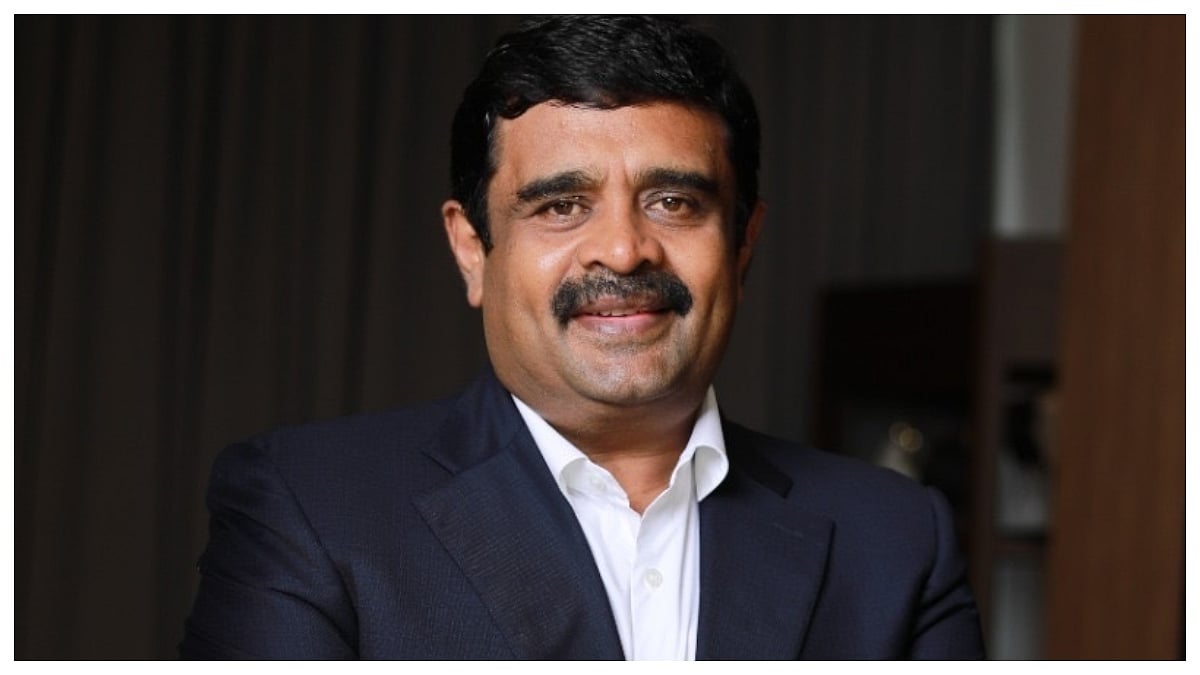
That is the gap B. Prabhakaran, Managing Director of Lloyds Metals & Energy, has sought to address through Lloyds’ growing presence in the district.
The approach has been to build opportunities around the people already living there. A mine or a plant can create jobs, but Prabhakaran’s work in Gadchiroli has gone beyond employment. Through Lloyds Metals and Lloyds Infinite Foundation, the effort has extended to skilling, education, healthcare and women’s livelihoods.
For those starting over, a job can mean a new life
The approach is most visible in the lives of people who have surrendered from Naxal backgrounds.
For someone leaving an armed movement, rehabilitation cannot end with surrender. There has to be something to return to a job, an income, a routine and a sense of belonging.
Prabhakaran has helped people from surrendered Naxal backgrounds move into employment. The company has reported 82 people being supported through employment and rehabilitation, including surrendered Naxalites and members of families affected by violence.
Building jobs around local skills
That same idea runs through Prabhakarabn’s larger employment programme at Lloyds.
As industrial activity has expanded around Surjagarh and Konsari, Prabhakaran has pushed for local people to be trained for the jobs being created around them.
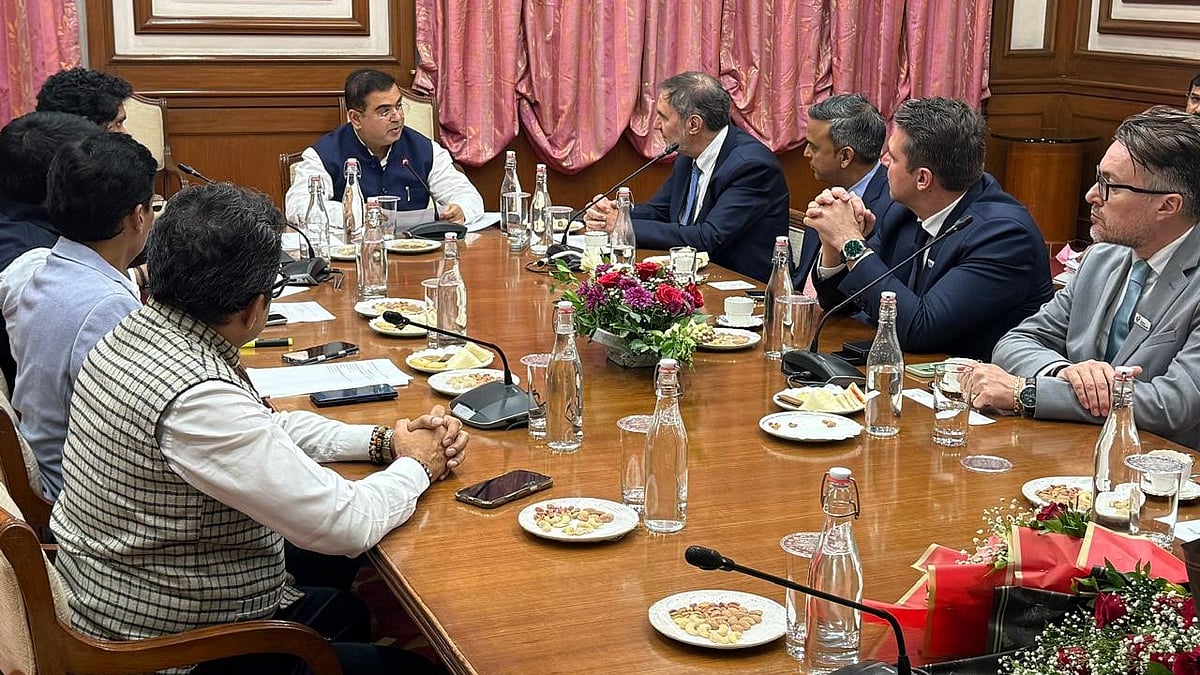
Skill development has been another important part of this approach. Training programmes in areas such as welding, electrical work, driving and other technical trades are designed to help local people build skills that can translate into employment opportunities within the region. Alongside these efforts, Prabhakaran has created more than 5,500 jobs in Gadchiroli, according to the organisation’s stated impact figures. The focus is not only on creating jobs, but also on building a local workforce that can participate in industrial activity taking shape around them.
This changes the meaning of employment in a place like Gadchiroli. Instead of a young person having to leave for Nagpur, Mumbai or another city to find work, there is a growing possibility of building a career closer to home.
The company’s own training centres have been designed around this need. The aim is not simply to train people and leave them to find work. Training is linked to the skills required at industrial sites, creating a clearer path from classroom to workplace. That connection between training and actual employment is central to Prabhakaran’s approach.
When women move from the sidelines to the driver’s seat
The change is particularly striking among women and its visible at Lloyds Vanya Clothing, another of Prabhakaran’s many initiatives.
In Gadchiroli, where traditional livelihoods have often revolved around farming and forest-based work, women are now entering jobs that were once considered male dominated. They are being trained to drive heavy vehicles, work in logistics and take up roles within industrial operations.
A woman earning a regular salary has greater control over her own income. A daughter with a job becomes an earning member of the household. A woman driving a heavy vehicle becomes visible proof that industrial work is not necessarily a male-only space.
Lloyds Vanya Clothing employs more than 150 tribal women from villages around the region, while LIF has also trained women in advanced garment operations.
The journey begins much before a job
Prabhakaran’s thinking around employment starts with education for which he initiated Lloyds Raj Vidya Niketan to achieve his larger vision in empowering youth and creating larger opportunities for them.
At Lloyds Raj Vidya Niketan in Hedri, children from rural and tribal backgrounds receive access to quality education. The school was created to give children in a remote part of Gadchiroli an opportunity that many families might otherwise struggle to access. The school has also added hostel facilities, helping remove another barrier for children living far from the institution.
But perhaps the most striking part of the education programme is what happens after school.
Students from Gadchiroli have been given the opportunity to study at Curtin University in Australia through a fully sponsored programme supported by Lloyds Infinite Foundation. What began as an idea of taking local talent to a global university has now grown into multiple batches of students.
For a child from a remote village, Australia can seem impossibly far away. A scholarship changes that from an idea into a real possibility.

And the larger hope is that these students will eventually bring their knowledge back into the region. The partnership has also moved closer to home, with Lloyds, Gondwana University and Curtin University signing agreements aimed at expanding technical education in Gadchiroli.
A hospital where people once had to travel for care
The same principle applies to healthcare for which Prabhakaran started Lloyds Kali Ammal Memorial Hospital at Hedri to bring specialist medical care closer to communities in remote parts of Gadchiroli. The hospital began as a smaller facility and was upgraded into a 30-bed multispecialty hospital in 2023. It provides free healthcare and has treated thousands of patients through hospital services and outreach programmes.
For a family living in a remote village, the value of such a facility is not measured only in beds or doctors. It is measured in time and money saved from travelling or delayed treatment.
LIF has also taken healthcare beyond the hospital through medical camps, preventive health programmes and ambulance services for remote areas.
Gadchiroli is now entering a new phase of industrial development. That makes the question of who participates in that growth increasingly important.
For Prabhakaran and Lloyds, the answer has been to build local capability alongside industrial capacity, i.e., train people for jobs, give women new avenues to earn, help children access better education, take students to global universities, provide healthcare closer to their homes and create opportunities for people trying to rebuild their lives after conflict.
The real measure of such an effort is not just the size of an industrial project. It is the woman who brings home her first salary, a youngster who gets his first technical job without leaving his district, a surrendered Naxal who begins a new working life, a child who sees a university abroad as a possibility rather than a distant dream and a family that can walk into a hospital without worrying about the cost of treatment.

