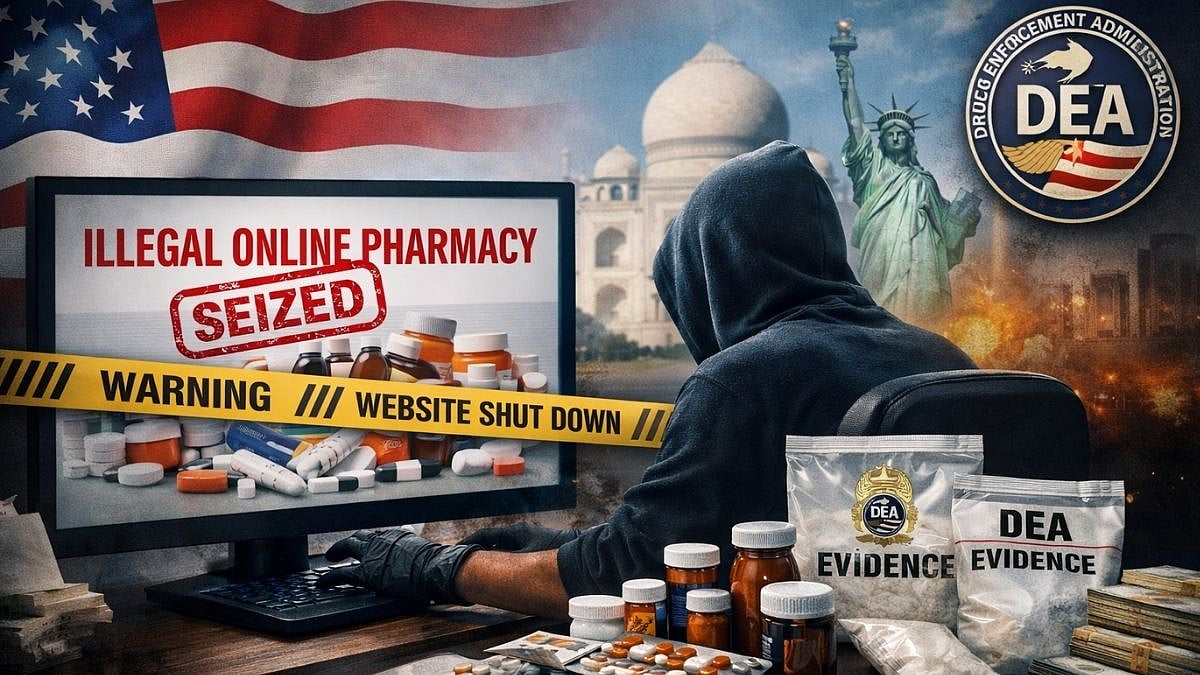
In a move to deter the illegal online sale of controlled pharmaceuticals in the United States, the Drug Enforcement Administration (DEA) in that country has seized 200 website domains that were part of an India-based transnational crime organisation operating in America. In a separate action, it arrested four individuals. This Operation Meltdown joint operation with Indian law enforcement agencies reflects an escalated response by the DEA to the illegal sale of drugs, some of them opioids that threaten people’s health.
Controlled drugs can be sold in the US only by licensed pharmacies based on valid prescriptions, while many websites operate without such requirements and are, according to authorities, selling fake or harmful drugs laced with opioids like fentanyl. It is well known that fentanyl has been linked to an epidemic of opioid addiction, overdosing, and drug-related deaths in the US and has been the target of the Trump administration even in its first term.
India’s links in the fentanyl chain
For instance, in a report issued six years ago, the DEA identified India as a major source of precursors of fentanyl and the finished opioid exported to Mexico after China had started imposing export restrictions. US intelligence prompted India to shut down an illicit fentanyl factory in Indore, and the Mumbai anti-narcotics cell seized 100 kg of its precursor chemical and made four arrests a few years ago. The flow of controlled substances under the radar, with a footprint in India, is a matter for worry, given the perception of growing addiction among the youth.
Dark web, crypto and global enforcement
The pattern that emerges in the use of the dark web on the internet, social media, and cryptocurrency to facilitate the flow of opioids and other controlled substances should serve as a wake-up call to law enforcement agencies. While China was treated as ground zero for fentanyl flow eight years ago, it has since pivoted to stronger enforcement on exports. Other theatres for clandestine online commerce, such as Canada and Western Europe, have also been the focus of DEA enforcement action, including shutting down websites selling fake or controlled drugs four years ago.
Need for heightened vigilance
At home, a spate of drug seizures in the ports of Gujarat and the National Investigation Agency’s report that international terror groups could be using India to raise major funds through narcotics to carry out attacks such as the Pahalgam tourist massacre underscore the need for extreme vigilance. The role of cryptocurrency in paying for illegal purchases must also be subjected to close scrutiny.
Recommendations have been made by the Financial Action Task Force to regulate crypto, mandating virtual asset service providers to retain originator and beneficiary information for some transactions. Keeping some classes of payments out of crypto could, perhaps, be a viable filter. Cleaning up the dark web is a major task that requires coordinated international action.
