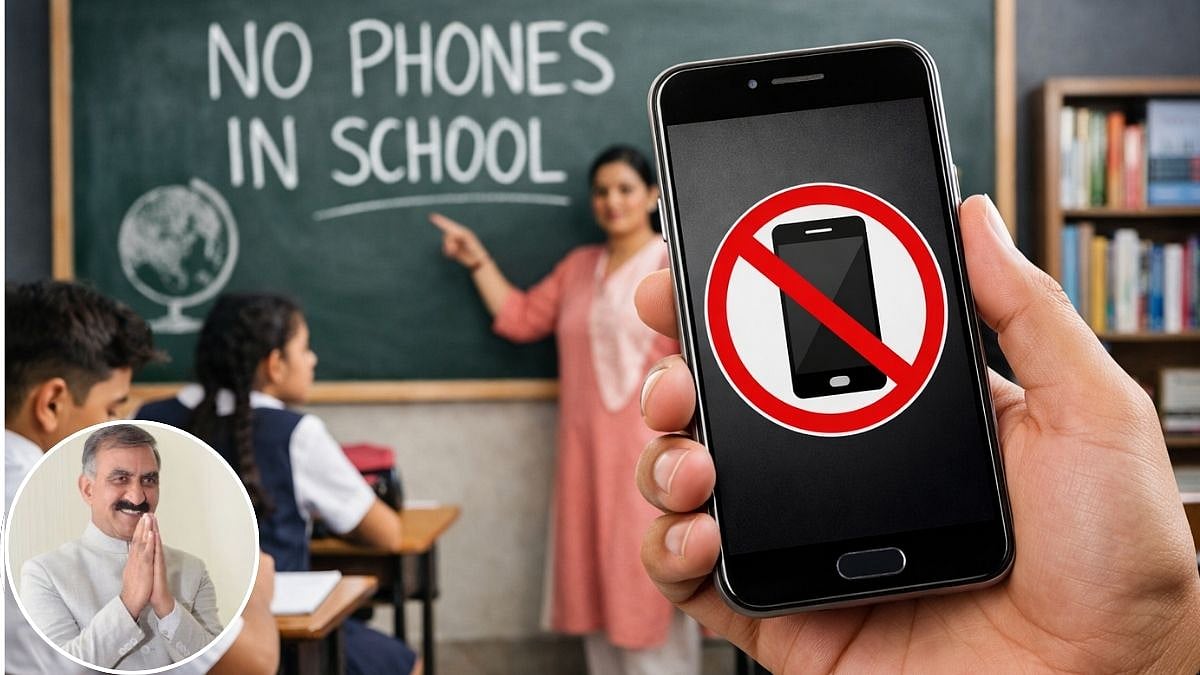
The horrors of online addiction came to the fore recently with the chilling death by suicide of three minor girls in Ghaziabad, allegedly obsessed with Korean serials and video games. Himachal Pradesh Chief Minister Sukhvinder Sukhu’s announcement of a ban on mobile phones in all government and private schools in the state from March 1, therefore, has come as a timely step. The Chief Minister cited the need for academic excellence and interpersonal growth as the reason for the ban. Students found with mobile devices will have to pay a fine of Rs 500, while their parents or guardians will have to undergo mandatory counselling.
Rising dangers of online addiction
Adolescent obsession with mobile phones is a dangerous trend that needs to be curbed. There have been innumerable cases of reckless online behaviour by teenagers, leading to fatal consequences. It has been found that many students are spending more time on their mobile devices than on studies or sports, hampering their all-round growth. The relentless use of social media sites has also made youngsters vulnerable to online predators and stalkers, leading to potentially dangerous situations.
Global moves to regulate social media
Recently, Australia became the first country to ban those under 16 from using most social media sites. It made it mandatory for platforms to verify users’ ages and dismantle underage users’ accounts. France’s lower house has also approved a bill banning social media use for those under 15, and the UK government is considering such a ban. Two southern states in India are also mulling such a move, with the Andhra HRD minister Nara Lokesh stating that children were slipping into relentless social media usage, while Karnataka IT minister Priyank Kharge referred to a ‘digital detox’ programme involving 300,000 children and 100,000 teachers.
Mental health concerns
Teenage obsession with social media sites has reached dangerous levels, affecting attention spans, academic performance and sleep patterns. Social skills have also been hit by this online addiction, and mental health experts point to its dangerous consequences. The Ghaziabad children’s case is a bizarre exposé on how online addiction makes adolescents or pre-adolescents live in an alternate reality far removed from everyday routine. Parental curbs on online usage led them to take the extreme step, and their suicide note is an example of how different their world was from that of their parents.
Need for state intervention
In a world where nuclear families are the norm, and most households consist of working couples, there is very little parental oversight of children’s behaviour. It, therefore, becomes imperative for the state to step in and ensure that children are protected from the dangers of online addiction. The Himachal government’s move is one in the right direction, as it envisages a more holistic approach to education and upbringing. We owe it to the future generation to ensure their mental and physical well-being.

