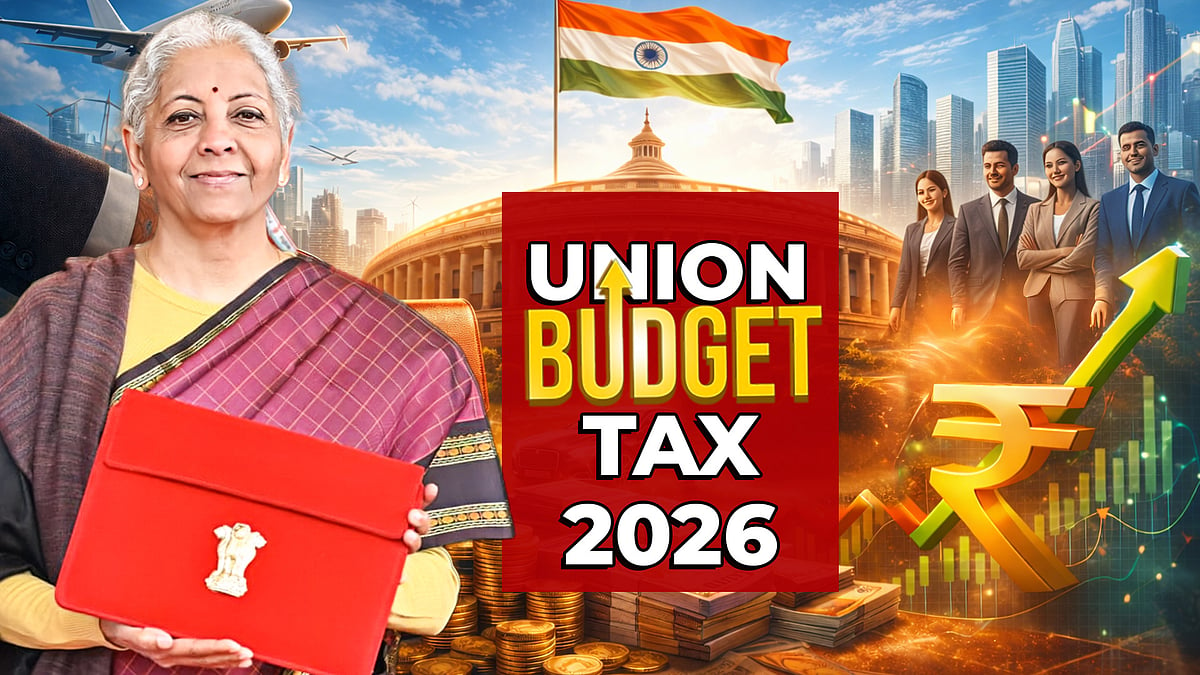
Budget 26 has been overtaken by news that the Indo-US trade deal has finally been clinched. Farmers’ organisations have already expressed apprehension that allowing zero per cent import tariffs on US goods may end up destroying the livelihoods of Indian farmers. While we await the finer details of this deal, it would be a good time to analyse to what extent Budget 26 will help Indian women, who comprise half the population, a large percentage of whom are working in the field of agriculture.
A sizeable number of these women are landless and are entirely dependent on daily labour, which is seasonal and poorly paid, especially since mechanisation, monocropping, and the acquisition of large tracts of land for public development purposes have led to their displacement. This has led to a drop in their wages and increased rural indebtedness.
Shift from MGNREGA raises alarm
Sadly, the shift from MGNREGA to VB-GRAM G will be the last straw on the camel’s back as far as women’s agricultural labour is concerned because, on the ground, it will mean a change from a rights-based and demand-led to a budget-capped, supply-driven scheme.
The three pillars of women’s empowerment are health, education and livelihood. None of these have been adequately addressed in Budget 26.
Digitisation and declining participation
Prof. Vibhuti Patel of TISS, Mumbai (retd), believes that digitisation was a key reason for the sharp reduction of women’s labour participation in MGNREGA. “Digital connectivity remains low in rural areas and so prevented real-time attendance uploading, especially since many women lacked smartphones. The use of biometrics requiring fingerprints to match central databases created another set of problems because those engaged in manual work faced high failure rates due to worn-out fingerprints,” said Patel.
A scheme that provided work to 72 lakh households during COVID-19 was down to 41 lakh households in 2024–25. While Budget 26 has made an allocation of Rs 95,692.31 crore for GRAM G, the states will now have to bear 40 per cent of the total expenditure, which works out to another Rs 55,590 crore. But already the 16th Finance Commission grants are projected to fall by 15% over last year’s allocations, and it is unlikely that states will be in a position to raise such large funds without the support of the Centre.
Education and health allocations
Allocations for the Ministry of Education are nearly stagnant — from Rs 1,21,949 crore revised estimate (FY26) to Rs 1,39,289 crore budget estimate (FY27). The overall health allocation has risen from Rs 95,957.87 crore to Rs 1,01,709.21 crore, a slight 6% increase, with a comparable 5.81% increase seen in the National Health Mission.
But Poonam Muttreja, executive director of the Population Foundation of India, has pointed out that NHM funding for family welfare has decreased from Rs 1,536.97 crore to Rs 1,524.74 crore, and family welfare capital outlays have dropped by 1.65%. These allotments support a wide gamut of areas, including frontline worker training, maternity care and contraception.
“Family planning funding is decreasing while demographic trends show stark regional variations in fertility. We need to have doubled the health budget at a time when we are facing catastrophic health issues which have been accelerated because of pollution. But the pollution budget has been cut from Rs 1,300 to Rs 1,100 crore,” said Muttreja.
Childcare and nutrition underfunded
She also emphasised that childcare and nutrition remain underfunded. Allocations for Saksham Anganwadi and POSHAN 2.0 have increased by only 5%, which is inadequate to tackle the problem of child malnutrition.
Anganwadis are expected to be nutrition centres, preschools, health hubs and childcare facilities, but nearly one million ASHAs and thousands of ANMs continue to work under conditions of low pay, insecurity and limited professional recognition, even as they shoulder expanding responsibilities.
“When most gender spending is folded into general schemes, women become invisible beneficiaries. In the absence of clear targeting, intent rarely translates into impact,” Muttreja maintains.
Entrepreneurship push questioned
Expanding on the Lakhpati Didi scheme, Finance Minister Nirmala Sitharaman announced in her Budget speech a new platform for women entrepreneurs called SHE-Mart — ‘Self-Help Entrepreneur’ Mart — which will help “women take the next step from credit-led livelihoods to being owners of enterprises”.
Amarjeet Kaur, national secretary of the All India Trade Union Congress, regrets that despite several women’s delegations having had lengthy interactions with the Finance Minister prior to the announcement of Budget 26, there has been little attempt to come up with clear women-targeted schemes. Kaur believes, “This whole emphasis on Lakhpati Didis and claims that the SHG numbers will increase from 20 to 40 million must be taken with a pinch of salt because banks are not forthcoming with loans and microfinance companies have proved to be extremely exploitative of women. Women often end up in debt traps by taking multiple loans to repay existing ones.”
Gender budgeting under scrutiny
Economist Dr Aasha Kapur Mehta, who has done extensive research on gender budgeting, regrets that an evaluation of all the nine budgets announced by the woman Finance Minister shows little gender sensitivity, with a reliance on general schemes rather than an attempt at targeted, high-impact empowerment.
The government claims to have lifted 25 crore people from poverty in the last ten years, but this has been done by manipulating the poverty index. For example, launching the National Mission for Financial Inclusion allowed 53 crore people to be brought into the formal banking system by opening Jan Dhan accounts, but it was subsequently found that a large number of these accounts are dormant and have never been used.
Cash transfers and missed priorities
Since the 2019 election, much of the welfare thrust has come through cash transfers on the eve of elections. These are often found to be short-lived interventions, which do not, in any way, ensure a structural improvement in the economic well-being of women.
Nirmala Sitharaman’s Budget 2026 failure has been its inability to prioritise social spending, which alone can empower the marginalised. Modi seems to have forgotten that his repeated successes in both parliamentary and state elections are because of the unflinching support he has received from women voters, and yet it is this loyal flank of voters that has been let down once again.
Rashme Sehgal is an author and an independent journalist.

