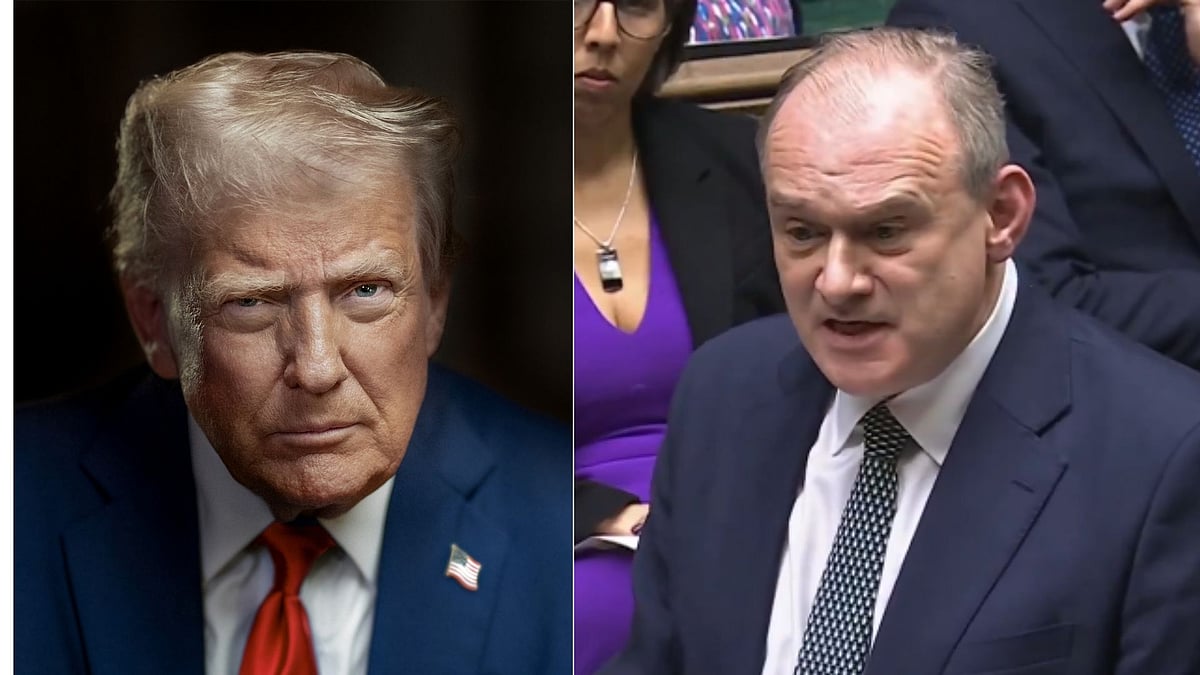
Liberal Democrat leader Ed Davey, head of the UK’s third-largest parliamentary party, issued a fierce response to a series of tariff-linked threats from Donald Trump against the UK and its European allies. These threats are tied to opposition to Trump’s controversial ambition to “buy” or annex Greenland from Denmark.
Speaking during a tense parliamentary session, Davey described the current international environment as an “incredibly grave moment.” He accused the former US president of engaging in unprovoked hostility and warned that the long-standing “special relationship” between Britain and the United States, once publicly celebrated by Trump, is now close to collapse.
Davey portrayed Trump’s approach to global affairs as rooted in intimidation rather than partnership. He said Trump was behaving “like an international gangster,” accusing him of threatening the sovereignty of allied nations and even jeopardising the future of NATO. He added that Trump’s behaviour resembled that of a bully who believes he can seize whatever he wants by force.
According to Davey, such instability only benefits geopolitical rivals such as Russia and China. He claimed that leaders like Vladimir Putin and Xi Jinping are the only ones who stand to gain from Trump’s actions.
He also criticised both the current Labour government and previous Conservative administrations for attempting to appease Trump, arguing that this strategy has failed. Davey said Britain must now choose between confronting Trump’s behaviour or offering concessions.
Tensions escalated after Trump announced new tariffs of 10% to 25% on imports from eight European countries, including the UK, in retaliation for their support of Denmark’s refusal to discuss Greenland’s transfer. Trump has justified his stance by citing US security concerns related to China and Russia.

Trump has further inflamed the situation by sharing fabricated images online depicting Greenland and Canada as part of the United States. His disputes have also extended to France, with threats of steep tariffs on French wine and champagne following disagreements with President Emmanuel Macron.
French officials have condemned these tactics as coercive and likened them to blackmail. Meanwhile, US Treasury Secretary Scott Bessent has sought to downplay the crisis, insisting that America’s international relationships remain strong.

