
With the latest backlash in Russia, Meta Platforms Inc.’s flagship messaging service, WhatsApp, is perhaps dealing with its most turbulent period to date. Once regarded as the gold standard for private communication, the platform is now besieged by aggressive government bans, scathing judicial rebukes and landmark antitrust investigations.
From the courtrooms of the Supreme Court of India to the regulatory chambers of the European Union, the pushback against WhatsApp reflects a growing global resistance to the platform's market dominance and its controversial data-sharing practices.
Total service blackout in Russia
The most immediate existential threat to the platform’s operations emerged today in Russia. According to reports from Bloomberg and the Financial Times, the Russian government has moved to "fully block" WhatsApp. This move is part of a strategic effort to transition the country’s 100 million users toward Max, a state-sponsored "super-app" designed to mirror the functionality of China’s WeChat.
While Meta has vowed to do everything possible to keep its Russian users connected, the government’s communications watchdog, Roskomnadzor, has successfully choked off access to drive adoption of domestic alternatives that integrate government services, banking and document storage. This blackout marks a significant geopolitical loss for Meta as it joins other restricted foreign services like Telegram in the crosshairs of Russian digital sovereignty.
WhatsApp earns Supreme Court ire in India
In India, WhatsApp’s largest market, the platform is facing a crisis of legitimacy. In a series of hearings concluded on February 3, 2026, the Supreme Court of India delivered a blistering critique of the company’s privacy policies.
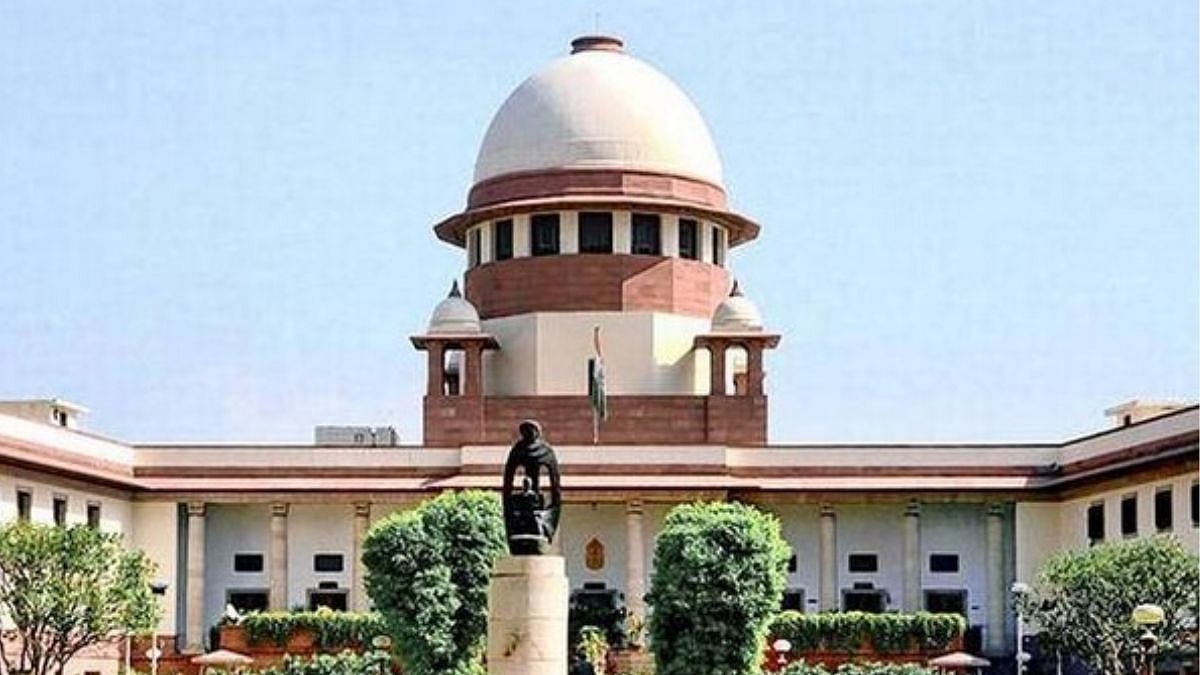
Dupreme Court of India |
Chief Justice Surya Kant described the platform’s 2021 update, which forced users to accept data sharing with other Meta entities or lose access, as a "mockery of constitutionalism." According to a LiveLaw report, the apex court rejected the argument that users have a "choice" to opt out noting that WhatsApp functions as a monopoly where "choice" is an illusion for the common citizen.
The court’s concerns extend beyond theoretical privacy to the commercial exploitation of user behaviour.
Justice Joymalya Bagchi pointed out that while WhatsApp claims messages are encrypted, the platform "monetises behavioural tendencies," allowing Meta to leverage user footprints for targeted advertising. The chief justice even cited personal experiences of receiving medicine advertisements minutes after discussing health issues on the app.
The court has now impleaded the Ministry of Electronics and Information Technology asserting that the commercial interests of multinational companies cannot come at the cost of the rights of Indian citizens. This legal battle stems from a November 2024 Competition Commission of India order that fined Meta Rs213.14 crore for abusing its dominant position.
Antitrust and AI scrutiny in the EU
Parallel to the drama in India, the European Union has launched a new offensive against Meta’s AI strategy.
On February 9, 2026, the European Commission sent a formal statement of objections to Meta, alleging that the company is unfairly restricting competition within WhatsApp. At the heart of the dispute is a January policy that prevents rival AI chatbots, such as ChatGPT, from using WhatsApp’s business tools to communicate with customers. EU officials view WhatsApp as a "key gateway" for AI assistants and fear that Meta’s restrictions could "irreparably marginalise smaller competitors."
Furthermore, the EU has officially added WhatsApp "Channels" to its list of "Very Large Online Platforms" under the Digital Services Act (DSA). This designation, announced in late January this year, follows the discovery that the channels feature now exceeds 45 million monthly active users in the bloc.
This status forces WhatsApp to comply with stricter content moderation and transparency rules by May 2026, including mitigating risks related to electoral manipulation and illegal content. Failure to comply could result in heavy fines, similar to the 120-million-euro penalty recently levelled against X (formerly Twitter).
Encryption crisis and global class-action lawsuits
Perhaps most damaging to WhatsApp’s brand is a new international class-action lawsuit filed in late January in the US District Court for the Northern District of California.
Representing users from India, Brazil, Australia, Mexico and South Africa, the lawsuit alleges that Meta’s "end-to-end encryption" (E2EE) pitch is "false and misleading." According to Bloomberg, the plaintiffs claim Meta maintains "backdoor" access that allows the company to store, analyse and review communication for internal monitoring.
This legal challenge coincides with the EU’s "Chat Control" proposal, which seeks to combat child sexual abuse by requiring platforms to scan private messages. WhatsApp and its competitor Signal have argued that such mandates would effectively break E2EE by creating third-party access points.
With former WhatsApp security heads alleging that thousands of engineers have had unaudited data access in the past, the platform’s reputation for ironclad privacy is being tested simultaneously by regulators who want more access and users who fear they have too much.
Across these multiple fronts, the narrative surrounding WhatsApp has shifted from a tool of empowerment to a case study in digital dominance. Whether through the total blockades in Russia or the "innovative oversight" promised by the Supreme Court of India, the era of WhatsApp’s unchecked expansion appears to have reached a definitive turning point.

