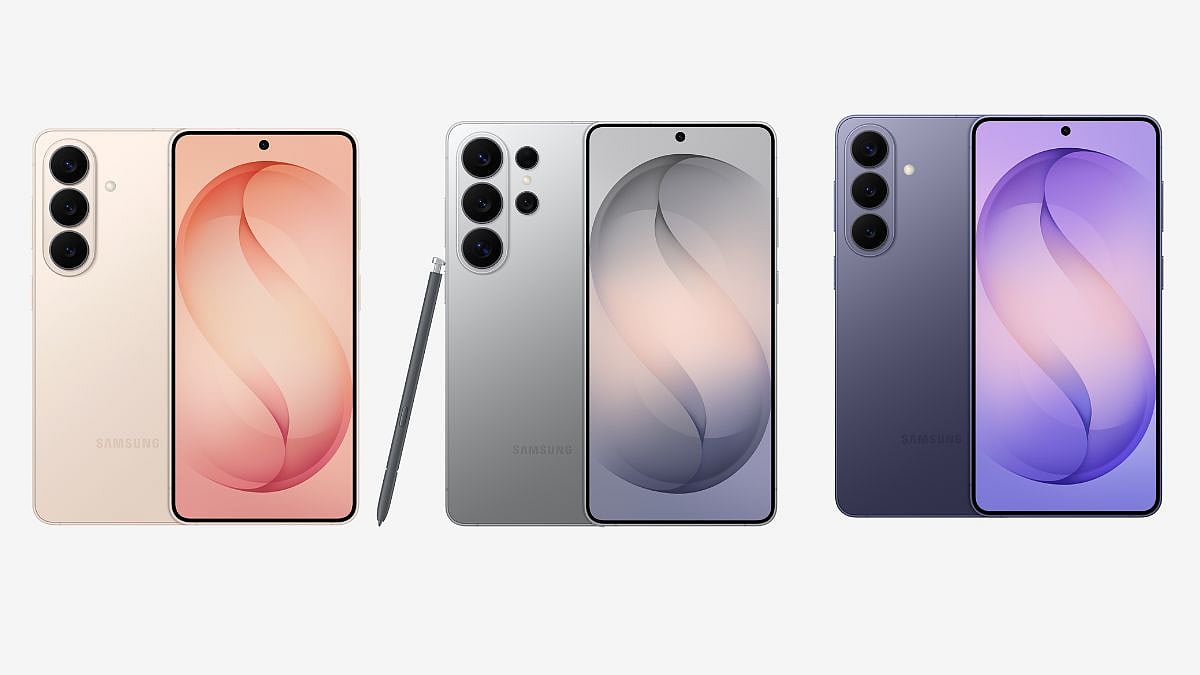
Samsung has launched the Galaxy S26 series in India, consisting of the base Galaxy S26, the larger Galaxy S26+, and the premium Galaxy S26 Ultra. The main differences include display sizes and resolutions, camera configurations, RAM/storage tiers, battery capacities, charging speeds, and even dimensions/weight. Processor is Snapdragon 8 Elite Gen 5 across models (with possible regional Exynos variations on non-Ultra).
This is an on-paper comparison based on official specifications from Samsung India and should not be taken as a definitive review of the devices. Here is how the three devices - Samsung Galaxy S26 Ultra, Samsung Galaxy S26+, and the Samsung Galaxy S26 - fare against each other.
Samsung Galaxy S26 vs Samsung Galaxy S26+ Samsung Galaxy S26 Ultra: Price In India compared
The Samsung Galaxy S26 starts at Rs. 87,999 for 12GB RAM + 256GB storage and Rs. 1,07,999 for 12GB + 512GB. The Samsung Galaxy S26+ is priced at Rs. 1,19,999 for 12GB + 256GB and Rs. 1,39,999 for 12GB + 512GB. The Samsung Galaxy S26 Ultra begins at Rs. 1,39,999 for 12GB + 256GB, Rs. 1,59,999 for 12GB + 512GB, and Rs. 1,89,999 for 16GB + 1TB.
Color options across the series include Black, White, Cobalt Violet, Sky Blue, Silver Shadow, and Pink Gold, with availability varying by model, variant, region, or channel- some exclusive to Samsung.com or carriers. Open sales begin March 11. Pre-orders are already live via Samsung.com, Amazon.in, Flipkart.com, Samsung exclusive stores, and other retail outlets.
Samsung Galaxy S26 vs Samsung Galaxy S26+ Samsung Galaxy S26 Ultra: Display compared
All models use Dynamic AMOLED 2X panels with adaptive refresh rates up to 120Hz. The Galaxy S26 has a 6.3-inch FHD+ display (resolution 2340x 1080 pixels, approximately 411 ppi). The Galaxy S26+ features a 6.7-inch QHD+ display (resolution 3120x1440 pixels, approximately 516 ppi). The Galaxy S26 Ultra offers the largest 6.9-inch QHD+ display (resolution 1440x3120 pixels). Protection includes Corning Gorilla Armor 2 on applicable models, though specifics vary.
Samsung Galaxy S26 vs Samsung Galaxy S26+ Samsung Galaxy S26 Ultra: Camera compared
The Galaxy S26 and S26+ share the same rear setup - 50-megapixel wide (f/1.8) with autofocus and 2x optical-quality zoom, 12-megapixel ultra-wide (f/2.2), and 10-megapixel telephoto with 3x optical zoom (f/2.4). Front camera is 12-megapixel (f/2.2) on both. The Galaxy S26 Ultra has a quad rear system - 200-megapixel wide (f/1.4) with autofocus and 2x optical-quality zoom, 50-megapixel ultra-wide (f/1.9), 10-megapixel telephoto with 3x optical zoom (f/2.4), and 50-megapixel telephoto with 5x optical zoom/up to 10x optical-quality zoom (f/2.9). Front is also 12-megapixel (f/2.2). All support up to 8K video recording.
Samsung Galaxy S26 vs Samsung Galaxy S26+ Samsung Galaxy S26 Ultra: Processor compared
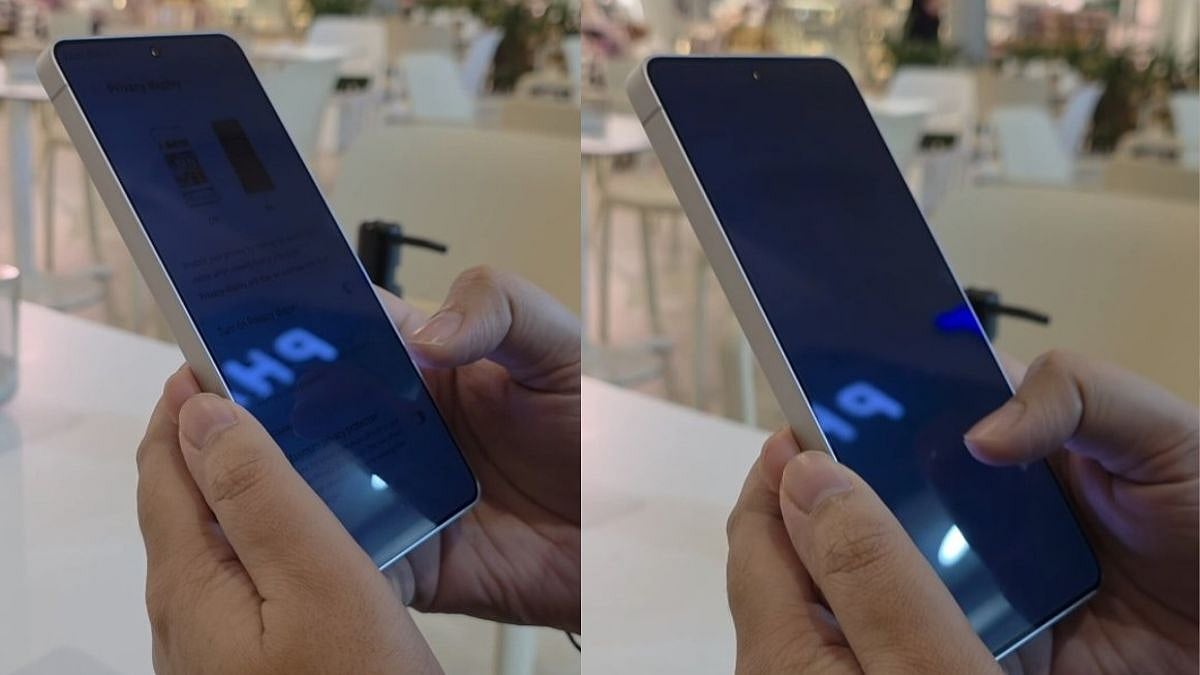
All three models are powered by the Snapdragon 8 Elite Gen 5 Mobile Platform (customised for Galaxy on the Ultra). Regional variations such as Exynos 2600 may apply to the S26 and S26+ in some markets, though not confirmed uniformly for India.
Samsung Galaxy S26 vs Samsung Galaxy S26+ Samsung Galaxy S26 Ultra: Battery compared
The Galaxy S26 has a 4,300mAh battery with 25W wired charging and 15W wireless charging. The Galaxy S26+ features a slightly bigger 4,900 mAh battery with 45W wired charging and 20W wireless charging. The Galaxy S26 Ultra includes the biggest of the lot, a 5,000mAh battery with Super-Fast Charging 3.0 up to 60W wired and wireless charging support.
Samsung Galaxy S26 vs Samsung Galaxy S26+ Samsung Galaxy S26 Ultra: UI compared
All models run Android 16 with One UI 8.5 out of the box and are promised up to 7 major Android upgrades, along with security updates valid until February 28, 2033.
Samsung Galaxy S26 vs Samsung Galaxy S26+ Samsung Galaxy S26 Ultra: Design compared
The Samsung Galaxy S26 is the lightest measuring approximately 149.6x71.7x7.2 mm and weighs 167 grams. The Galaxy S26+ is larger at approximately 158.4x75.8x7.3 mm and weighs 190 grams. The Galaxy S26 Ultra measures 163.6x78.1x7.9 mm and is the heaviest at 214 grams. All include an in-display fingerprint sensor, stereo speakers, IP68 dust and water resistance (based on series standards), NFC, Wi-Fi 7 support, Bluetooth, and USB Type-C. The Ultra adds enhanced thermal management via a redesigned vapor chamber.
Samsung Galaxy S26 vs Samsung Galaxy S26+ Samsung Galaxy S26 Ultra: Verdict
The Samsung Galaxy S26 series offers distinct choices depending on priorities and budget. The base Galaxy S26 provides a compact form factor, solid 50-megapixel triple camera setup, and 4,300mAh battery at the lowest entry price of Rs. 87,999, making it suitable for users seeking a balanced, smaller flagship without needing maximum zoom or screen real estate.
The Galaxy S26+ steps up with a larger 6.7-inch QHD+ display, higher 4,900 mAh battery, and faster 45W charging for Rs. 1,19,999 onward, appealing to those wanting more screen size and endurance in a non-Ultra model.
The Galaxy S26 Ultra stands out with its 6.9-inch QHD+ display, superior 200-megapixel main camera plus dual telephoto lenses (3x and 5x optical zoom), 5,000mAh battery with 60W charging, up to 16 GB RAM/1 TB storage, and extras like enhanced thermal management, positioning it as the choice for photography enthusiasts, power users, or those needing the best zoom and multitasking capabilities at Rs. 1,39,999 and above.
Again, it is important to reiterate that this remains an on-paper assessment and real-world performance, battery efficiency, and user preferences should guide the final decision.

