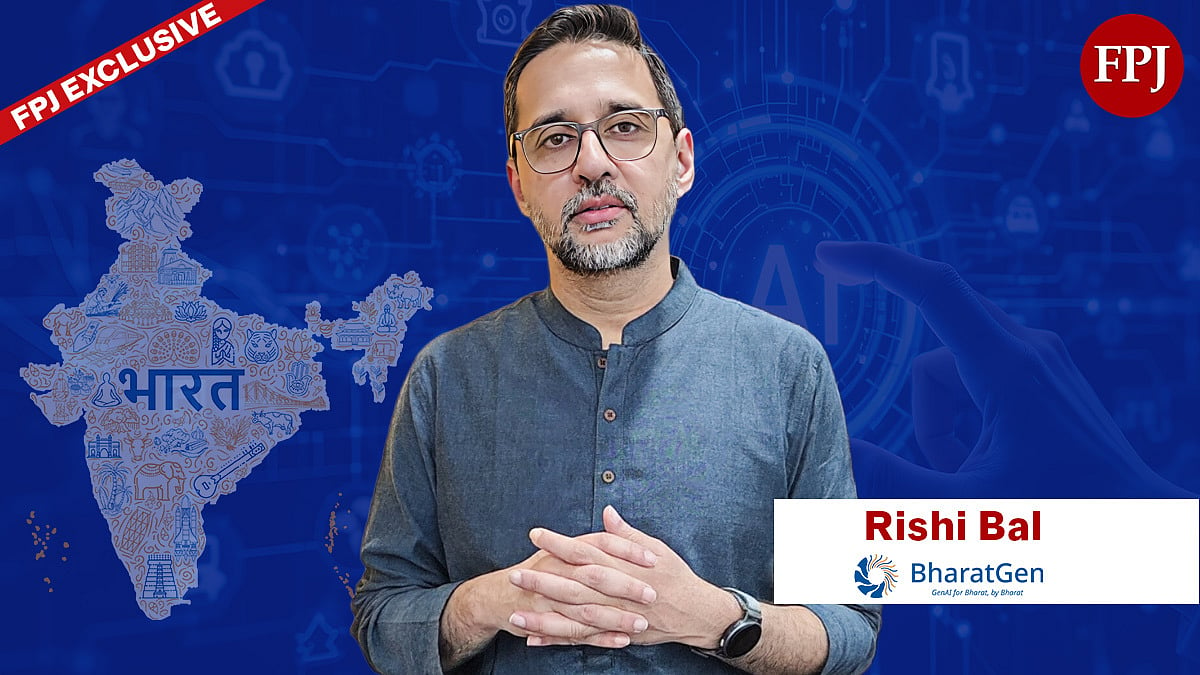
While global frontier models like ChatGPT and Claude continue to chase ever-larger scale, BharatGen is charting a different course altogether. Housed at the Technology Innovation Hub and backed by the government's IndiaAI Mission, BharatGen recently unveiled Param2, a 17-billion-parameter multilingual model. At its core is a commitment to sovereignty - built on India's own data and compute, so that no single geopolitical shock, whether a war or a tariff war, can disrupt it.
In an exclusive conversation with the Free Press Journal, Rishi Bal, CEO of BharatGen, opens up on why India is betting on sovereign AI on its own terms, with over 20 trillion tokens of indigenous data, a 60+ strong research team, and a 100-strong intern pipeline shaping the roadmap.
1. FPJ: BharatGen recently unveiled Param2, a 17-billion-parameter multilingual model, at the India AI Impact Summit. Global frontier models are now being built at a much larger parameter scale — why is BharatGen betting on a smaller, India-specific model instead of chasing scale?
Rishi: At BharatGen, we're deeply committed to building for India and building for India means that we build models that are affordable and accessible. Our 17 billion parameter model hits the sweet spot in terms of affordability and quality and that's just the starting point. We're going to continue growing these models and ensuring that we have a suite of models that are accessible to all people.
So, whether it's a hospital in the rural area that wants to run its own intelligence or a large enterprise that wants to run intelligence in the cloud, we'd like to have solutions that are available for everyone. India doesn't need to be the country that builds the biggest models. India needs to be the country that builds the most useful models that serve all citizens.
2. FPJ: BharatGen is often described as a ‘sovereign; AI initiative. In concrete terms - data, compute, and infrastructure - what does sovereignty actually mean for BharatGen, and how insulated is it from dependence on foreign chips, cloud, or training data?
Rishi: Sovereignty is a guarantee. A guarantee of access, a guarantee of control, and a guarantee of knowing what's gone inside your AI. So that when you build your government or enterprise on top of that AI, you know exactly how it's been built, you know exactly how to make it work for you, and you know that when you need it, it's going to be there.
Regardless of what happens at the end of the world, what war breaks out, or what tariffs are imported. At BharatGen, we build our own data. We've built over 20 trillion tokens of data and closing on three petabytes of data scale.
This data is at the foundation of all the models that we build. At BharatGen, we also build on heterogeneous compute, which means that we work with multiple chip providers, multiple data centre providers, all of whom are located in India. And what this heterogeneity gives you is choice, the choice to build on multiple platforms and deploy on multiple platforms, so that no single tariff can hit sovereignty.
3. FPJ: How would you honestly assess BharatGen's current readiness against global players like OpenAI's ChatGPT or Anthropic's Claude? Is this a like-for-like race, or is BharatGen solving a fundamentally different problem?
Rishi: Frontier models like ChatGPT or Claude are absolutely amazing and frontier models solve for a different class of problems than the ones that BharatGen is trying to solve for. At BharatGen, we're deeply connected with Indianness and building that into the models that we create. We think about 22 Indian languages but we also think about the hundreds of dialects.
We think about culture and Indianness and perspective all being embedded into the models that we're building so that when our models talk to an Indian name, they pronounce the name correctly. Our models understand Indianness so that they understand every bartan (vessel) in your kitchen and the name that you have for it. Indian models mean that when a farmer in Jharkhand wants to ask a question in Santali, the AI can actually understand it and when a nurse in Karnataka needs to dictate or provide some information in Kannada, the AI gets it.
Indian models built for India so that we have the solutions that we need in India here and now with control over the roadmap, not just when it's commercially interesting for someone else to build it.

4. FPJ: In what specific use cases — governance, healthcare, education, regional-language access — do you believe BharatGen will outperform or serve Indians better than a global AI model ever could?
Rishi: At BharatGen, we're deeply committed to building for India and building for India means that we build models that are affordable and accessible. Our 17 billion parameter model hits the sweet spot in terms of affordability and quality and that's just the starting point. We're going to continue growing these models and ensuring that we have a suite of models that are accessible to all people.
So whether it's a hospital in the rural area that wants to run its own intelligence or a large enterprise that wants to run intelligence in the cloud, we'd like to have solutions that are available for everyone.
5. FPJ: How many people currently work at BharatGen, and how has that number evolved as the initiative has scaled? Is the team drawn largely from IIT alumni, or is BharatGen actively recruiting talent from outside that ecosystem?
Rishi: At BharatGen, we're very proud of the incredible team that we've built. We have over 60+ researchers, engineers, linguists, and managers that are working across the team. This team has been assembled from IITs from all across the country so that we have BTechs, MTechs, and PhDs from everywhere that have come together to build India's next generation AI model.
At BharatGen, we're not just building models, we're also doing core original research. We have over 30 research papers that we've published in top journals globally.
6. FPJ: You've spoken about "building the builders" through your internship programme, with over 100 students learning to build LLMs while still studying. How central is this talent pipeline to BharatGen's long-term strategy compared to the models themselves?
Rishi: At BharatGen, we have 100+ interns who are learning to make the next generation of AI when they're still in college. So we are creating India's next generation of AI producers right here. We were never short on talent and we have incredible talent in India.
What we were short of was the playground and the opportunity to work on cutting-edge AI and that's what we're giving our students and employees right here at BharatGen.
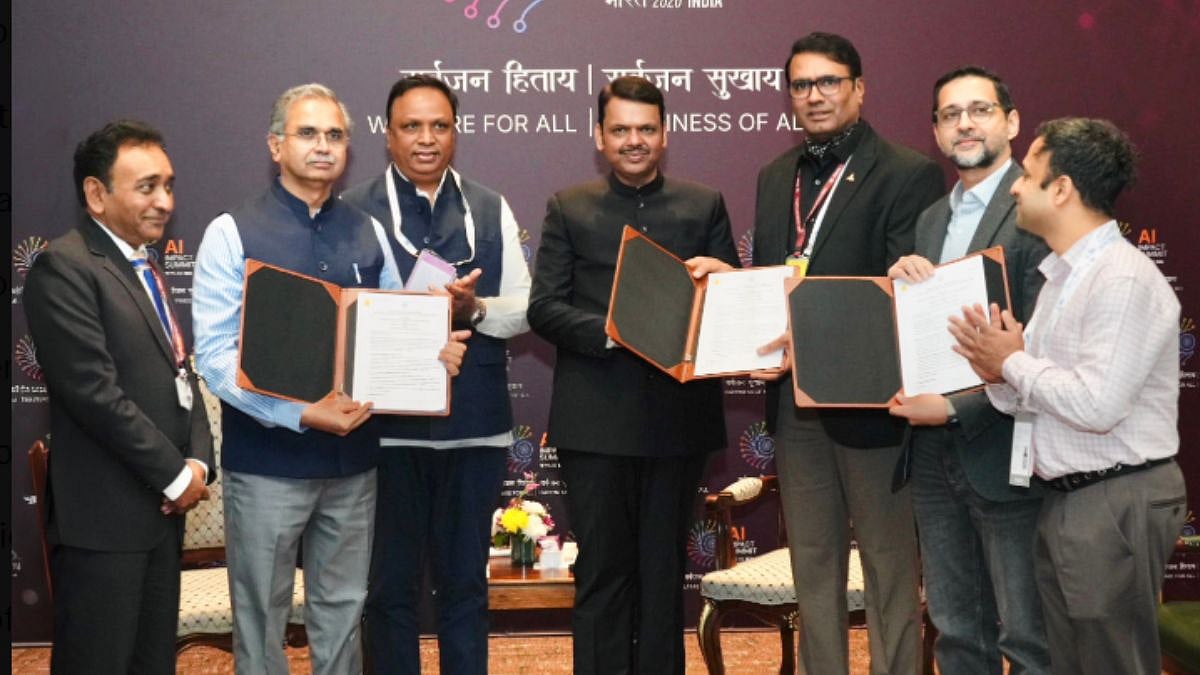
7. FPJ: BharatGen operates as a non-profit, government-funded initiative. How does that funding and governance model shape your product decisions differently from how a venture-backed AI company like OpenAI or Anthropic would operate?
Rishi: At BharatGen, we're building India's AI ecosystem. And that means building the data, the talent, the research, and the models and applications that will power India's larger ecosystem. Venture capital is good at a lot of things, but non-profits are the place to go when you want to bring people together.
We want to create a community of builders, we want to create a community of researchers, and people who can come together to build the next generation of AI for India.
8. FPJ: Looking beyond India, do you see BharatGen's multilingual, sovereign-AI approach as a model other countries in the Global South might replicate, or is this strategy inherently built for India's specific linguistic and infrastructural reality?
Rishi: Frontier models today sound like an AI that was made on the west coast of America, and that makes sense if you live on the west coast of America. But we think AI has many voices, many cultures, many tones, and many perspectives. And these perspectives and tones need to be reflected in order for AI to truly belong to every country and region that the AI operates in.
In that sense, India's challenges are not unique. We have our own languages, our own culture, our own perspective that needs to be effectively represented in the AI that we use. At BharatGen, we're trying to solve that problem. And that problem is not unique to India. It's the world's problem. So the opportunity for us in India is not just to build a better sovereign AI model for India, but to actually show an open approach that can be collectively used by the world.

