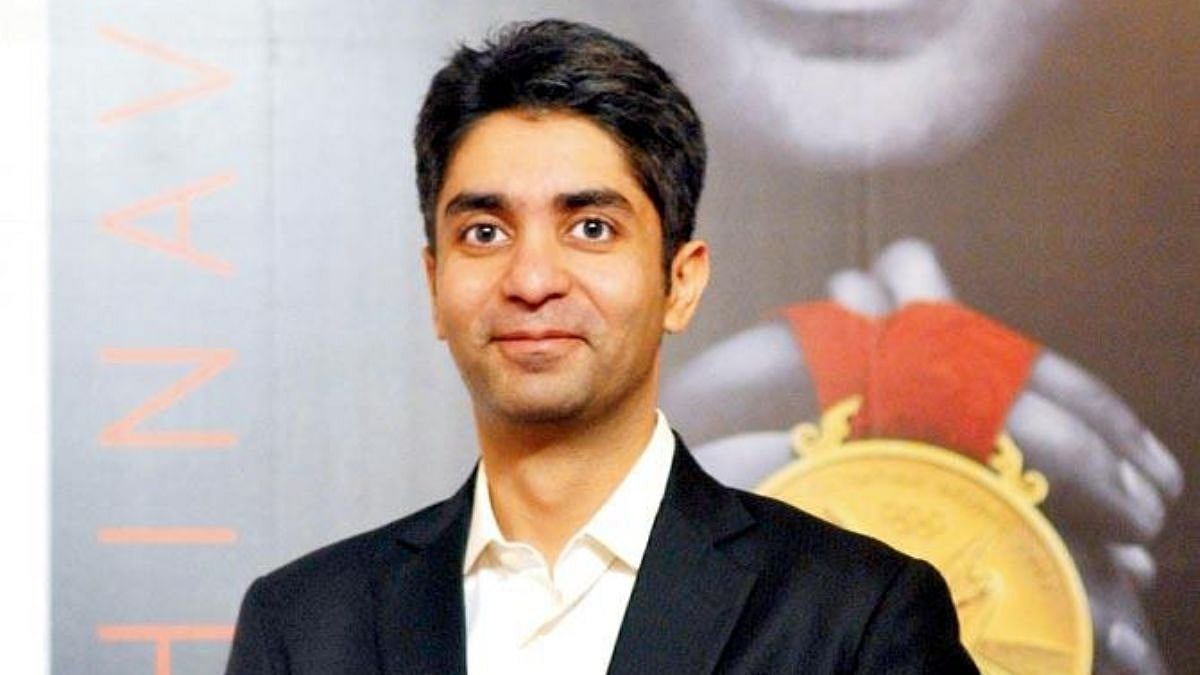
New Delhi: Olympic gold medalist and Indian shooting legend Abhinav Bindra welcomed the Union Cabinet's approval of the Rs 1,856.67-crore Khelo India Sports Goods Manufacturing Scheme but stressed the need to focus on building global competitiveness rather than merely expanding manufacturing capacity.
He highlighted India's small share of global sports equipment exports and called for segment-specific strategies, including cost competitiveness and large-scale production in sports balls, specialised engineering in cycling and advanced composites, and greater investment in innovation, intellectual property and product development in sports technology.
The Union Cabinet, chaired by Prime Minister Narendra Modi last month, approved the Khelo India Sports Goods Manufacturing Scheme with a total outlay of Rs 1,856.67 crore for the period from 2026 to 2033-34.

"The ₹1,856 crore initiative for sports goods manufacturing is welcome. But the larger question is whether we are building manufacturing capacity or genuine global competitiveness. NITI Aayog projects that India’s sports equipment exports could grow from $275 million to $8.1 billion by 2036. Yet today, India accounts for barely 0.5% of global exports. What must fundamentally change to bridge that gap?" Bindra wrote in an X post.
"Different segments demand very different strategies. In sports balls, where India already has experience, the challenge is cost competitiveness and scale. In cycling and advanced composites, it is specialised engineering and integration into global supply chains. In emerging sports technology, it is scientific innovation, intellectual property and product development," he added.

Bindra further stressed that India needs a differentiated manufacturing strategy to compete across various segments of the global sports industry, underlining the importance of identifying its position in the global value chain.
"Can one manufacturing strategy effectively address all three? More fundamentally, where in the global value chain do we want Indian companies to compete? As contract manufacturers, suppliers of critical technologies, or owners of globally recognised products and brands? Each requires a different investment strategy and captures very different economic value. International certification is essential in many sporting disciplines, but it is only the entry point. Sustained competitiveness comes from consistent performance, continuous innovation and the confidence of the world’s most demanding customers," Bindra said.

He said the focus should extend beyond setting up factories and increasing production to developing specialised capabilities, ensuring international quality standards and investing in sustained innovation.
He also emphasised that the success of the scheme should be measured by India's ability to build globally competitive industrial ecosystems that can sustain themselves beyond government support and establish the country as a key player in the global sports manufacturing industry.
"Perhaps every investment should face two questions: What competitive disadvantage does it permanently eliminate? And what capability will remain when government support ends? The real measure of success should not be factories established or equipment produced, but whether we create specialised industrial ecosystems that global sport comes to depend upon. India’s ambition should not simply be to participate in global sports manufacturing, but to become indispensable in carefully chosen parts of it," he concluded.
Level up your brain the fun way. Play daily games and quizzes on FPJ Smart!
(Except for the headline, this article has not been edited by FPJ's editorial team and is auto-generated from an agency feed.)

