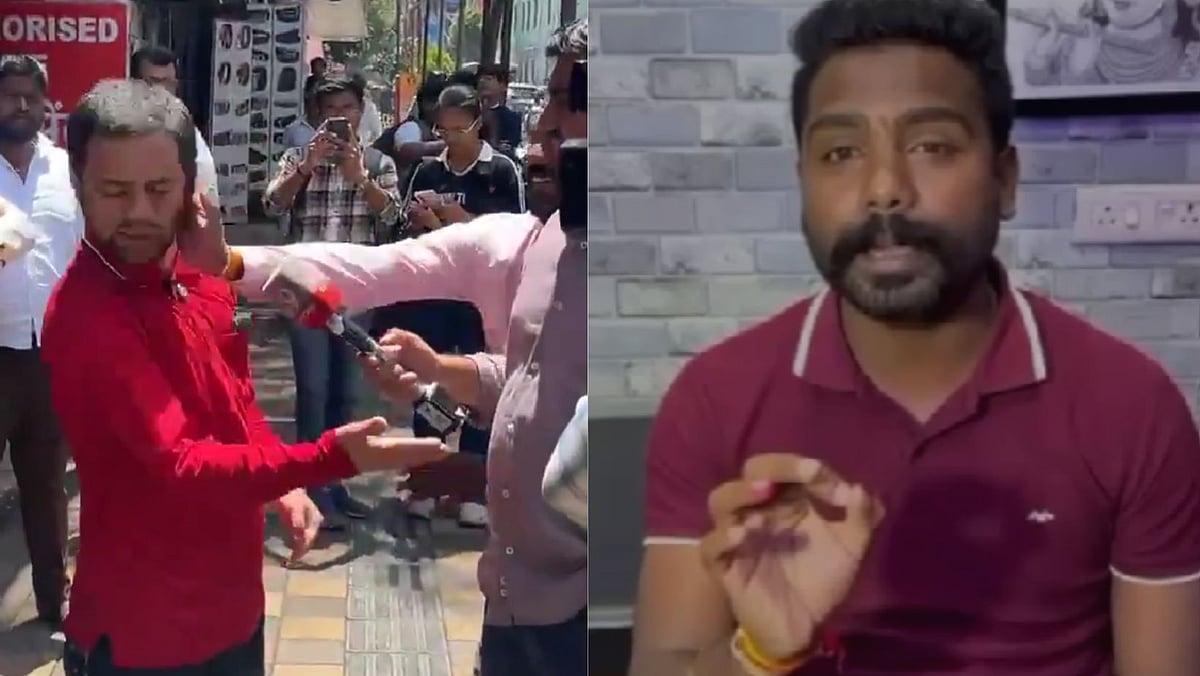
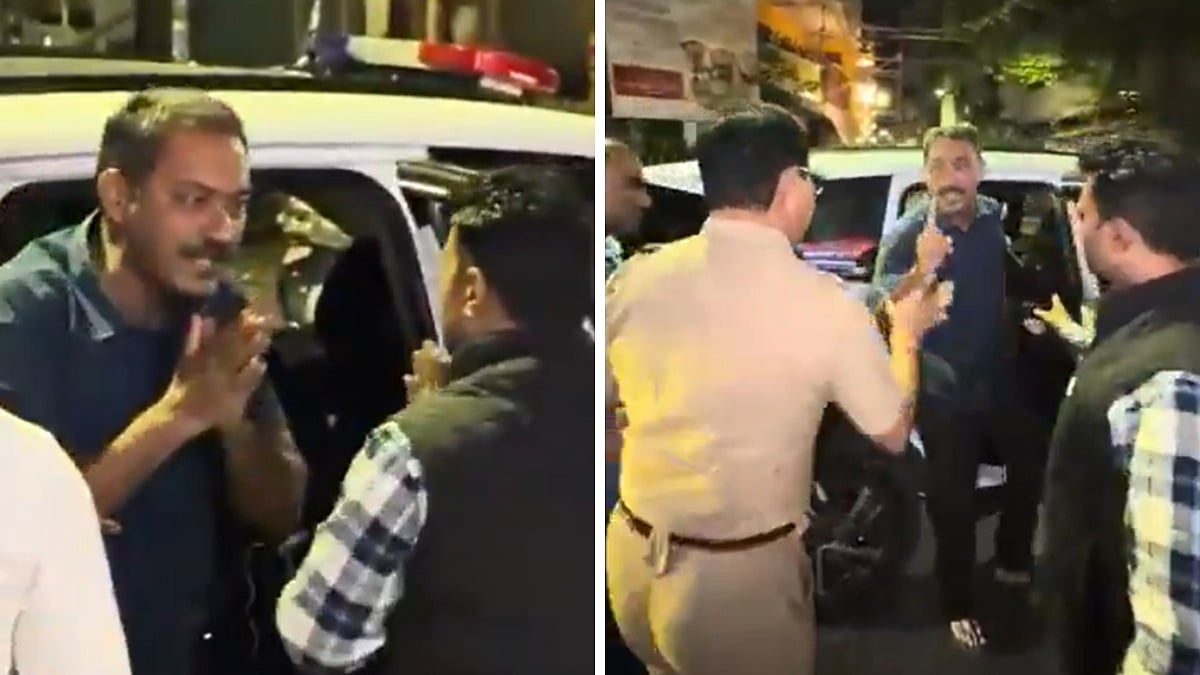
Pune: Social activist Vidyanand Bapat was allegedly assaulted by a man while he was being interviewed during a public feedback drive on loudspeakers and DJs on Tilak Road in Pune. Bapat, who has been vocal against the use of high-decibel sound systems during the Ganesh festival, said the attackers took advantage of the fact that he was unarmed and that there were no armed police personnel nearby.
The incident happened while a journalist was interviewing Bapat about his stand on loud DJs and sound systems. Bapat said the journalist witnessed the incident and had footage of what happened. He alleged that the assault was an attempt to create sensationalism and gain publicity.
Bapat asks police to take action
Speaking to the media about the incident, Bapat said he had already informed the police. He also urged the journalist to hand over the footage of the incident to the police. Bapat said arguments should be answered with logic and not violence.
He described the incident as a result of a “mob mentality” and said it was the responsibility of the police to deal with those involved. Bapat also rejected the suggestion that his opposition to loudspeakers meant he was against the Ganesh festival. The incident came amid a wider debate in Pune over the use of DJs, sound systems and dhol-tasha troupes during Ganesh festivities.
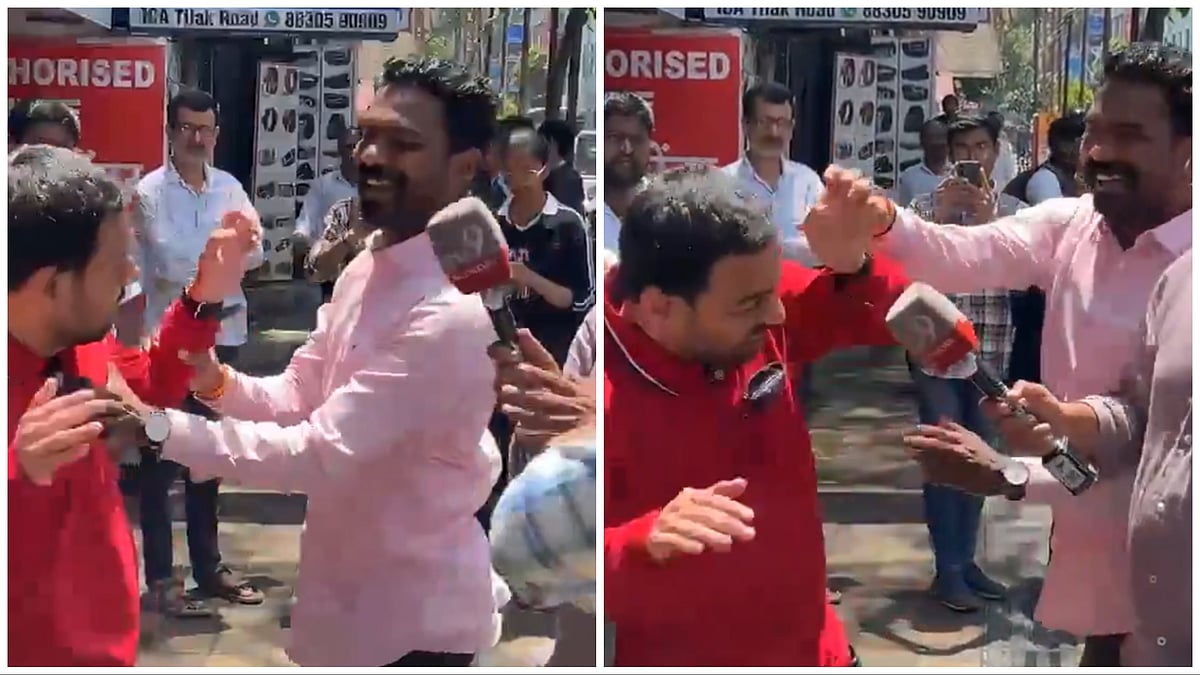
Assault accused identified as Santosh Chavan
The person accused of assaulting Bapat has been identified as Santosh Chavan, a resident of Rautwadi in Kothrud, according to the information available. Chavan is also reported to work for a real estate developer. He is said to be a former president of the Priyadarshini Ganesh Mandal in Rautwadi.
The exact reason for the alleged assault has not been established. It is also not clear what triggered the confrontation or whether Chavan acted alone or as part of a group. The police investigation is expected to establish the circumstances and motive behind the incident.
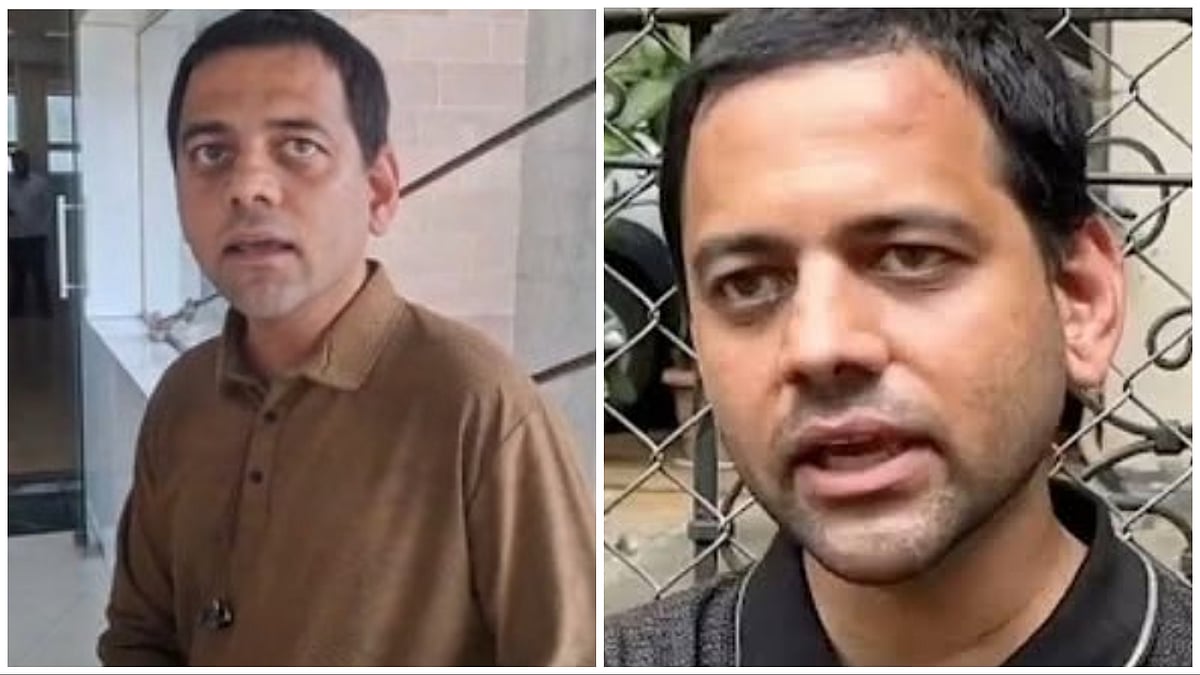
Chavan had criticised Bapat’s stand on sound systems
In a social media video a few days ago, Chavan spoke about the ongoing debate over sound systems and dhol-tasha performances during the Ganesh festival. He said some people were demanding that the festival be celebrated without sound systems and dhol troupes because they cause inconvenience to residents.
Chavan said that, as a Puneite, he wanted to highlight what he described as the “ground reality” of the city’s Ganesh festival. He pointed to Pune’s large number of Ganesh mandals and said the city has around 3,800 to 4,000 small and large mandals. He said around 1,400 mandals in the Peth areas are registered.
According to Chavan, the mandals collectively spend more than Rs 100 crore during the 12-day festival. He claimed that the figure rises to around Rs 1,000 crore when household Ganesh celebrations are also included.

Chavan says sound systems support livelihoods
Chavan argued that sound systems should not be viewed as the enemy. He acknowledged that loud sound can cause problems for residents. However, he said strict volume limits could address the issue instead of imposing a complete ban.
Chavan claimed that if around 700 mandals use sound systems, stopping them would affect the livelihoods of thousands of people working around the festival. He said electricians, generator operators, tractor-trolley drivers, labourers, sound operators and decorators depend on this work during the festival.
He claimed that around 8,000 households could be affected if these activities were stopped. Chavan also questioned comparisons between Pune and Solapur. He said Solapur has around 1,000 mandals, with only about 100 registered. Pune, he said, has more than 3,800 mandals and around 1,400 registered mandals.
He also pointed to differences in the immersion routes and the time taken for immersion in the two cities.
According to him, Solapur has an immersion route of around four to five kilometres, while Pune’s route is around 12 to 15 kilometres. He said immersion took around 22 hours in Solapur last year compared with around 30 hours in Pune.
Chavan called for dialogue and new rules
Chavan said banning sound systems was not the solution. Instead, he called for Ganesh mandals, the administration and other stakeholders to sit together and frame updated rules. He said the rules should be strictly followed by the mandals.
He also referred to Lokmanya Tilak’s role in popularising the public Ganesh festival. Chavan said the festival was meant to bring people from different castes and religions together.
He questioned whether Bapat’s position on sound systems was consistent with those ideals. Chavan further criticised Bapat for focusing on noise pollution. He asked whether Bapat had also spoken about issues such as air pollution, water pollution, deforestation and corruption.
He also questioned whether Bapat was targeting Ganesh mandals at someone else’s behest. However, the video statement does not by itself establish that these remarks were directly connected to the alleged assault on Bapat.
The police investigation will determine what led to the confrontation and whether Chavan or any others will face action in connection with the alleged assault.

