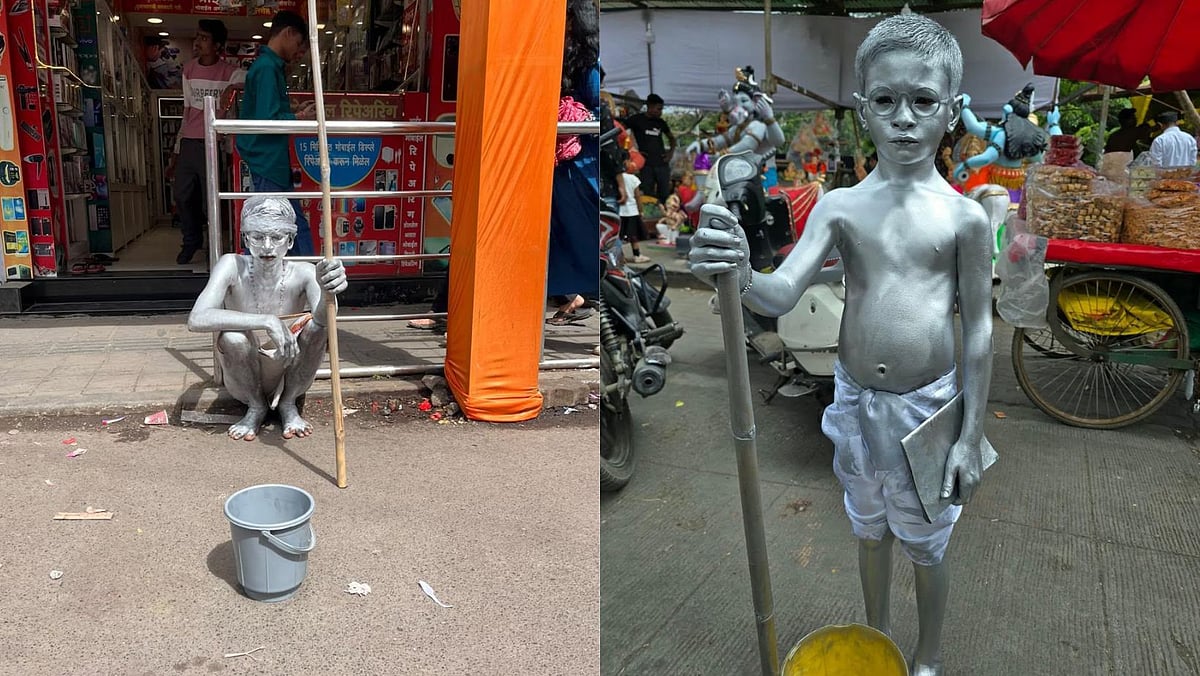
Pune: For thousands of people visiting the Ganpati mandals in Pune, the sight of children painted silver from head to toe may appear to be another street performance amid the festive crowds. But behind the striking “living statues” are children spending their days on the streets, earning money instead of attending school.
While speaking to The Free Press Journal, Aryan (8) and Sameer (14), were seen painted silver, with one holding a book and a stick while the other sat on the roadside with a container for money.
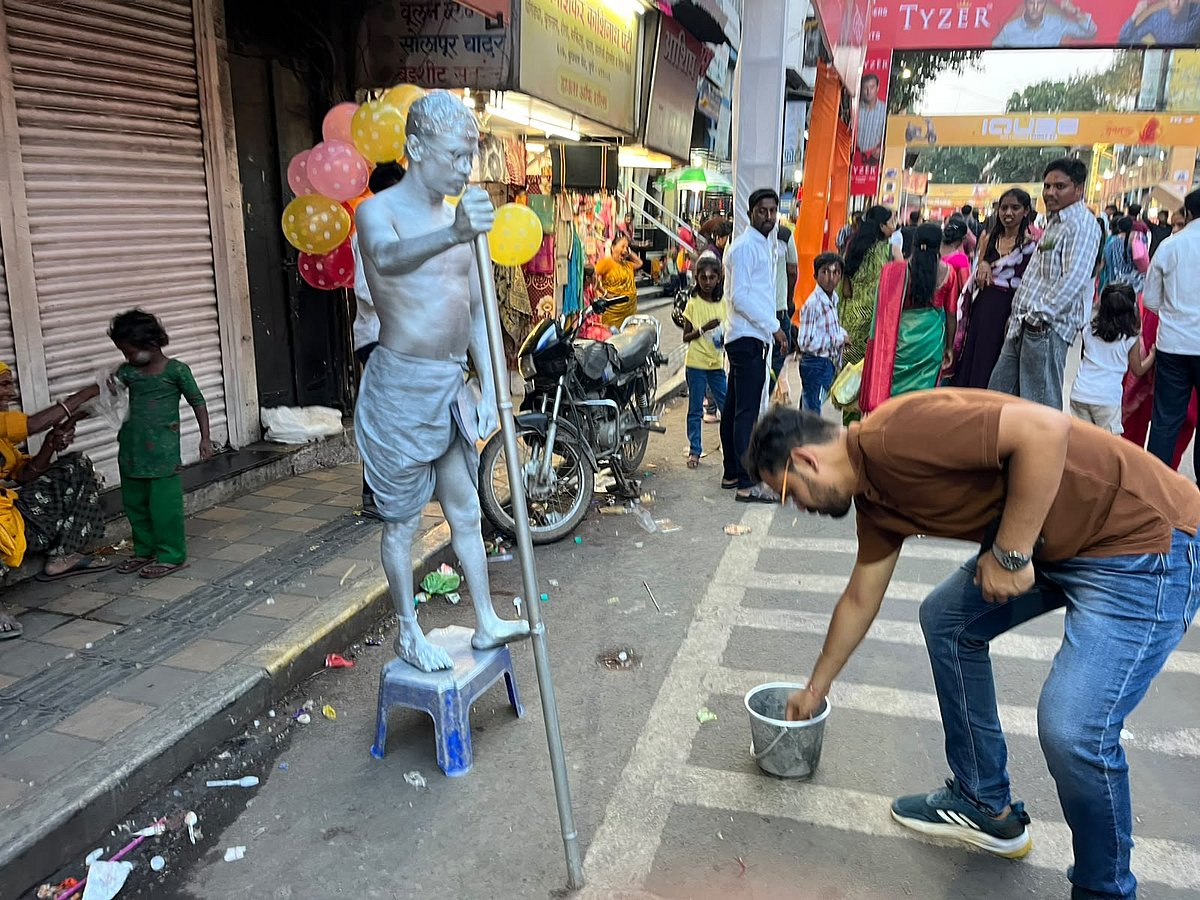
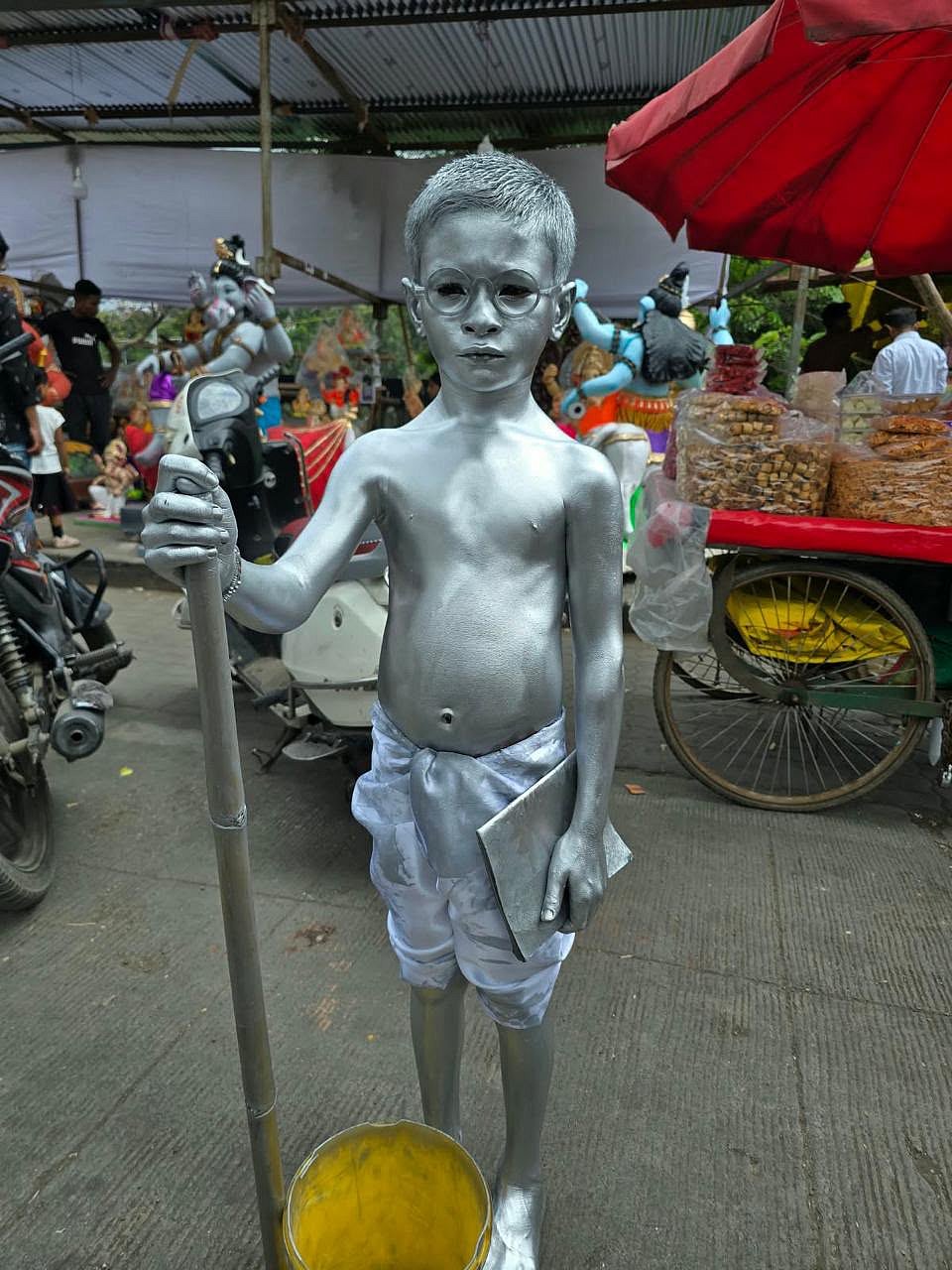
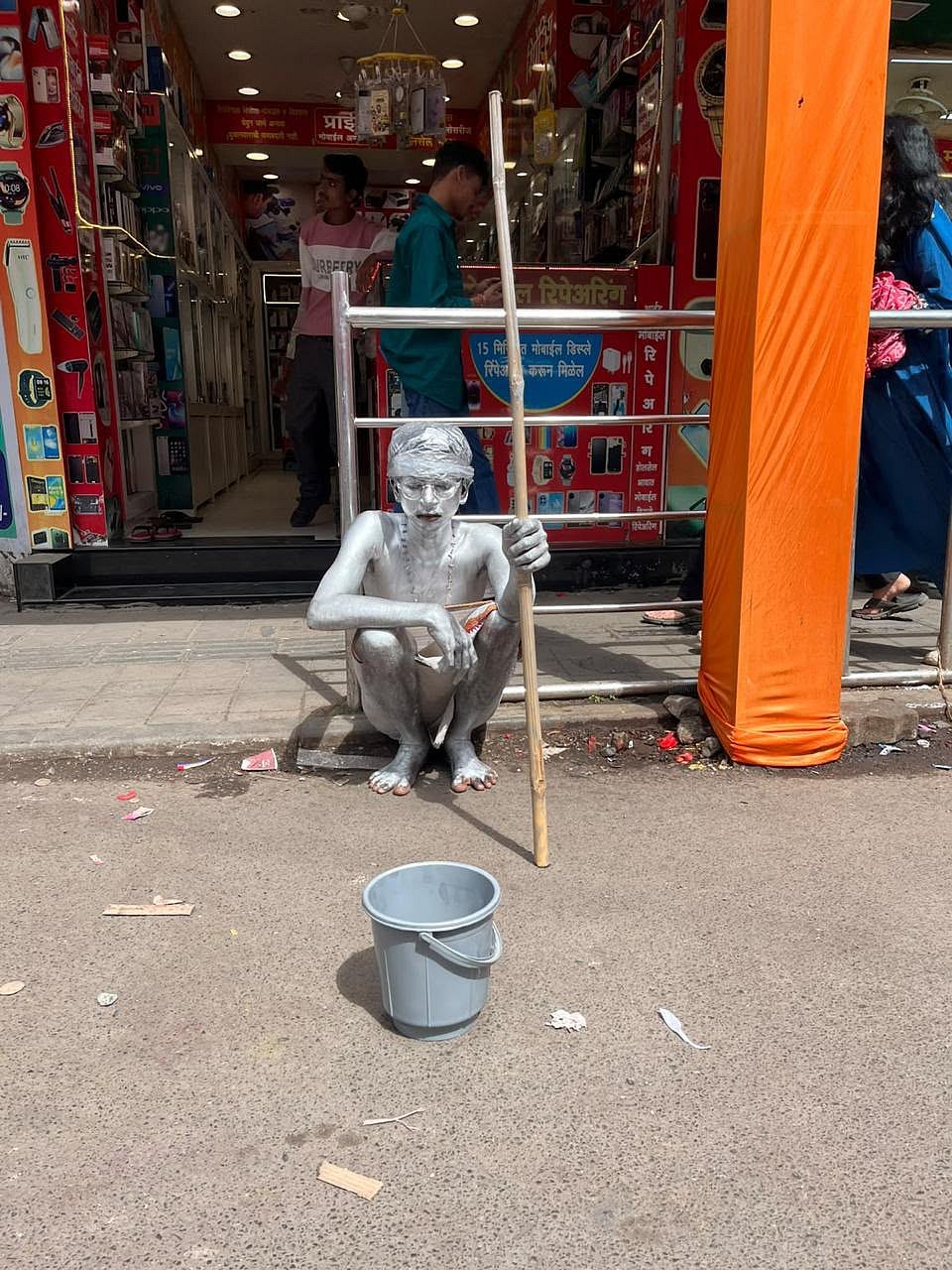
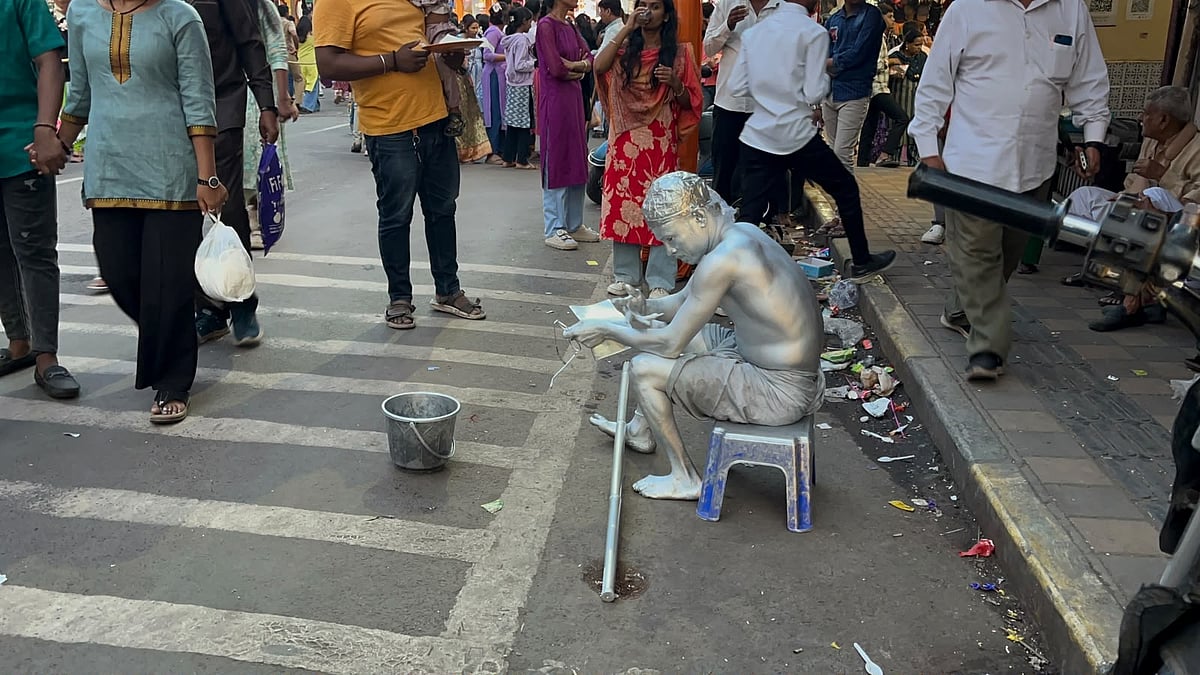
“I come here with my family. They paint me silver and tell me to stand like a statue. People look at me, take photographs and sometimes give money. I don’t know how much money we collect because my parents take care of it,” said Aryan.
He added, “There are around 8-12 of us who stand daily like statues, painted in silver and begging for money. I don’t feel happy doing this, but we can’t do anything else. Every festival, we feel left out when we see people celebrating with joy, wearing new clothes and eating sweets. The 8-12 of us meet, celebrate and enjoy as much as we can.”
For the children, the silver paint is not merely a performance. It is a way of attracting attention in crowded public spaces and increasing their chances of receiving money.
Sameer said, “People notice us when we look like statues. If we just stand normally, they may walk past. I come here because we need money. Sometimes it is very hot and sometimes my body starts hurting. But if I leave, I won’t earn anything. People see the paint, but they don’t see why we are here.”

‘We don’t even have a proper house’
Aryan’s parents said their decision not to send him to school was linked to the family’s difficult circumstances. They said they did not have a permanent house and did not want the additional responsibility and “tension” associated with schooling.
“We don’t even have a proper house to stay in. We have many problems. We don’t want to put this tension on the child. We want him to live freely and stay with us,” his parents said.
They said that while they understood the importance of education, their immediate concerns were food, shelter and managing daily expenses.
“For other families, sending a child to school may be simple because they have a house and a fixed place to live. Our situation is different. We don’t know where we will be tomorrow,” they said.

A system exists, but reaching the children remains a challenge
A police officer familiar with the issue, speaking on condition of anonymity, said attempts had been made to assist such children, but some families were reluctant to accept intervention.
“We have tried to speak to some of these families and connect them with available help, but they often avoid the process. Their biggest concern is that they do not want to be separated from their children or moved away from the place where they earn. There are also issues of documentation, mobility and lack of trust. Simply asking them to send the child to school does not solve the family’s housing and livelihood problems,” the officer said.
The officer added that authorities also face difficulty in continuously tracking families who move from one location to another.
The officer said that the Juvenile Justice framework considers children who are found begging or living on the streets as children in need of care and protection, while Mission Vatsalya provides mechanisms for shelter, education, rehabilitation and family-based support.
Meanwhile, for Aryan, school remains an uncertain possibility. “I like books. When I see children in uniforms, sometimes I think about going to school. But my parents have many problems, so I stay with them,” he said.
Sameer said he did not want to spend his entire life performing on the streets. “I would like to learn something that can help me earn properly when I grow up. I don’t want to stand on the road like this forever,” he said

