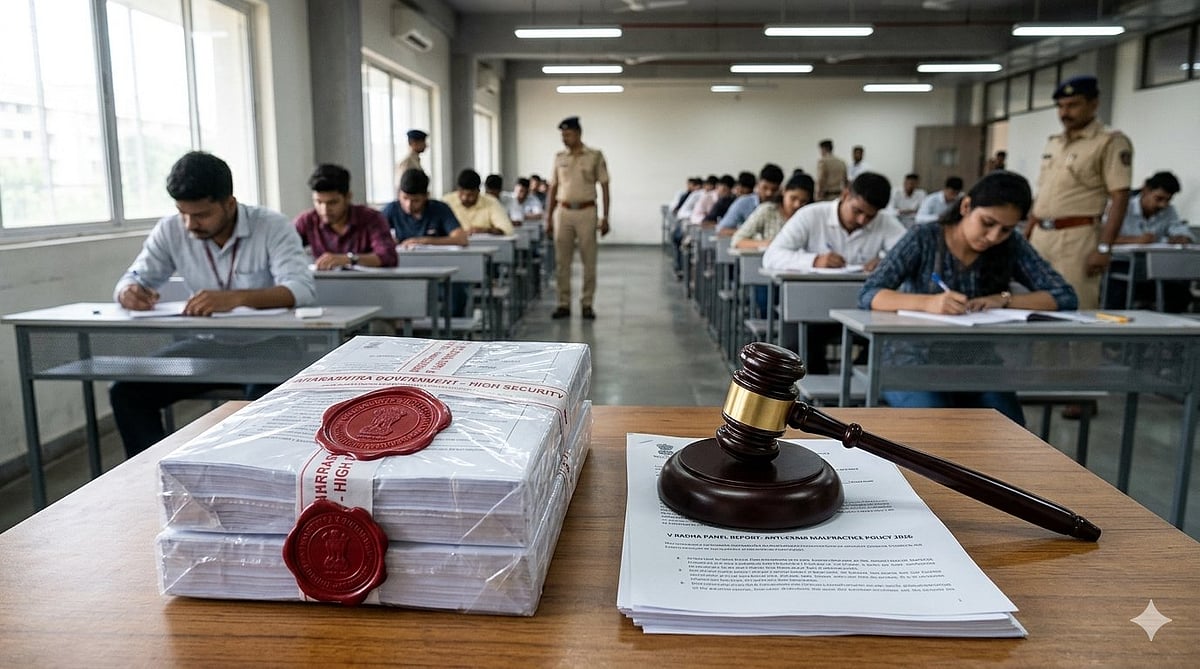
Pune: The V Radha-led Competitive Examination Reforms Committee has recommended substantially tougher penalties for examination-related offences, including five to 10 years of imprisonment and fines of up to ₹50 lakh for individuals caught using unfair means, as part of its second report submitted to the Maharashtra government. For organised examination fraud involving individuals or institutions, the panel has proposed seven to 10 years of imprisonment, a minimum fine of ₹10 crore, recovery of losses and confiscation of properties.
The committee has also proposed increasing penalties for service-provider agencies involved in examination malpractices, strengthening investigation mechanisms, setting up special fast-track courts and introducing technology-based safeguards to prevent paper leaks and cheating in competitive examinations.
The second report proposes a series of measures aimed at strengthening transparency, security and accountability in the Maharashtra Public Service Commission (MPSC) and other competitive recruitment examinations. The recommendations focus on preventing paper leaks, examination fraud and other malpractices that have repeatedly raised concerns among candidates appearing for government recruitment examinations.
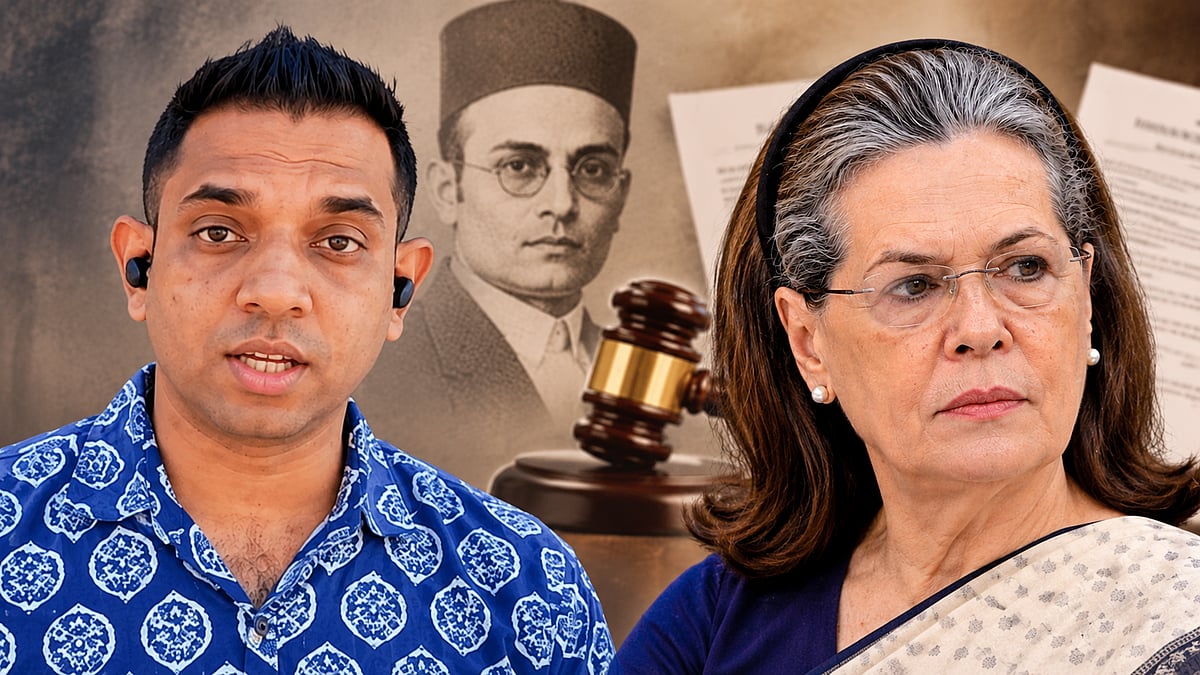
Under the Maharashtra Competitive Examination (Prevention of Unfair Means) Act, 2024, the existing provisions prescribe three to five years of imprisonment and a fine of up to ₹10 lakh for individuals using unfair means during examinations. The committee has recommended increasing the punishment to five to 10 years of imprisonment and a fine of up to ₹50 lakh.
For organised examination fraud involving individuals or institutions, the panel has proposed seven to 10 years of imprisonment, a minimum fine of ₹10 crore, recovery of losses and confiscation of properties. The proposed provisions also provide for a wider definition of property liable for attachment and confiscation, including land, buildings, movable assets, intellectual property and digital or virtual assets.
The committee has further recommended increasing the penalty for service-provider agencies involved in examination malpractices from ₹1 crore to ₹5 crore, along with recovery of examination-related expenses and an eight-year ban. Directors, management members and persons in charge of such agencies could face five to 10 years of imprisonment and fines of up to ₹5 crore.
Among the significant recommendations is the establishment of a Special Task Force (STF) to investigate examination-related offences and a system of fast-track courts to ensure that cases involving paper leaks and recruitment irregularities are disposed of without prolonged delays. The committee has proposed that such offences be investigated only by officers of at least the rank of Additional Superintendent of Police (Additional SP) in districts and Deputy Commissioner of Police (DCP) in commissionerate areas, replacing the existing DySP and ACP-level investigation mechanism.
The STF has also been recommended to have exclusive jurisdiction over serious examination-related offences. A Special Fast Track Court has been proposed to expedite trials, with all pending cases under the Act, including older cases, to be transferred to these courts and disposed of within three months.
Speaking about the recommendations, Vikram Babanrao Pachpute said, “To improve the recruitment examination process in the state, Hon. Chief Minister Devendraji Fadnavis Saheb had formed a high-level committee. After the first report of this committee was submitted, the State Government accepted most of its suggestions. And today, the second report of this committee has been submitted to the State Government. And this report is very important. Because in this, to curb paper leaks, the committee has made some strict suggestions to the State Government. It has also suggested some new provisions in the law.”
Pachpute further highlighted the proposed punishment for those involved in examination paper leaks. “Most importantly, there should be rigorous imprisonment of about seven to ten years for persons and institutions involved in paper leaks in this entire process, and a fine of not just a small amount but up to Rs 10 crore has also been recommended by this committee. This is going to be a very important step, which the State Government will definitely take in the coming time,” he said.
Apart from stricter penalties, the committee has proposed a three-tier Examination Command and Control Centre at the MPSC headquarters, district level and individual examination centres to monitor examination arrangements and prevent malpractice. The panel has also recommended a dedicated technology and cybersecurity cell to study the misuse of sophisticated communication devices, wearable cameras and artificial intelligence during examinations.
The MPSC has been advised to appoint a Chief Information Security Officer (CISO) and introduce a unified information security policy to protect examination systems and candidates' personal data. These measures are aimed at addressing organised examination fraud as well as emerging technology-based methods of cheating.
The committee has also recommended financial relief for candidates appearing for MPSC examinations. It has proposed a full refund of examination fees to candidates after they appear for the examination. Candidates could receive the refund directly or through transfers to their bank accounts.
Another recommendation concerns the fees candidates pay for raising objections to answer keys. If the rechecking process establishes that a candidate's objection is valid and results in a change in marks, the candidate should receive a refund of the objection fee.
Pachpute said the committee had considered repeated demands from students regarding examination fees and rechecking charges. “If a student’s rechecking is found to be correct and their demand for rechecking is found to be valid, then definitely if the marks change, the rechecking money of such students will also be waived,” he said.
To further strengthen examination management, the committee has recommended assigning greater responsibility to District Collectors for ensuring transparent examination processes. It has also proposed creating an independent ‘Venue Bank’ of examination centres that meet prescribed standards of infrastructure, facilities and security. This is expected to improve the selection and monitoring of examination venues and reduce opportunities for malpractice.
The committee submitted its first report to the state government in the first week of November 2026, following which the government accepted most of its recommendations.
Pachpute thanked the committee and Chief Minister Devendra Fadnavis for taking steps to address students' concerns, stating that the proposed STF and fast-track court mechanism would be important in ensuring accountability and timely action against examination-related offences.

