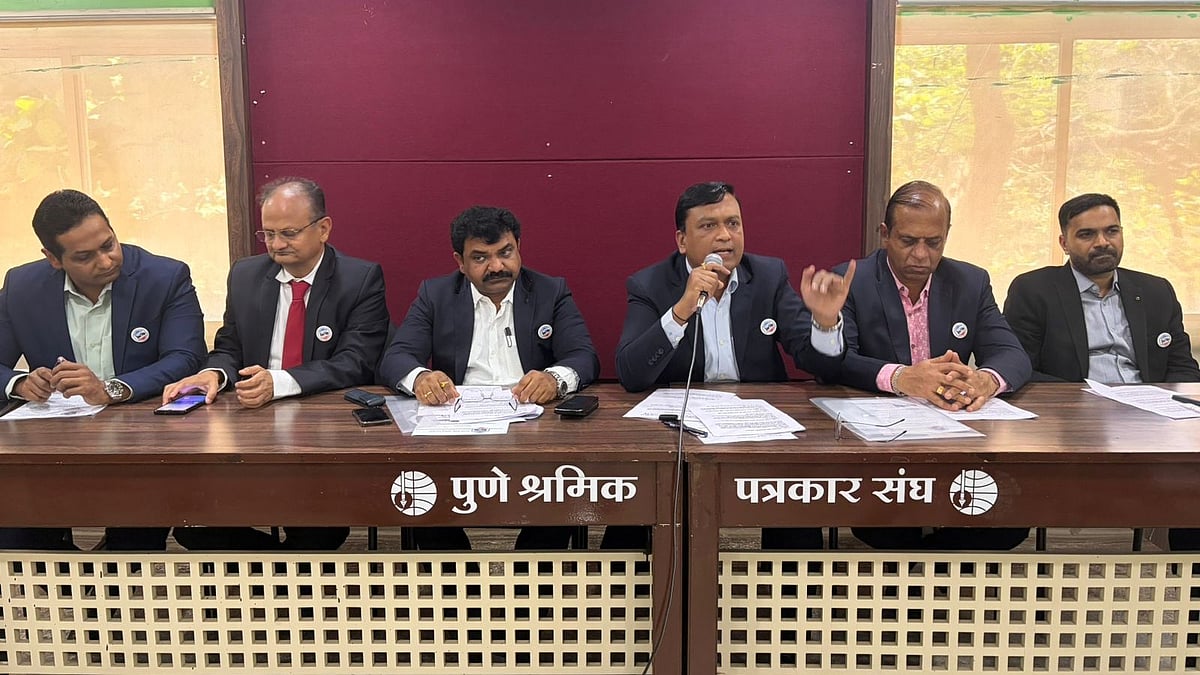
In a significant development for the construction sector, the Pune Ready Mix Concrete (RMC) Association has announced a temporary and structured operational pause across all RMC plants in the district. The shutdown will come into effect from midnight of April 15 and will remain in place for a few days as part of an industry-wide initiative to strengthen compliance, safety and operational standards.
The association clarified that the move is not a strike but a planned step towards improving internal processes and aligning with regulatory expectations. During this period, all manufacturing and dispatch of ready-mix concrete will remain suspended.
Road dust accounts 61%
Amid ongoing concerns over Pune’s air quality, the Association highlighted findings from studies by the Maharashtra Pollution Control Board (MPCB), which indicate that road dust is the largest contributor to particulate pollution (PM10) in the city, accounting for nearly 61%. Vehicular emissions contribute around 18%, while construction-related dust accounts for approximately 11%.

The association emphasised that RMC plants form only a small portion of construction-related dust and that industrial emissions overall contribute just about 1-2% to Pune’s pollution levels. It maintained that the industry is already taking steps to further reduce its environmental impact.
Turnover of ₹450 crore per month
The RMC sector plays a crucial role in Pune’s infrastructure growth, supplying nearly 9 lakh cubic meters of concrete every month. With around 300 plants operating in the district, the industry generates an estimated turnover of ₹450 crore per month and ₹5,400 crore annually.
Impacting over 30,000 families
It also provides direct employment to nearly 12,000 workers and supports up to 24,000 indirect jobs, impacting over 30,000 families. From metro projects and highways to housing and industrial developments, the sector remains a key pillar of modern construction.

The association pointed to multiple challenges currently affecting operations, including the need for approvals from various departments, evolving compliance requirements, traffic restrictions impacting delivery schedules, and rising operational costs. Despite engaging in discussions over the past nine months with authorities such as the District Collector’s office, police commissionerates, MPCB, municipal corporations, and regional development bodies, the industry said a unified regulatory framework is still awaited. “We waited for nine months; now it is time for a decision,” the association stated.
During the temporary shutdown, RMC plants will undertake measures such as internal compliance audits, transit mixer safety checks, dust-control upgrades, workforce training, and standardisation of documentation and operating procedures. The association also plans to introduce a Quality and Safety Certification Framework for member plants to enhance transparency and ensure adherence to defined benchmarks.
The industry has urged the state government to introduce a single-window clearance system, a uniform policy framework for RMC operations across Maharashtra, scientific traffic time-slotting for transit mixers, and clear environmental compliance guidelines. It has also called for clarity in the classification of temporary and permanent batching plants.
Builders, contractors, and infrastructure agencies have been advised to source concrete only from certified RMC plants to ensure better quality, safety, and environmental compliance. Reiterating its stance, the association stated that it remains committed to responsible practices and collaborative engagement with authorities, adding, “We are not the problem, we are part of the sustainable solution.”

