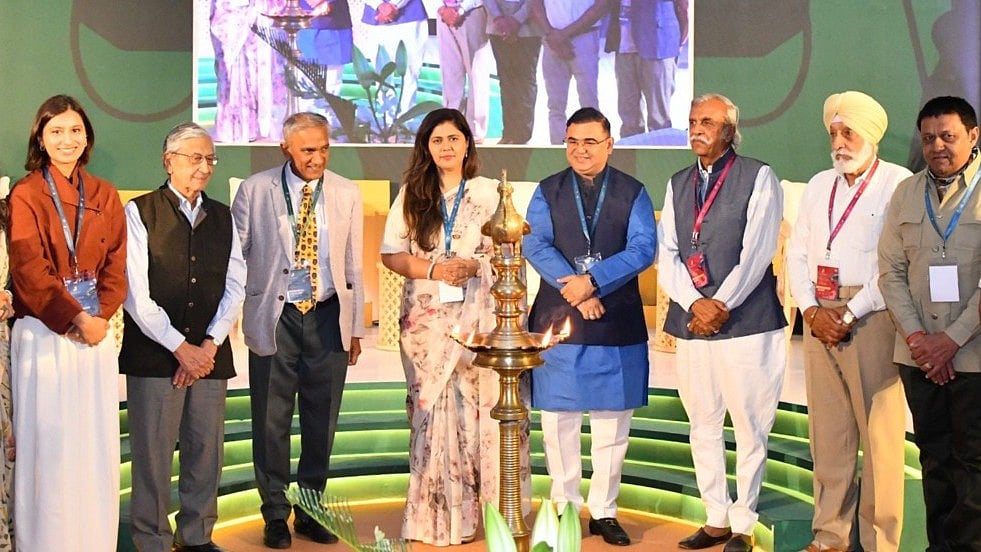
Stressing the need for a structured and collaborative approach to develop India’s equine sector, Pankaja Munde, Maharashtra Minister of Animal Husbandry, said that the state government is open to collaborating with institutions and engaging with universities to support the growth of the equine ecosystem. The announcement was made at the inauguration of The Equestrian Forum 2026, a national-level conference organised by The Equine Collective in Pune.
The forum was inaugurated by Munde and Jaykumar Rawal, Maharashtra Minister of Marketing and Protocol, in the presence of industry experts, academicians and stakeholders from across the country.
Organised by The Equine Collective under the aegis of MIT World Peace University (MIT-WPU), the forum brought together riders, breeders, veterinarians, policymakers, and industry leaders to deliberate on building a structured, sustainable, and globally competitive equine ecosystem in India.
Welcoming the gathering, Gayatri Rahul Karad, Founder of The Equine Collective and Convenor of the forum, highlighted the need for formalisation of the sector. She said, “India’s equine sector, despite being part of a global equine ecosystem valued in the hundreds of billions of dollars, remains largely unstructured, with a significant portion of the workforce lacking formal training and certification. Through The Equestrian Forum, we aim to bridge this gap by building a unified platform that supports skill development, standardisation and long-term career pathways. This is not just a conversation; it is a commitment to transforming the ecosystem and creating sustainable opportunities for thousands engaged in this sector.”
Addressing the audience, Munde emphasised the importance of innovation and collective action. Praising the initiative by Karad, Munde said, “New ideas are always challenging, but they are also very powerful. The concept of a collective approach for the equine sector is both timely and necessary. The sector has strong potential, not just in sports, but also in rural development, environment, and employment generation. We are committed to supporting initiatives related to animal welfare, scientific breeding, veterinary care, and skill development.”
.jpg)
Rawal highlighted the cultural and economic significance of the equine sector. He said, “The relationship between humans and horses is built on trust, discipline, and emotional connection. India has a rich equine heritage, and it is important to preserve and promote this while also modernising the sector. There is strong potential for growth in areas such as breeding, equine tourism, veterinary care, and training.”
Dr Rahul V Karad, Executive President, MIT-WPU, underlined the role of academia in enabling sectoral growth. He said, “Through platforms like The Equestrian Forum, MIT-WPU aims to connect education, animal welfare, sports science, and innovation to strengthen India’s equestrian ecosystem. Collaboration between academia, government, and industry is essential for sustainable growth.”

