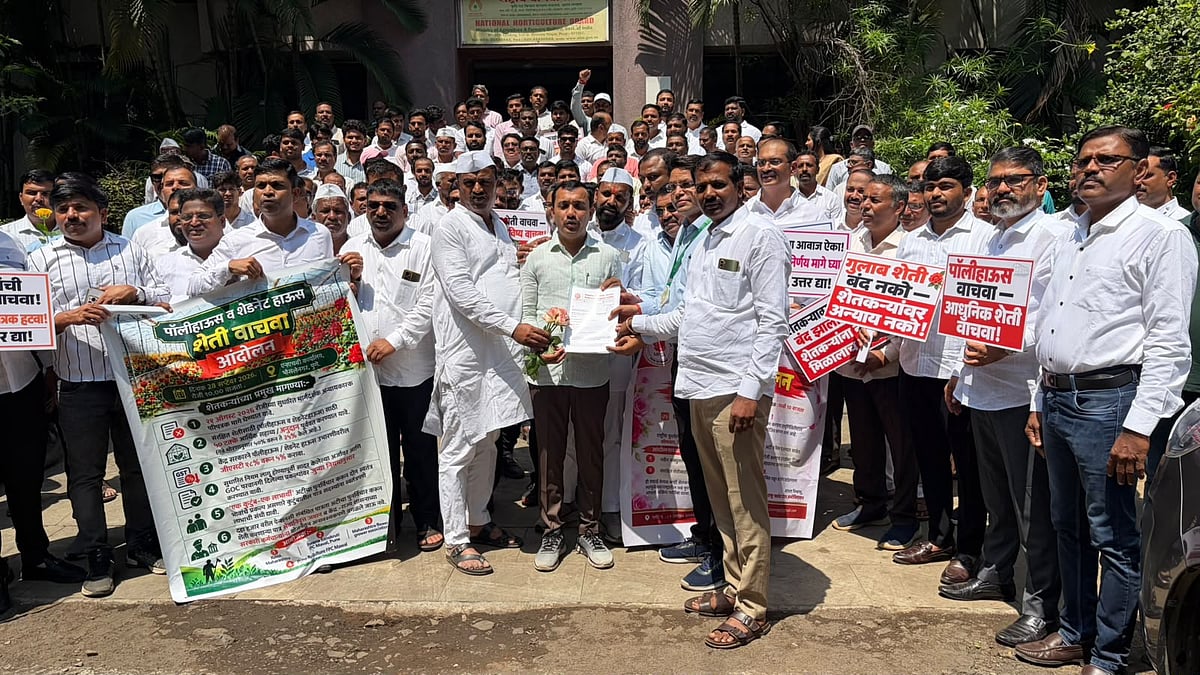
Pune: Farmers and representatives of greenhouse and shade-net house manufacturers staged a protest outside the National Horticulture Board (NHB) regional office in Pune on Monday, demanding that the subsidy for protected cultivation be restored to 50% and the restrictive conditions introduced under the revised guidelines be withdrawn.
The protest was organised by farmers associated with the Maharashtra Flower Growers Association and Pune Flower Growers Company, along with Pavana Sanskriti FPC and the Indian Greenhouse Manufacturers Association (IGMA). Around 400 farmers participated in the protest. The delegation met the NHB Deputy Director and submitted a memorandum listing their demands.
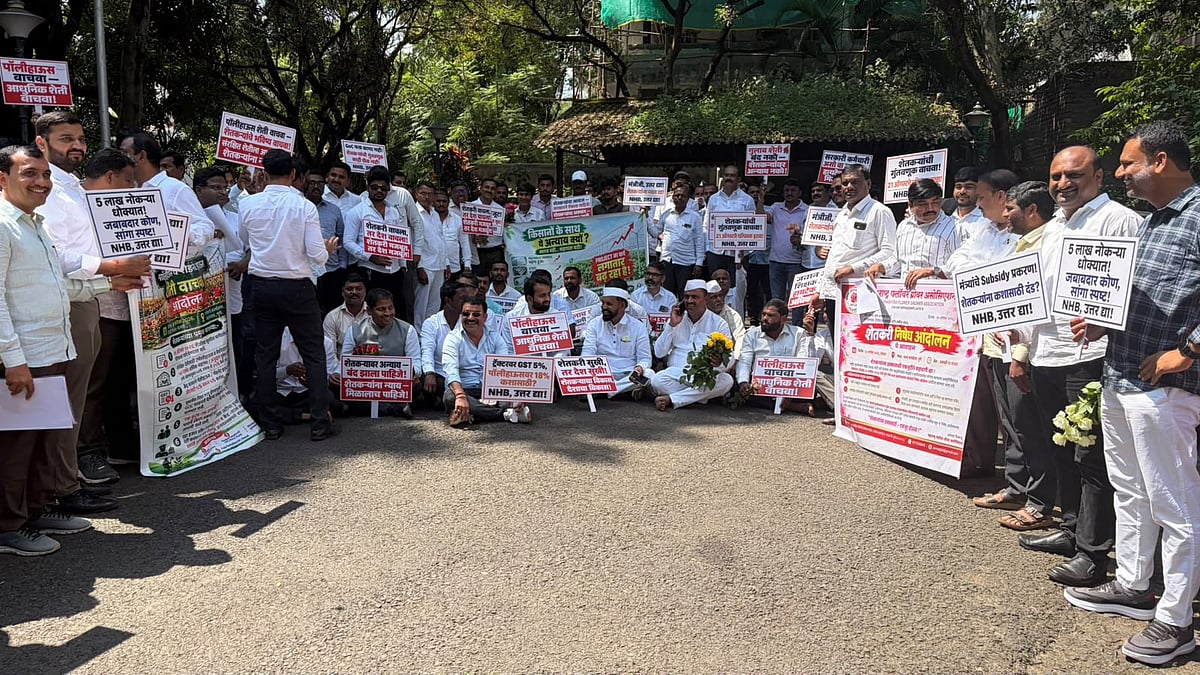
The farmers alleged that the Centre’s decision to reduce financial assistance for protected cultivation from 50% to 35%, coupled with additional eligibility conditions, has discouraged farmers from investing in polyhouses and shade-net houses. They also claimed that several previously approved subsidy cases remain pending, affecting both farmers and the greenhouse manufacturing sector.

The protest followed demonstrations held in Delhi on September 15 and 16 outside the NHB and the Ministry of Agriculture. According to the organisers, similar protests are being held across 10 states as part of a nationwide campaign seeking a rollback of the revised guidelines.
Progressive farmer Mukund Thakar said, “Farmers invest substantial amounts of their own capital, land and bank loans in protected cultivation projects and should be consulted before major policy changes are introduced.” He also demanded that projects already initiated under the earlier guidelines be protected from the financial impact of the revised policy and that pending applications be cleared at the earliest.
IGMA National Secretary Paramshwar Thor, National Joint Secretary and Maharashtra President Tejomay Ghadge, Vaibhav Khandare, Nitin Jagtap, Roshan Pingle and Jaydeep Nanaware were among those present at the protest.
Ghadge said that the effective subsidy available to farmers is further reduced because they have to pay 18% GST on materials used for construction, while farmers without GST registration cannot claim input tax credit. “The subsidy should be restored to 50% and the restrictive conditions introduced under the revised guidelines should be withdrawn,” he said.
The representatives also said they had met NCP-SP chief Sharad Pawar last week and apprised him of the issue. According to the organisers, Pawar assured them that the matter would be raised with Prime Minister Narendra Modi during his proposed visit to Baramati next month.
The farmers have demanded withdrawal of the revised guidelines issued on August 21, restoration of the 50% subsidy, reduction of GST on polyhouse and shade-net construction from 18% to 5%, and implementation of the earlier rules for applications submitted before the revised guidelines came into force.
They have also sought reconsideration of the “one family-one beneficiary” condition to allow eligible members of families with separate projects to avail benefits independently. Another demand is to reconsider the pension-related eligibility condition that excludes farmers receiving pensions above ₹10,000, particularly retired personnel and government employees who are actively engaged in farming.

