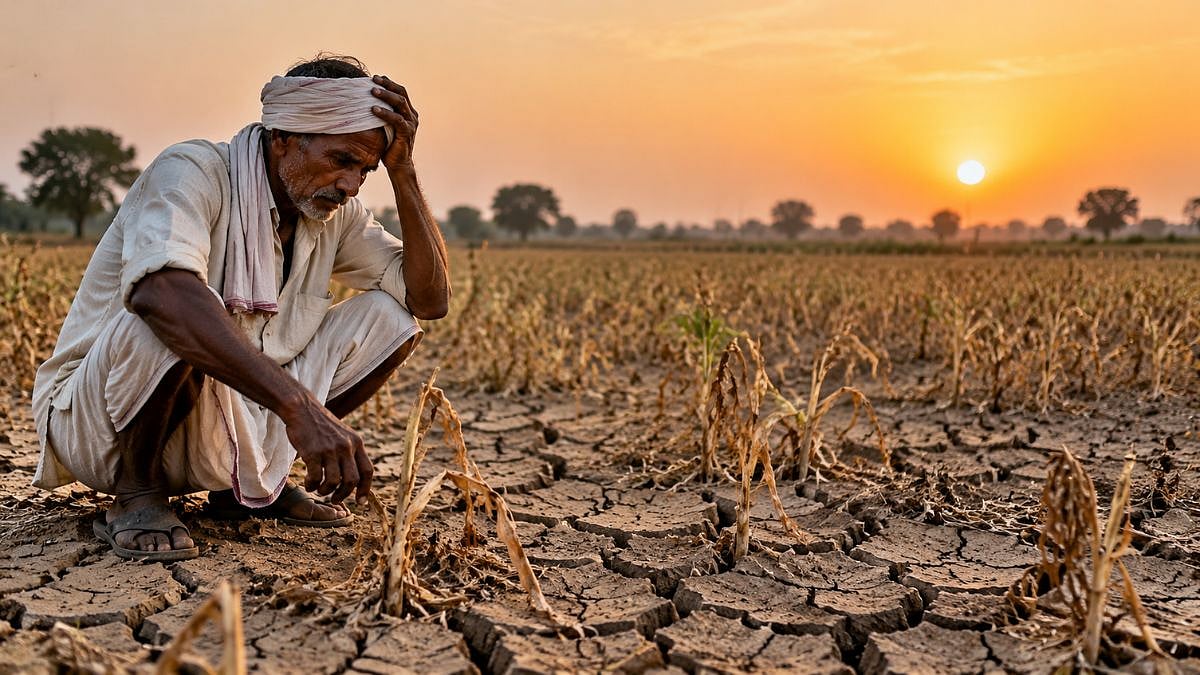
Pune: The Pune district administration has started an assessment of crop losses across eight drought-affected tehsils, with officials asked to complete the process by October 8. The exercise is important for farmers waiting for financial assistance and other government relief. The drought-hit tehsils are Bhor, Velhe, Daund, Indapur, Purandar, Baramati, Shirur and Khed.
Pune District Collector Jitendra Dudi said joint teams from the Revenue, Agriculture and Rural Development departments have been formed to conduct the crop-loss assessments, known as panchnamas. The teams have also been given training at the tehsil level. The administration wants to complete the exercise quickly and submit the report so that relief can be provided to affected farmers. The assessment covers around 1.25 lakh hectares of kharif crops across the eight tehsils.

Uneven rainfall leaves farmers in distress
The drought situation has emerged despite Pune district recording decent overall rainfall this monsoon. Dudi said rainfall was highly uneven across the district. Some areas received heavy rain within a short period, while others faced long dry spells.
The administration’s assessment is based on rainfall and dry-spell conditions in individual tehsils rather than the district’s overall rainfall figures. Across Maharashtra, 265 of the state’s 358 tehsils have been declared drought-affected. The eight affected tehsils in Pune are part of this list.
The drought declaration followed conditions including rainfall deficiency and prolonged dry spells in the affected areas.

October 8 deadline for panchnamas
The district administration has directed all departments involved in the exercise to complete the panchnamas by October 8. Dudi said the aim is to submit the assessment report immediately after the field-level exercise. This will allow the government to process financial assistance and other concessions for farmers without delay.
However, the large area to be covered has put pressure on the administration. Reports have also highlighted staff shortages during the assessment exercise, with agriculture officials having to cover multiple villages. The administration will therefore have to complete assessments across thousands of farms within a short period.
Water planning begins amid El Niño forecast
The drought situation has also raised concerns about water availability in the coming months. Dudi said water planning had begun as early as July after the meteorological department’s forecasts were reviewed.

At present, major dams in Pune district hold around 65% to 90% of their storage capacity. However, the administration is not relying only on current water levels. The Water Resources Department has been directed to plan water use carefully until the next monsoon, especially in view of the forecast of El Niño conditions.
The administration is also keeping a watch on drinking-water availability in villages and settlements. Where there is a severe shortage of drinking water, tankers will be deployed immediately after receiving a request, Dudi said.
Farmers await relief
For farmers in the eight affected tehsils, the immediate concern is crop damage and the availability of financial support. The completion of the panchnamas by October 8 is therefore a key step before relief can reach affected farmers.
The administration has said that the assessment will be completed on priority so that the damage report can be sent to the government and assistance can be released as early as possible.

