
Pune District Court on Saturday remanded Siddhant Panchange, accused of assaulting Jai Maharashtra journalist Nikhil Sukre during the ongoing Maharashtra Public Service Commission (MPSC) agitation in Pune, to 14 days of judicial custody.
Police Custody Ends
Panchange was produced before the court on Saturday after he was earlier granted one-day police custody on Friday. After hearing the matter, the court remanded him to judicial custody (MCR) for 14 days.
According to police, a case has been registered against Panchange under Sections 118(1), 296, 352 and 351(2) of the Bharatiya Nyaya Sanhita (BNS).
Journalist Protection Law Applied
Police have also invoked Section 4 of the Maharashtra Media Persons and Media Institutions (Prevention of Violence and Damage or Loss to Property) Act, 2017, after verifying evidence establishing that Sukre was working as a journalist at the time of the incident.
The case is being investigated by the Vishrambaug police. Further investigation will be conducted under the supervision of Anuja Deshmane, Assistant Commissioner of Police, Vishrambaug Division.
Speaking to The Free Press Journal, Sukre said attacks on journalists while they are performing their professional duties were a serious concern and that such incidents affect the freedom and safety of the press.
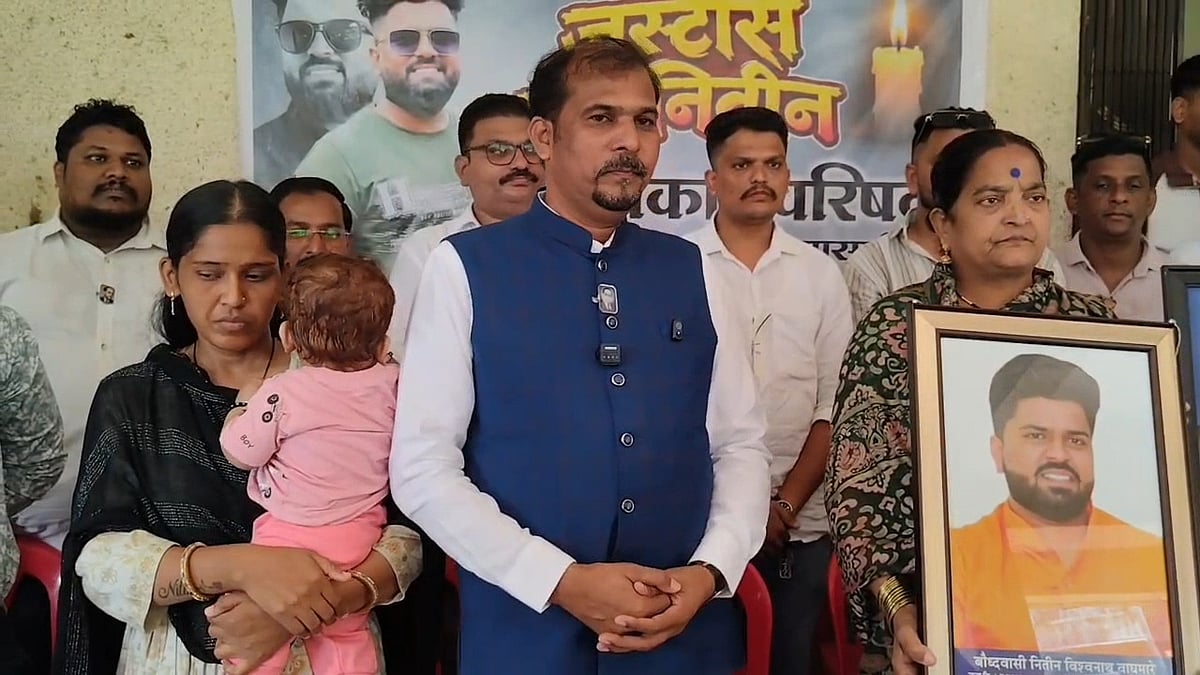
He said, “Attacks on journalists and threats to their physical safety are a serious matter of concern. When a journalist is assaulted while performing his duty, it is not just an attack on an individual but also an attack on the Fourth Estate of democracy. This is not about me simply because it happened to me, such incidents should not happen to any journalist. The provisions of the Journalist Protection Act must be strictly followed, and the law must ensure that appropriate action is taken against those responsible.”
What is the Journalist Protection Act?
The Maharashtra Media Persons and Media Institutions (Prevention of Violence and Damage or Loss to Property) Act, 2017, commonly referred to as the Journalist Protection Act, was enacted to provide legal protection to media persons and media institutions against violence and damage or loss to property in connection with their professional duties. The law covers journalists and other specified media personnel and provides for criminal action in cases of violence against them.
Section 4 of the Act deals with punishment for violence against media persons and damage or loss to property belonging to media persons or media institutions. The legislation is intended to ensure that journalists can carry out their professional responsibilities without facing physical attacks or intimidation. It also provides a specific legal framework for dealing with offences against media persons, in addition to provisions under general criminal law.

