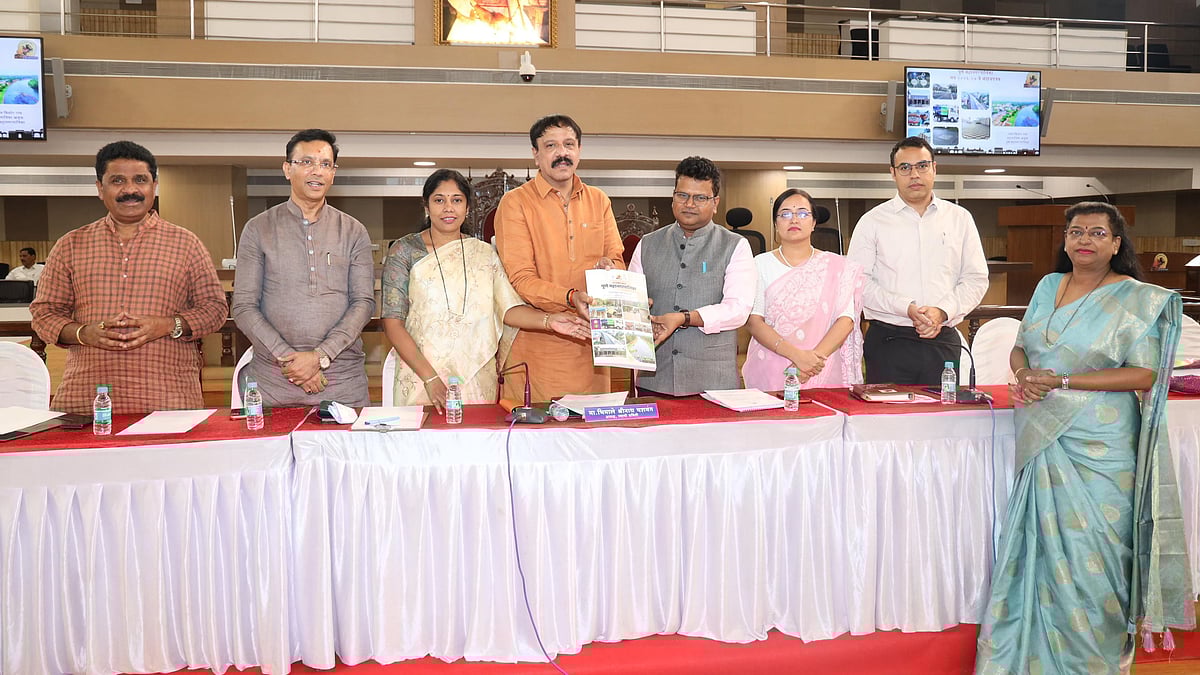
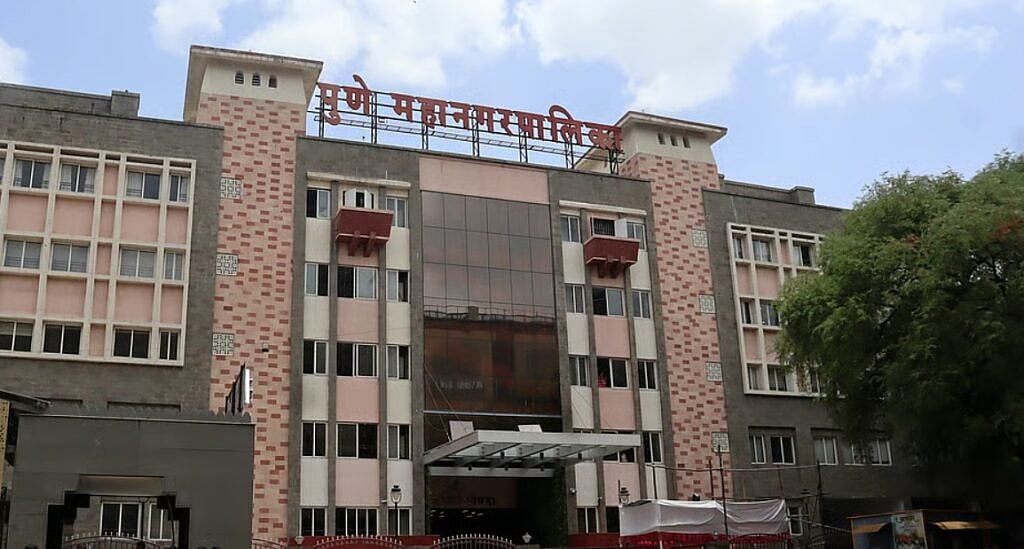
Pune Municipal Corporation (PMC) Commissioner Naval Kishore Ram on Monday presented the 2026-27 municipal budget, with a major focus on reducing water leakage, expanding supply to newly merged villages and promoting sustainable water use.
According to the budget proposal, the civic body has made a revenue provision of Rs 1,274.65 crore and a capital provision of Rs 2,077.43 crore for water supply-related works.
As Pune's population is expanding, the city is witnessing a continuous rise in water demand. However, limited water resources have made efficient water management a key priority for the civic administration.

The Water Supply Department of PMC manages the entire process from sourcing water to supplying safe drinking water to citizens. This includes pumping water from sources, treating it at purification plants, disinfecting it, distributing it through pipelines and monitoring water quality regularly.
Key water initiatives in Budget 2026-27
In the upcoming financial year, PMC plans to prioritise equitable distribution of water across the city. One of the major focuses will be on completing the ongoing common water supply scheme, which aims to reduce water leakage and utilise the saved water for supply to newly merged villages within the municipal limits.
The civic body will also finalise Detailed Project Reports (DPRs) for water supply schemes in the newly incorporated villages and implement them in phases.
To strengthen water resources, the civic body has proposed the revitalisation of lakes and the enhancement of storage capacity, which will help increase available water reserves within the city.
The corporation will also promote the reuse of treated wastewater generated from sewage treatment plants. Citizens and institutions will be encouraged to use treated water for toilet flushing, gardening and other non-potable purposes, reducing pressure on the drinking water supply.
Replacing old pipelines and improving infrastructure
Due to heavy rainfall and a prolonged monsoon this year, silt accumulation and blockages in pipelines have increased complaints of contaminated water in some areas. The budget proposes the replacement of old and damaged water pipelines.
The PMC is also planning to introduce recycling of filter backwash and clarifier water in water treatment plants to minimise water loss during purification.
In addition, solar power projects will be installed on the roofs of water purification plants and pumping stations to reduce electricity costs and promote environmentally friendly energy generation.
Progress under the common water supply scheme
The civic body has made steady progress under its ambitious water supply project. Work on 1,100 km of water pipelines and 68 storage tanks is expected to be completed by March 2026.
Under the project, nearly 1.95 lakh water meters have already been installed, while the overall scheme includes the construction of 80 storage tanks, laying of 1,800 km of pipelines and installation of 3.15 lakh water meters.
Installation of meters in areas such as Ganeshnagar and Sukhsagarnagar has already crossed 90 per cent completion.
Water revenue and billing reforms
PMC collects water charges through metered connections. The corporation collected Rs 150 crore in 2023-24 and Rs 154.46 crore in 2024-25, while Rs 109.62 crore has been recovered till January 31, 2026, in the current financial year.
As of January 2026, the city has 40,212 water connections, with outstanding dues of around Rs 100 crore. A major issue affecting billing is the high number of defective meters, with nearly 41.98 per cent of meters currently faulty.
To address this, the civic body plans to install ultrasonic and electromagnetic meters, which are expected to improve billing accuracy and reduce arrears.
Water supply expansion in newly merged villages
The PMC has appointed a consultant to implement the common water supply scheme in 34 newly merged villages. Preliminary work has begun in areas such as Bavdhan, Sus-Mhalunge and Lohegaon-Wagholi, where new storage tanks and several kilometres of pipelines will be developed.
Officials said these budgetary provisions and projects aim to strengthen the city’s water infrastructure and ensure a sustainable and equitable water supply for Pune’s growing population.

