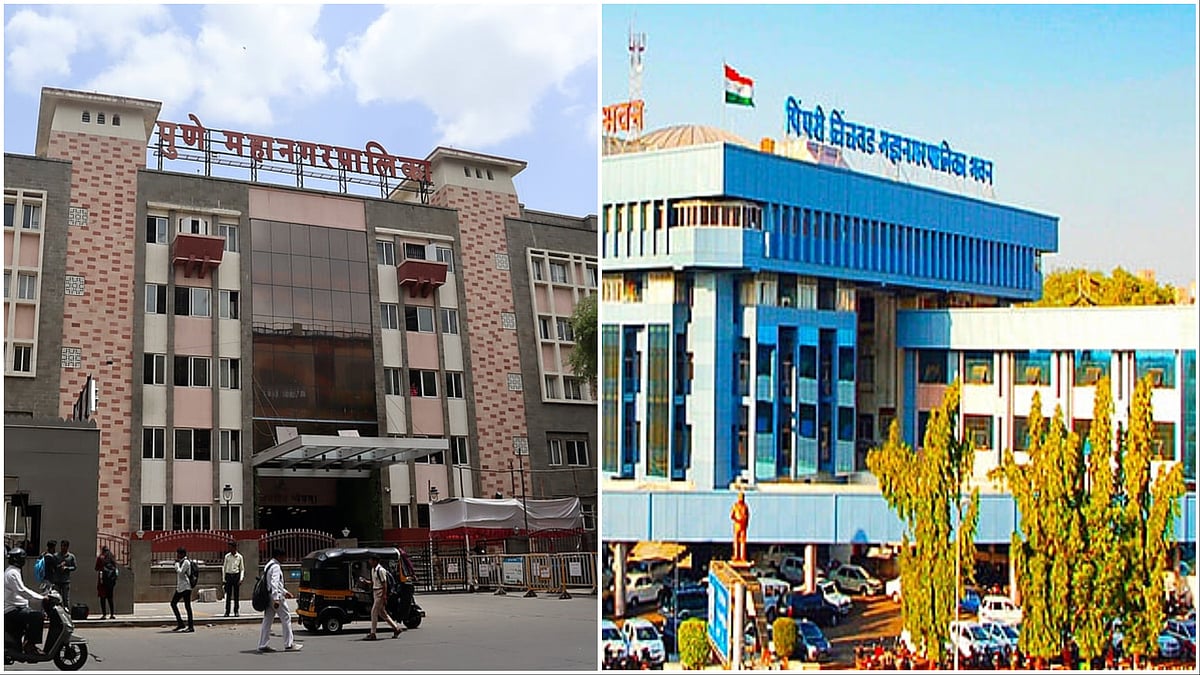
Pune: The past few weeks have witnessed intense election drama, at times surpassing the atmosphere seen during Lok Sabha and State Assembly elections, as politicians have raised the stakes for the civic polls in the district. Campaigning has gone up a notch for the Pune Municipal Corporation (PMC) and Pimpri-Chinchwad Municipal Corporation (PCMC) elections.
However, all campaigning will come to a halt on Tuesday at 5 pm, as the Maharashtra State Election Commission (SEC) has mandated a ban on all campaign-related activities aimed at influencing voters, beginning more than 24 hours before polling day. This cooling-off period will give Punekars a full day to reflect calmly on their choices, as a single vote could shape the city’s future for the next five years.
Battle lines have been drawn as allies at the state and Centre -- the Bharatiya Janata Party (BJP) and the unified Nationalist Congress Party (NCP) -- go head-to-head for control of the Pune Municipal Corporation (PMC) and Pimpri-Chinchwad Municipal Corporation (PCMC).
Both civic bodies were once bastions of the NCP, which held power for 15 years from 2002 to 2017, until the BJP wrested control in the 2017 elections by securing comfortable majorities in both corporations. However, due to the Covid-19 pandemic, reservations, and other administrative issues, elections to local bodies could not be held after the previous term ended in 2022.

It has now been nearly nine years since Punekars last voted for the PMC and PCMC, and with the upcoming elections beginning on a clean slate, both parties are eager to reclaim power.
Ajit Pawar rebelled against his uncle, Sharad Pawar, in 2023 to join the BJP-led NDA government at the Centre and became a part of the Mahayuti government as a deputy chief minister. In the subsequent Lok Sabha and state assembly elections, he contested alongside the BJP against his uncle, whose faction remained part of the Maha Vikas Aghadi (MVA).
However, as the civic elections were announced, the political equations took an unexpected turn. The BJP and the NCP initially announced a “friendly contest” in both civic bodies, citing the large number of aspirants as the reason they could not contest together. Chief Minister Devendra Fadnavis said, “We are separating for the time being because we cannot be together. To prevent a third force from winning, the BJP and the NCP will have a ‘friendly contest’ in Pune and Pimpri-Chinchwad.”
The situation then took a drastic turn, with the BJP deciding to go solo for most parts, while Ajit Pawar reunited with his uncle for the municipal corporation polls in Pune and Pimpri-Chinchwad.
The Unexpected Happens in Pune & Pimpri-Chinchwad
The unexpected soon began unfolding in Pune and Pimpri-Chinchwad as local leaders started making aggressive moves, disregarding both historical context and the fact that their parties remained allies at the state and national level. Incidents of aggressive poaching from rival parties, sharp criticism, and even unrealistic claims became increasingly visible, particularly in Pimpri-Chinchwad.
Ajit Pawar launched his campaign in both cities, directly targeting local BJP leaders, including Union Minister of State and Pune MP Murlidhar Mohol, Maharashtra Cabinet Minister Chandrakant Patil, and BJP MLA Mahesh Landge. These attacks quickly triggered strong counter-offensives. BJP minister Chandrashekhar Bawankule and BJP state president Ravindra Chavan came out aggressively in support of their local leaders, openly taking on Pawar himself. In response, NCP leaders from across the state also began attacking the BJP leadership.
The final straw came when Chief Minister Devendra Fadnavis, without naming Ajit Pawar, launched a sharp criticism -- marking an unprecedented moment in Maharashtra politics, as it was the first time a chief minister publicly criticised his own deputy chief minister during an election campaign.
With tensions escalating, both parties released their manifestos. The BJP promised fare concessions for women on Pune’s metro rail and city bus services, while in Pimpri-Chinchwad, it announced proposals for a separate district and a new Lok Sabha constituency, along with several other ambitious commitments across both civic bodies. The NCP, meanwhile, promised free public transport in Pune and a daily water supply, along with a traffic-free city in Pimpri-Chinchwad, outlining an equally ambitious manifesto.
Both parties have criticised each other's manifestos and questioned their predecessors. While Ajit Pawar stuck to sarcasm, Fadnavis dismissed the NCP manifesto, saying, "One promises anything when they know they won't win.”
The Final Push
The concluding campaign rally of Chief Minister Devendra Fadnavis for the PMC elections was held at 1 pm on Tuesday at Gokhale Nagar. Meanwhile, Ajit Pawar held a press conference in Pune and also addressed a concluding campaign rally in Pimpri-Chinchwad on the same day. Both campaigns played a crucial role in shaping the final outcome.
Several last-minute developments were witnessed, as both the Chief Minister and the Deputy Chief Minister had set up their camps in Pune, despite also campaigning for municipal corporation elections in other cities across the state.
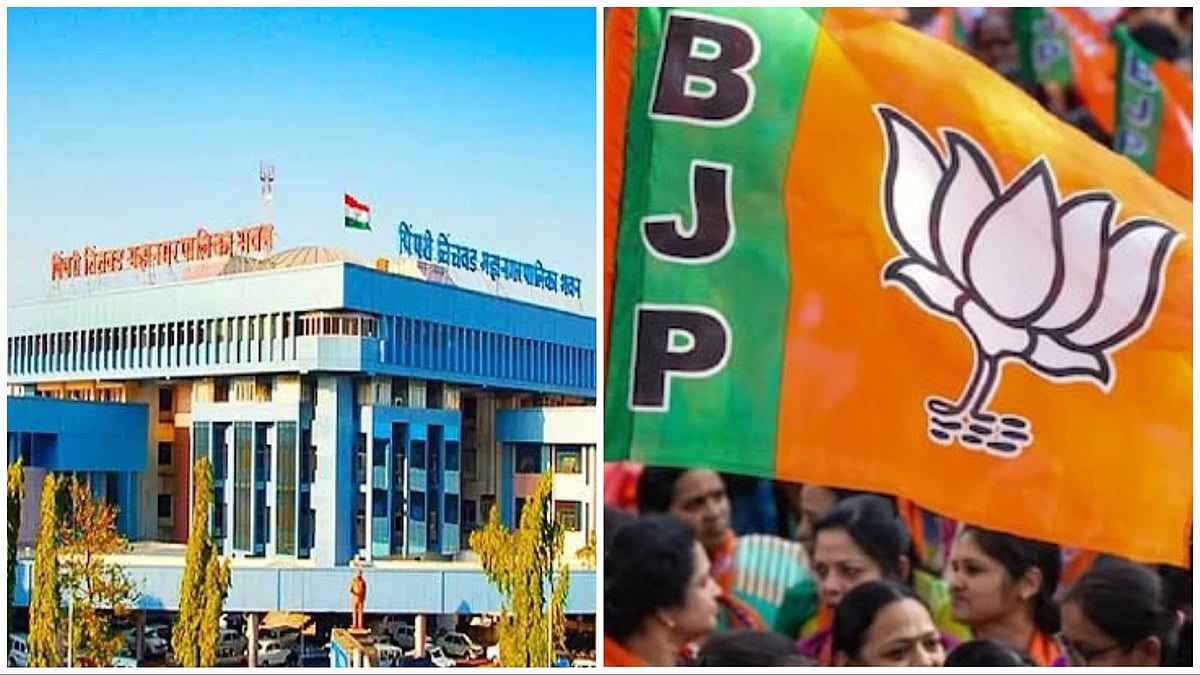
Speaking on the preparations, Pune District Collector Jitendra Dudi told ANI, "The election will take place on 15th January. All the necessary arrangements have been made. The nomination process was completed 10 days ago. Polling parties will arrive on 14th January here, and the police administration has taken all the measures regarding security arrangements."
Administrative Preparations
Meanwhile, the Pune and Pimpri-Chinchwad Police Commissionerates have ramped up security for the 2026 municipal elections, with polling on 15th January and counting on 16th January, to ensure peaceful proceedings.
In Pune, led by the Pune City Commissioner of Police Amitesh Kumar and Joint Commissioner of Police Ranjan Kumar Sharma, deployment includes four Additional Police Commissioners, 14 DCPs, 7,000 police personnel, 3,000 Home Guards, four SRPF companies, 1,500 external reinforcements, 500 motorcycle patrols, and 8 Quick Response Teams (QRTs).
In Pimpri-Chinchwad, led by Pimpri-Chinchwad Commissioner of Police Vinoy Kumar Choubey and JCP Dr Shashikant Mahavarkar, the forces comprise two Additional CPs, eight DCPs, 11 ACPs, over 4,000 police personnel, four Riot Control Squads, and 2,000 Home Guards.
Additional measures include numerous flying squads for Model Code enforcement, externment of known troublemakers across Pune and Pimpri-Chinchwad, and deposit of licensed weapons.

