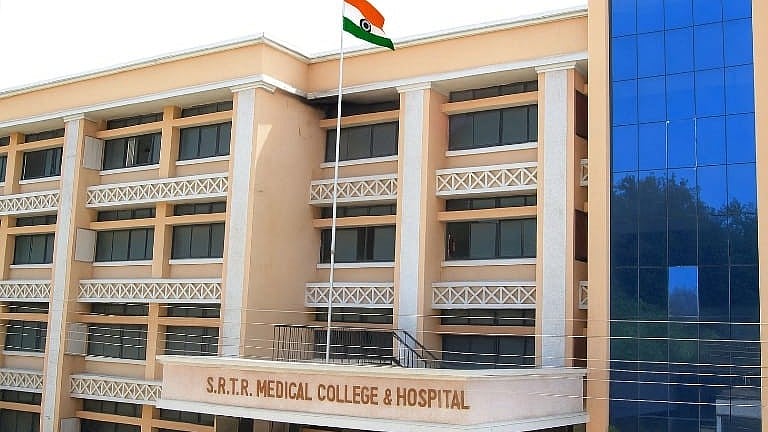
Beed: Swami Ramanand Teerth Rural Government Medical College and Hospital (SRTRGMC), Ambajogai, renowned as Asia's first rural government medical college and a lifeline for lakhs of patients from Beed, Latur, Parbhani, Dharashiv and other districts of Maharashtra, as well as neighbouring Karnataka and Telangana, is itself facing a severe staffing crisis.
While the MBBS student intake has tripled from 50 to 150 over the years, sanctioned faculty and staff positions remain based on the original 50-seat capacity, putting severe strain on both healthcare delivery and medical education.
Compounding the crisis, the state government's failure to conduct regular recruitment has left several top administrative and clinical positions being handled on an ad-hoc basis. From the Dean and Medical Superintendent to various heads of departments, key positions are currently being managed by in-charge officers, raising concerns over patient care and the quality of medical education.

Currently, Dr Shankar Dhapate serves as the in-charge Dean. The crucial post of Medical Superintendent, responsible for the day-to-day management of the hospital, is being held temporarily by Dr Rakesh Jadhav. The post of Vice-Dean is being handled on an interim basis by Dr Rajesh Kachare.
Critical clinical departments, including Obstetrics and Gynaecology, Psychiatry and Anaesthesiology, are currently headed by Assistant Professors. Key administrative positions, including Chief Administrative Officer and Deputy Superintendent, also lack permanent appointees amid prolonged delays in recruitment through the Maharashtra Public Service Commission (MPSC).
Rising patient load, dwindling oversight
When the college was established, faculty and support staff were sanctioned according to an annual intake of 50 MBBS students. Today, despite the intake rising to 150 MBBS students and the institution having 91 postgraduate (PG) students, the hospital continues to function with the outdated staffing structure.

The institution currently caters to 150 undergraduate MBBS students and 91 postgraduate students.
The absence of full-time leadership in key positions has affected oversight of sanitation, workforce deployment and the resolution of patient grievances, according to sources.
The chronic shortage of permanent professors and associate professors has also affected classroom instruction and clinical training.
With faculty numbers falling short of the mandatory standards set by the National Medical Commission (NMC), the institution faces the risk of regulatory action, including issues related to recognition of seats.
In-charge Dean Dr Shankar Dhapate said that when the college was established, posts were sanctioned according to an intake capacity of 50 MBBS seats. Even though the intake has since increased to 150, the institution continues to operate with the old and inadequate staffing pattern.
"We are continuously pursuing the matter with higher administrative authorities to fill vacant posts and sanction additional staff," he said.

