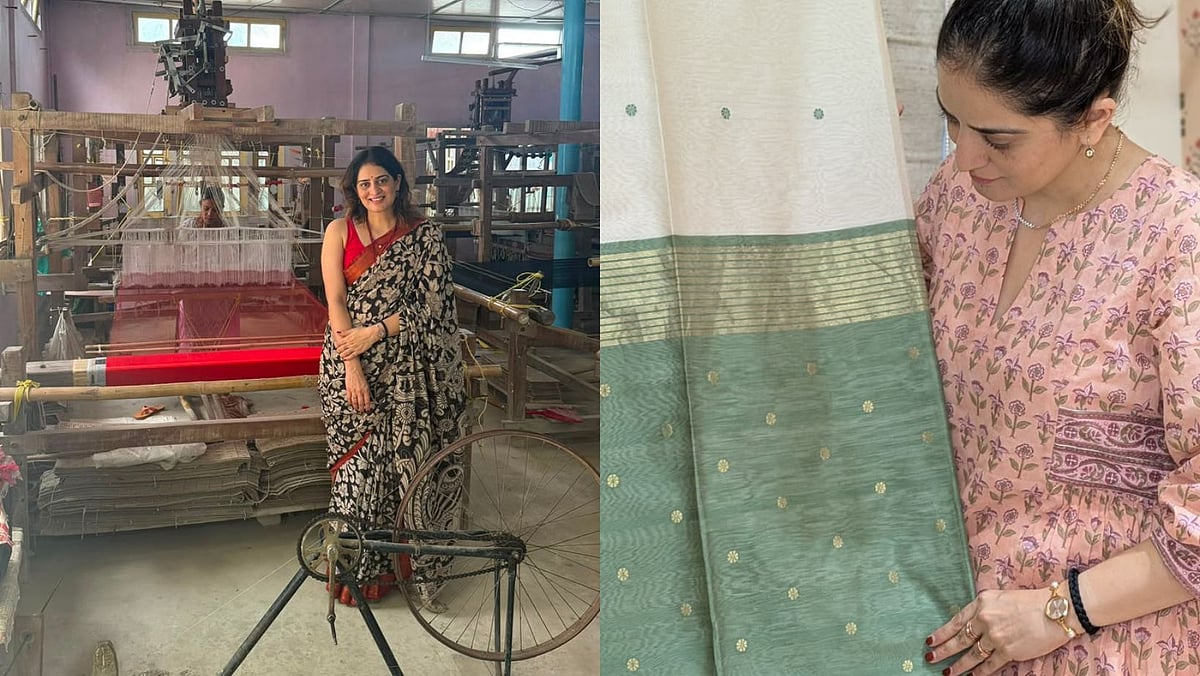
India's handloom heritage is woven with stories that stretch back centuries. From the delicate Maheshwari weaves of Madhya Pradesh to the vibrant block prints of Rajasthan and Gujarat, every region has developed a distinct textile language. Yet many of these traditions today stand at a crossroads. Machine-made fabrics, changing consumer preferences and shrinking incomes have forced many artisans to abandon family professions that have been passed down through generations.
For the artisans, the challenge is not a lack of skill but a lack of sustained demand. Without regular work, many weavers and block printers are compelled to seek other livelihoods, taking with them techniques that may never be revived.
Bridging this gap between traditional craftsmanship and contemporary consumers is Pune-based designer Preeti Pawar, who has spent more than two decades working directly with weavers and block printers across India. Rather than treating handcrafted textiles as niche products, she incorporates them into clothing that appeals to modern lifestyles, creating a steady demand for artisans' work while preserving the authenticity of their craft.
Her collaborations extend to weaving communities in Madhya Pradesh, Tamil Nadu, Karnataka and Maharashtra, as well as traditional hand block printers from Rajasthan, Gujarat and Andhra Pradesh. Every garment created through these partnerships supports not only individual artisans but also the survival of techniques that are increasingly becoming rare.
For Preeti, preserving textiles is about much more than fashion. Having also trained as a psychologist, she believes clothing reflects identity and confidence. That perspective encourages a slower, more thoughtful approach to design, where handcrafted fabrics are valued not merely for their appearance but for the stories and human effort they embody.
Her commitment to sustainability also complements this philosophy. Through workshops with design students, she promotes upcycling and zero-waste practices, encouraging young designers to view discarded fabric not as waste but as a resource. Simple projects, such as transforming leftover textiles into functional products, introduce future professionals to responsible design practices while reducing textile waste.
Beyond the studio, Preeti works with the Svayambhu Foundation, helping women develop tailoring skills and supporting initiatives that enable them to earn independent livelihoods. By connecting traditional craftsmanship with vocational training, she contributes to preserving skills while creating new economic opportunities.
In a world driven by mass production, India's textile traditions need more than admiration—they need people who create meaningful opportunities for artisans to continue practising their craft. Every handwoven fabric purchased, every block-printed textile appreciated, and every artisan supported helps keep a centuries-old legacy alive.
Sometimes, preserving heritage does not require building museums. Sometimes, it begins with ensuring that the hands which have woven history for generations never have to stop.
Speaking to The Free Press Journal, Preeti said, "Clothing is more than aesthetic; it is an extension of identity, emotion, and internal well-being. I believe garments should not merely look good but also make the wearer feel comfortable, confident and connected to their personality."
Writer and columnist Shefali Vaidya, who has been associated with Preeti's work for several years, says the designer's strength lies in understanding people as much as fabrics. "She has been my designer for almost eight years now. She is my go-to person for all my outfits. I love her design sensibility, her finishing and her attention to detail. She understands each client's needs and sense of aesthetics and suggests designs accordingly," Vaidya said.

