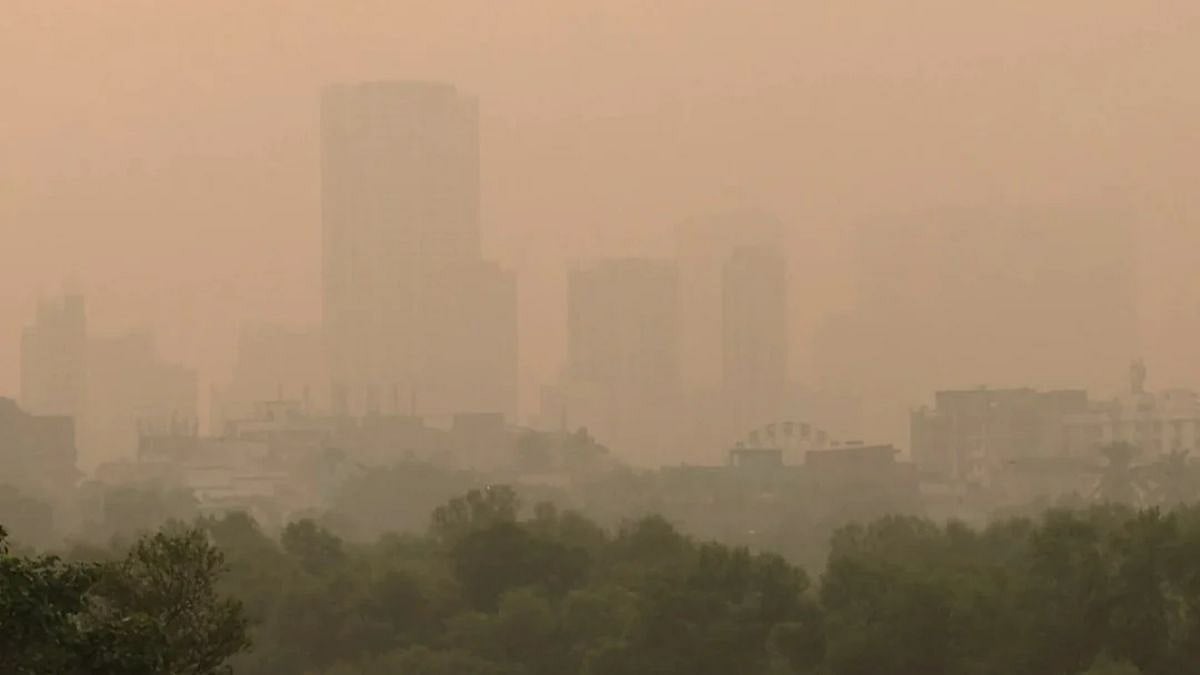
Mumbai: While Mumbai’s post-Diwali air was relatively cleaner this time as compared to previous years, the lower figures are not cause for celebration just yet and must be seen in context, environmental experts told the Free Press Journal.
A day after Diwali, Mumbai recorded an average air quality in the “moderate” category at 172 at 4 pm on Monday. The comparable figure from 2025 for the city was an air quality index of 211 – in the poor category – on October 21, the day after Diwali last year.
Even air quality in the “moderate” category can cause discomfort to those with lung diseases such as asthma, as well as those with heart disease, as per the Central Pollution Control Board.

'PM2.5 Data Matters Most'
Nevertheless, the CPCB’s data on air quality does not mean that there is no cause for worry, noted Sumaira Abdulali, environmental activist and convenor of non-governmental organisation Awaaz Foundation.
“What matters most for human health is PM2.5 data, as that is the particulate matter that gets lodged in the lungs most easily,” Abdulali told the Free Press Journal. “The air quality index is an average of components that don’t necessarily have a lot to do with each other. A comparison of PM2.5 figures of this year as against those of last year would be more instructive.”
PM2.5 refers to fine particulate matter with a diameter of 2.5 micrometres or less, or about 30 times smaller than the width of a human hair. Such particles can be easily breathed into the lungs and into the bloodstream, making them more dangerous to human health.
The monitoring station run by the Maharashtra Pollution Control Board at the Bandra-Kurla complex recorded an air quality of 181, in the “moderate” category at 6.05 pm on Tuesday. However, a closer look reveals that the maximum PM2.5 levels were recorded at 466, while the minimum figure was recorded at 37.
The World Health Organization recommends that 24-hour average exposure to PM2.5 should not exceed 15 micrograms per cubic metre.
Other Cities In Maharashtra
Even as Mumbai recorded relatively cleaner post-Diwali air this year, pollution levels in other major cities in Maharashtra rose significantly this year as compared to the post-Diwali period last year.
The most striking jump was in Pimpri Chinchwad, where the pollution was over two times that of last year. The city recorded an air quality index in the “very poor” category at 301 this year, as compared to a figure in the “moderate” category at 137 on October 21 last year. In Nagpur as well, the AQI level was recorded at 268 this year, as against 164 last year.
Experts attributed the lower readings in Mumbai this year on Diwali day to a strong sea breeze, among other factors.
While Mumbai’s coastal location provides an advantage in terms of combating air pollution, other factors need to be weighed in as well.
A member of a government-funded research organisation, who asked not to be named, told the Free Press Journal: “Mumbai’s topography is such that the landmass rises suddenly from the sea level, as compared to, say, some places in coastal Gujarat. As a result, pollutants do not dissipate as quickly in Mumbai as in some other coastal areas. This, combined with the effect of firecrackers, means that pollution remains in place.”
Abdulali acknowledged that awareness about the harms of bursting firecrackers has increased in Mumbai, but maintained that it is not enough. “Mumbai has to lead the way for other cities in the state and across the country,” she said. “In any case, we need more accurate data about the air that the citizens of the metropolis are breathing.”


