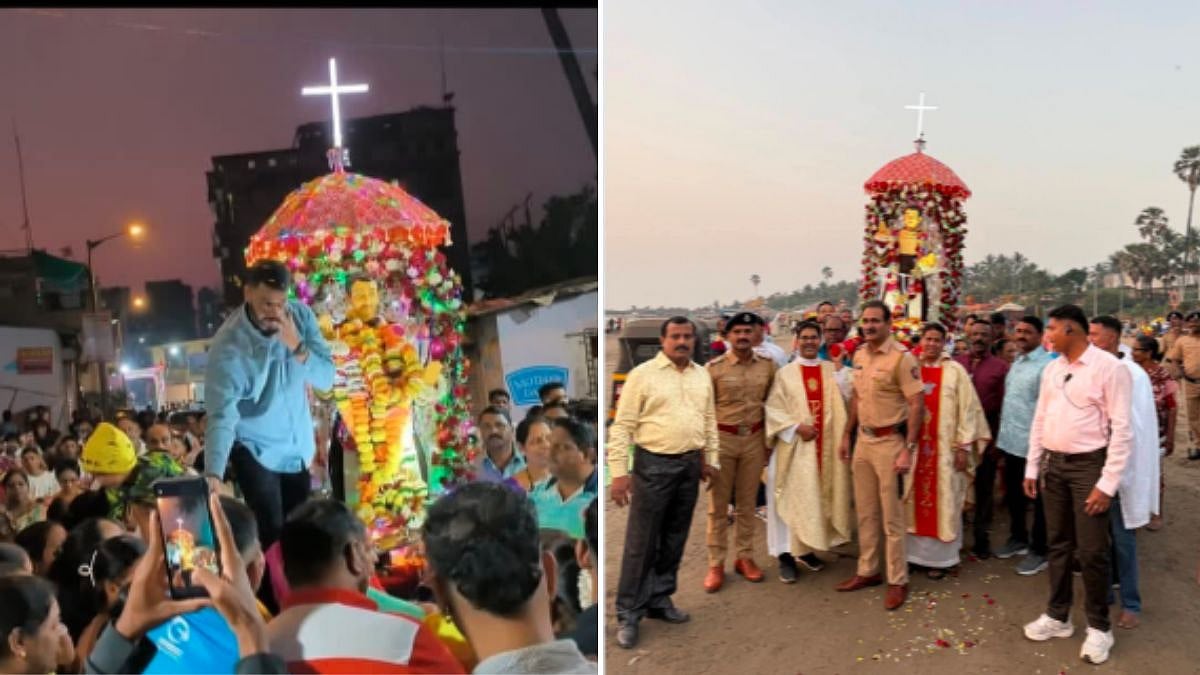
Mumbai: Two four-century-old shrines—a church dedicated to St. Gonsalo Garcia, the first Roman Catholic saint from India, inside the historical Vasai Fort, and the St. Bonaventure Church at Erangal —celebrated their annual feast days on Sunday.
Vasai Fort celebration
Hundreds of worshippers attended the religious services at the partially ruined Church of the Holy Name, one of the seven built by different Roman Catholic orders, including the Franciscans and Jesuits, inside the Vasai Fort. Father Peter Fernandez presided over the celebration. The locals refer to the feast and the fair around it as 'Killa Cha Sann'.
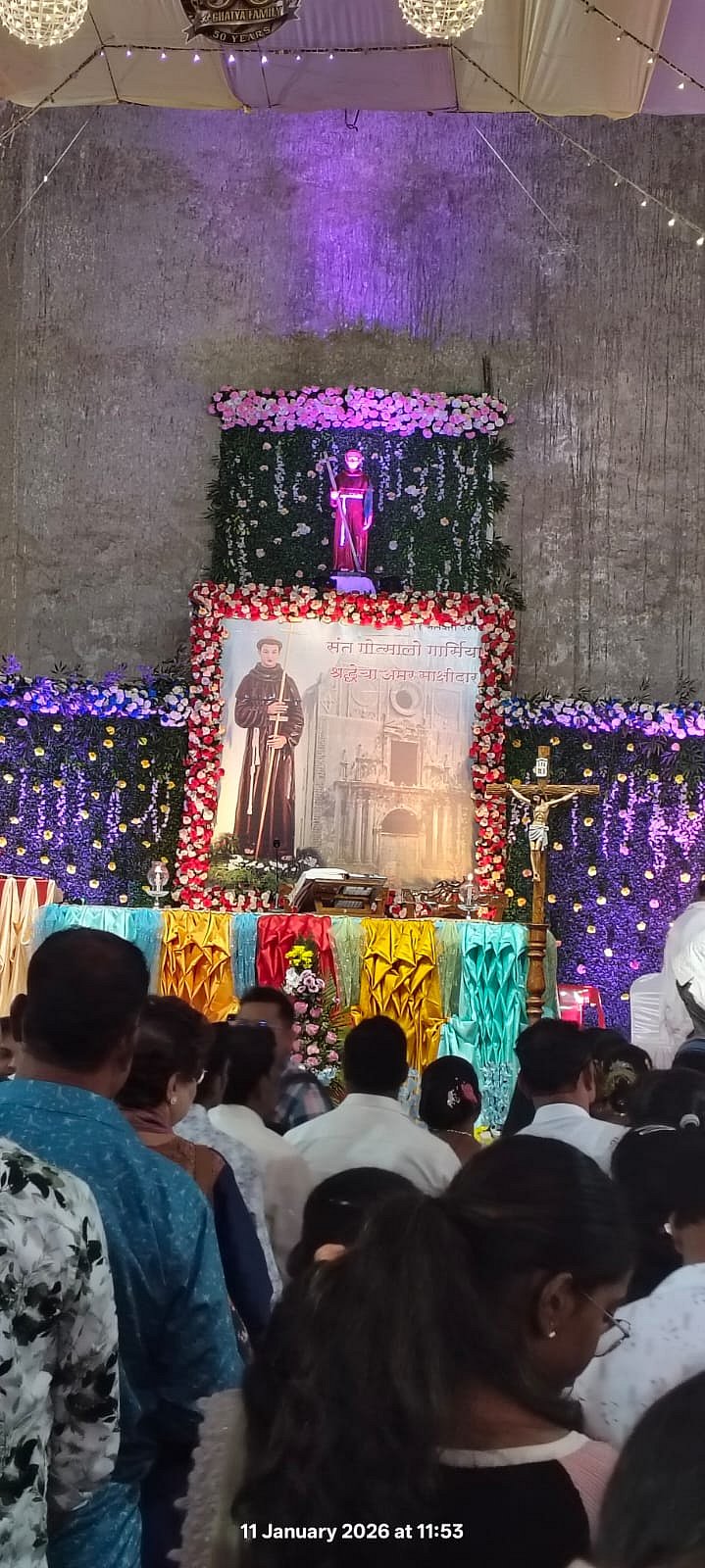
St. Gonsalo Garcia (1557–1597) was born in Vasai to a Portuguese father and an Indian mother. He spent his childhood learning in the college that was attached to the church. He is recognised as the patron saint of the Diocese of Vasai.
Priest presides
Father Caesar Dabre, a priest in the Vasai Diocese, said that Garcia studied to be a priest but was not ordained as one. "He became a businessman but later joined priests in their religious missions in East Asia. He learned Japanese and started teaching catechism as a Franciscan Brother," said Dabre.
In Japan, Garcia was among 26 people accused of sedition by the local administration. They were crucified in Nagasaki on February 5, 1597. He was declared a saint by the Vatican in 1862, becoming the first Indian Catholic saint.
Local participation
James Thomas Fernandes, global culture coordinator and Vasai head of Mobai Gaothan Panchayat, a community organisation representing Mumbai's native Catholics, said that the Vasai Fort is maintained by the Archaeological Survey of India, but locals are allowed to hold a religious service every Sunday. "People from outside Vasai travel to the church for the annual event," said Fernandes.

Thousands of worshippers also gathered at Erangal, near Madh, on Sunday for the feast of the Church of St. Bonaventure.
Traditional observances
The church was built in 1575 by the Portuguese and destroyed during the Maratha wars in 1739. The ruins were repaired in the 1950s. Many local families continue the tradition of arriving at the church the evening before the feast. They set up enclosures to cook and sleep before waking up for the religious service.
Bosco Patel, a devotee at the church, said that in the days when there was no motorized transport, people arrived in animal carts from places like Kurla. "People from Vasai and Versova came by boat. They cook East Indian dishes such as moile and stew using different meats and vegetables like navalkol (kohlrabi). All the wadis from Madh to Erangal are occupied by pilgrims and their families who come by bus or their private vehicles, which have replaced the traditional bullock carts," said Patel.
To get details on exclusive and budget-friendly property deals in Mumbai & surrounding regions, do visit: https://budgetproperties.in/

