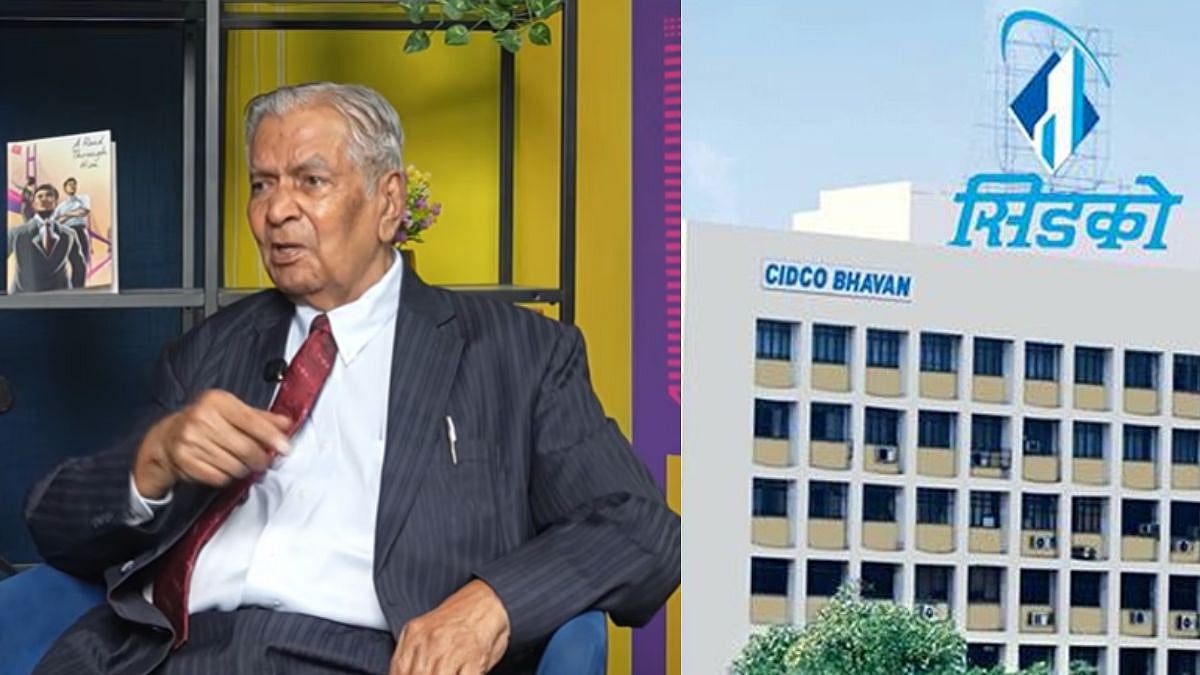
Navi Mumbai: Today, lakhs of people reside in Navi Mumbai, with areas such as Vashi, Nerul, Belapur and Panvel, which have transformed into major residential hubs. However, decades ago, the city existed only on paper, with no basic infrastructure like proper water supply or railway connectivity.
While speaking on the Indian Infra Show on PowerTrain by Aakash Bhavsar, Former CIDCO Managing Director R. C. Sinha said that the idea of Navi Mumbai was first envisioned in 1970 as a 'counter magnet' to reduce the growing pressure on Mumbai. However, despite years of planning, actual development took place only after 1990, after he took charge of CIDCO.
‘There Was No Work On Ground'
In the podcast, Sinha claimed that although foreign consultants and designers had prepared plans and models for Navi Mumbai, the city lacked basic infrastructure. "There should be roads, railway lines, water and electricity, but there was nothing on the ground,” he recalled.
Not just this, he also alleged that CIDCO itself was going through a severe financial crisis and did not even have enough money to pay employee salaries when he joined the organisation in June 1990.
How City Was Built From Scratch
The former bureaucrat said the first step towards developing Navi Mumbai was creating basic infrastructure for people to live, including water, electricity, roads, telephone connectivity, schools and hospitals.
Recalling those times, Sinha said, "New Bombay used to get electricity only for six days a week, and Thursday used to be an off day." He claimed CIDCO later coordinated with MSEB to improve the power infrastructure, after which the electricity supply became regular.
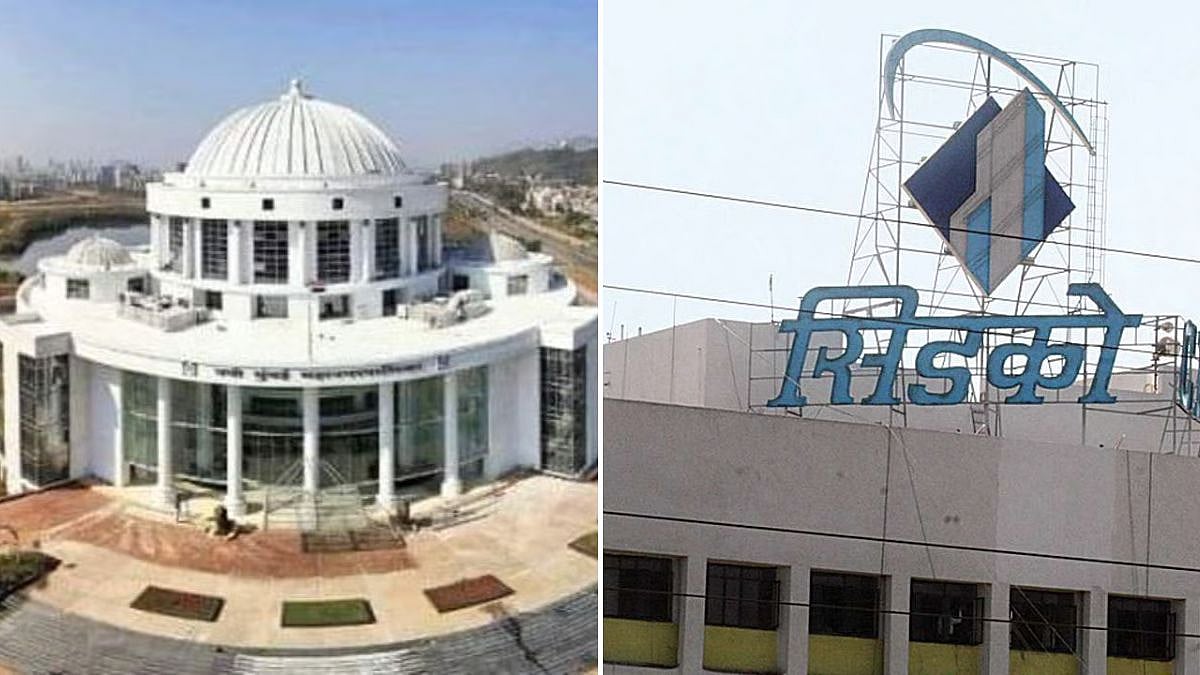
Speaking on the water supply issue, he said CIDCO also worked on it by creating a dedicated water source through the Hetawane Dam near Panvel.
Apart from this, the communication also gradually improved in the area. Sinha said that earlier, New Bombay and Mumbai had STD dial as it was a different district, but when Delhi and Ghaziabad got direct dial, he questioned the Secretary of Telephone and said, "You can give direct dial from one state to another state. Why can't you give from one district to another district?"
Railway Line That Changed Everything
The Harbour Line trains, which run crowded in today's time, also witnessed strong opposition. Many officials questioned whether enough people would even use the rail service. On this, Sinha questioned, "You are looking 25 years back, while we are looking 50 years ahead."
Speaking on the podcast, he said CIDCO went ahead with the project after an agreement with the Railway Board, adding that today, the Harbour Line has become the backbone of Navi Mumbai's growth, helping lakhs of people to travel daily. He also added, "The day the railway line came, land prices also increased in Navi Mumbai by 50 per cent."
Navi Mumbai Infra Story - Wide Roads & No Waterlogging
Sinha also called Navi Mumbai a better city than Mumbai in terms of living conditions. Unlike Mumbai's congested streets, Navi Mumbai was planned with wider roads and drainage systems designed to reduce flooding and waterlogging during the monsoon. Sinha claimed the city's drainage and water management systems were inspired by international models from Sweden.
Former IAS Officer Questions 'Mumbai 3.0'
After reflecting on Navi Mumbai's growth, Sinha also raised strong questions on the Maharashtra government's ambitious project, 'Mumbai 3.0'. He did not support the idea as he explained that Mumbai is already facing severe congestion, pollution and water shortages. "Why everything in one place? Why only in Mumbai?" he questioned, suggesting that there should be a focus on developing new metropolitan cities in states such as Madhya Pradesh, Rajasthan and Uttar Pradesh.
For this, Sinha proposed Bundelkhand in Uttar Pradesh as the next metropolitan hub due to the availability of barren land, large stretches of government wasteland, and proximity to Jhansi railway station. He also said that the region could be connected to the Delhi-Mumbai corridor through road and railway networks.
(With a special arrangement with Indian Infra Show on PowerTrain by Aakash Bhavsar)
To get details on exclusive and budget-friendly property deals in Mumbai & surrounding regions, do visit: https://budgetproperties.in/
