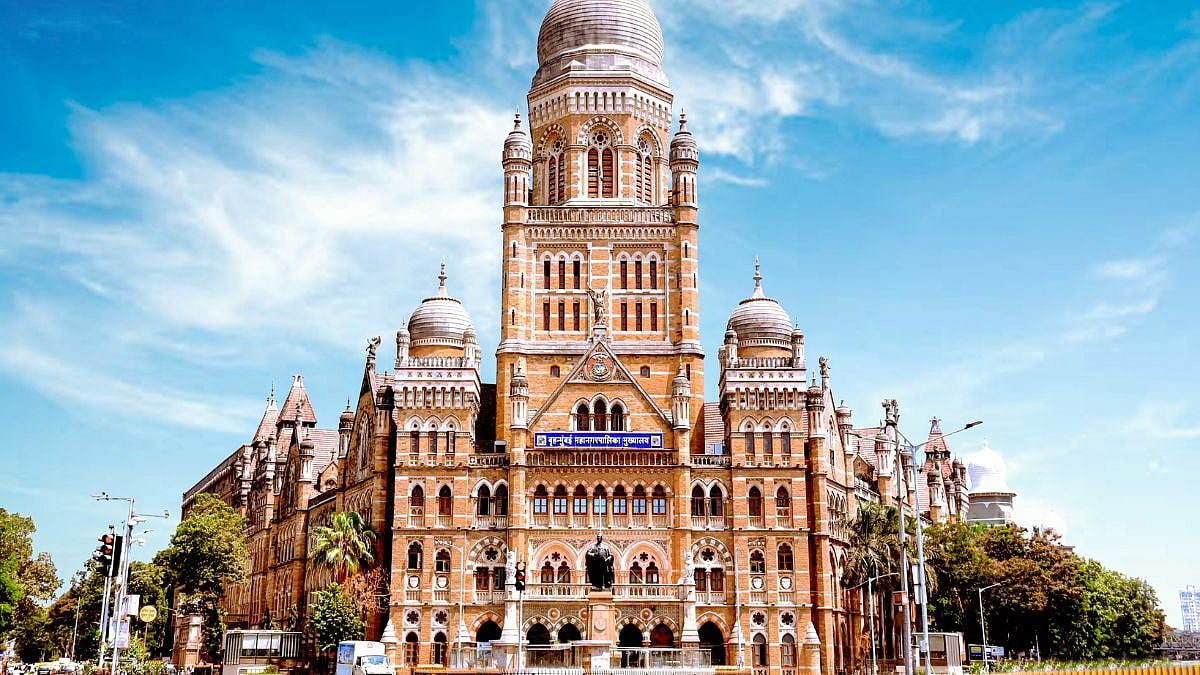
Mumbai, Dec 17: As Mumbai prepares for a new chapter in civic governance, it is worth reflecting on the BMC’s remarkable 154-year journey. From building the city’s early infrastructure to managing one of the world’s most complex urban landscapes, the corporation has been central to Mumbai’s growth, resilience and daily life.
Mumbai’s remarkable transformation from a modest colonial town into a globally recognised metropolis occurred alongside the rise and fall of the British Empire. As the city expanded rapidly in population, trade and infrastructure, the need for a structured and independent civic administration became increasingly clear.
A turning point came in 1803, when a devastating fire exposed the urgent need for urban governance, leading to reforms such as the 1807 establishment of the Court of Petty Sessions with two magistrates and a Justice of the Peace.
Mumbai’s municipal framework gradually evolved in the 19th century, laying the foundation for a structured civic institution capable of managing a rapidly growing city...
. 1845: Formation of the Town Committee
. 1858: Introduction of a tri-member commissioner system
. 1865: Establishment of a board combining a municipal body and Justices of the Peace
Birth of the Municipal Corporation.....
A landmark was reached in 1872 with the formal establishment of the Municipal Corporation of Bombay, comprising 64 members. For the first time, taxpayers were granted voting rights, marking a significant step towards democratic urban governance. The Corporation held its first meeting on September 4, 1873.
Formation of the Standing Committee....
The Standing Committee traces its origins to the Town Council, established under the 1872 Act. It consisted of 12 members—eight elected by the Corporation and four nominated by the government—and was entrusted with broad administrative and financial powers, enhancing municipal efficiency.
Expansion of voting rights.....
A landmark reform in 1922 reshaped Mumbai’s electoral system. Justices of the Peace lost their representation, and tenants paying a monthly rent of Rs 10 or more were granted voting rights, replacing the earlier taxpayer-only system and broadening civic participation.
Growth in representation....
The size of the Municipal Corporation steadily expanded to reflect Mumbai’s demographic and geographic growth:
1872: 64 members
1922: 106 members
1928: 108 members
1931: 112 members
1938: 117 members
1956: 131 members (after including suburban areas)
1968: 140 members (with single-member constituencies)
1982: 182 members
1991: 221 members
2002 onwards: 227 members, the current strength.
From Chairman to Mayor...
The city’s leadership title evolved over time: initially “Chairman”, it became “President” under the 1882 Act. In 1931–32, the title changed to “His Worship the Mayor”, and after India’s independence, British-era honorifics were dropped, simplifying the title to “Mayor”. The first Chairman was Captain George F. H. Henry, while the first Mayor was Sir J. B. Boman Behram.
A fully elected municipal body....
Until 1952, the Municipal Corporation included nominated and ex-officio members. After independence, this system was abolished, and the 1952 general elections ushered in the city’s first fully elected Municipal Corporation—a landmark achievement and a major milestone in the city’s journey towards democratic governance.
BMC’s iconic building...
In 1866, municipal offices operated from a modest building in Girgaon. The foundation stone of the current iconic Municipal Corporation building was laid by Lord Ripon on December 19, 1884. Construction began in July 1889 and was completed in July 1893 at a cost of Rs 11,19,969. Today, the building stands as a lasting symbol of Mumbai’s rich civic heritage.
Also Watch:
Key milestones...
. 1872: Formal establishment of the 64-member Municipal Corporation.
. 1957: Merger of extended suburbs into the Corporation.
. 1972: Marathi recognised as the official working language in BMC.
. 1973: Centenary celebrations of the Corporation.
. 1982: Golden Jubilee of the Mayor’s office.
. 1996: Renaming of Bombay as Mumbai.
To get details on exclusive and budget-friendly property deals in Mumbai & surrounding regions, do visit: https://budgetproperties.in/

