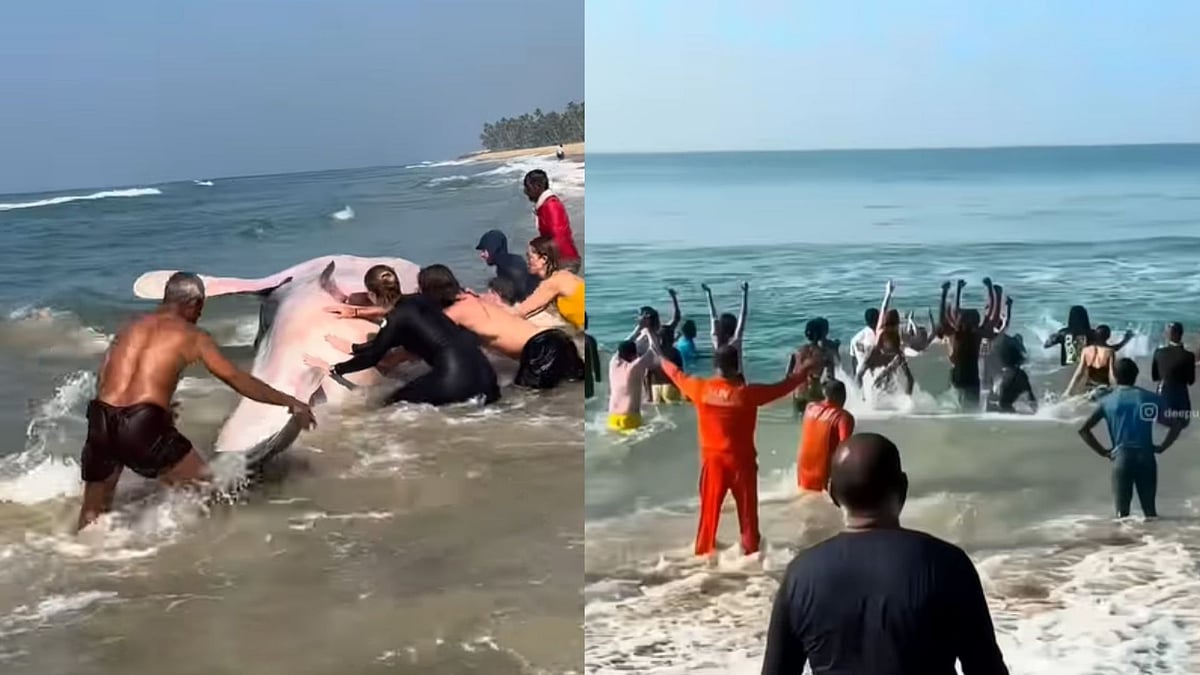
A rare early-morning sighting created both panic and unity at Kerala’s Varkala Beach when a massive whale shark was found stranded on the shore around 8 am. The gentle giant, believed to have been accidentally dragged in by a fisherman’s net, lay helpless on the sand as waves struggled to pull it back to deeper waters.
Hours-long battle to save the giant fish
What followed was an extraordinary display of teamwork. Dozens of local residents, fishermen, and tourists formed human chains, pushing the shark repeatedly into the sea. Many of them had cuts and scrapes from the shark’s rough, sandpaper-like skin, yet continued working tirelessly.
Despite their efforts, the water wasn’t deep enough for the whale shark to gain momentum, causing it to wash back ashore several times.
Volunteers injured but determined
Volunteers began bleeding from minor abrasions, but not one person stepped back. For many, saving the shark felt like a mission of compassion. Whale sharks, though enormous, are non-aggressive filter feeders and are currently listed as endangered, making the rescue attempt even more significant.
Rescue boats step in for final attempt
After more than three hours of continuous attempts, two rescue boats finally reached the shore. A rope was carefully secured around the shark’s tail, and the teams coordinated to gently tow it into deeper waters. This time, the operation succeeded, the whale shark slowly gained movement and swam away, sparking cheers across the beach.
Videos of the rescue soon flooded social media, with users applauding the bravery and humanity shown by the volunteers. One comment read, “Le shark to the family: Trust me, I visited God’s Own Country and met real humans.”
Another user said, “Incredible! Proud of every person who stepped in to help. True heroes.”
A reminder of marine conservation challenges
Whale shark strandings, while uncommon, often happen when these large creatures get entangled in fishing nets or follow prey too close to the shore. Marine experts say such incidents highlight the need for safer fishing practices and faster coastal rescue mechanisms.

