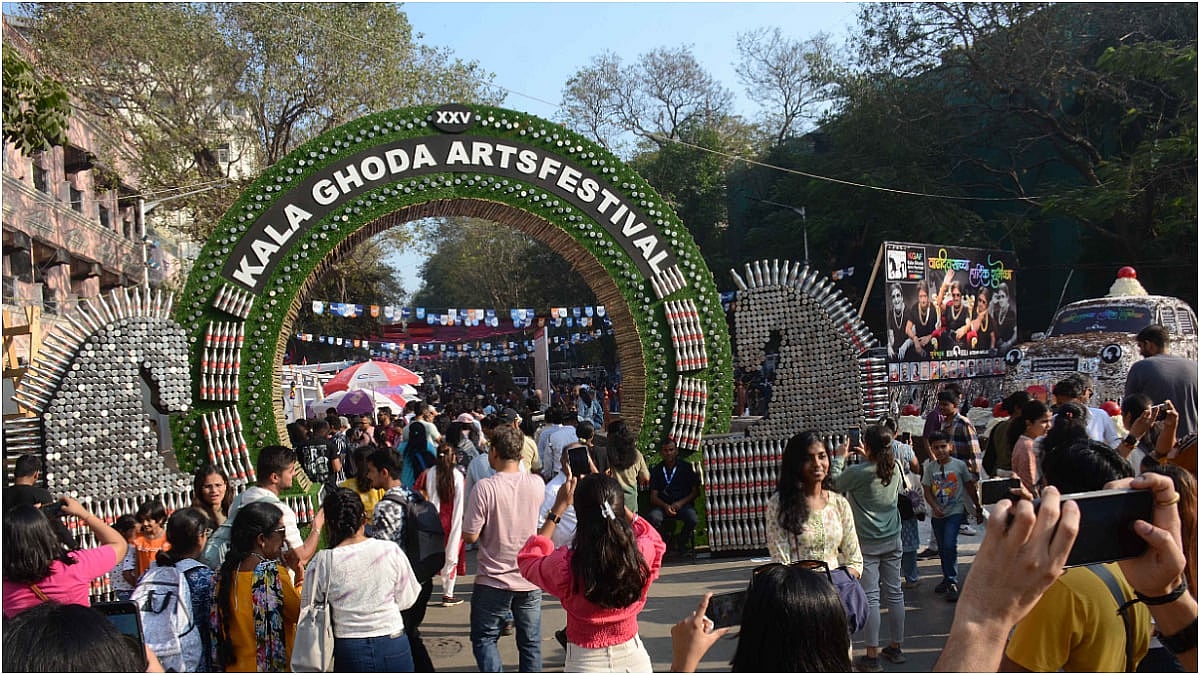
At the bustling Kala Ghoda Arts Festival, where contemporary installations often dominate attention, a quieter yet extraordinary art form has drawn collectors: rare Mysore Kalam paintings crafted using vegetable colours, hand-carved wood, and real gold.
A family legacy spanning generations
“This is Mysore Kalam art,” the exhibitor explains. “Our grandfather started this work in 1972.” What began as a family passion has now become a generational responsibility. While their roots trace back to Mysore, the family later expanded operations across India, sourcing rare artworks and preserving traditional methods.
"We buy original pieces from temple auctions, royal families, and collectors," he says. "Some works come from Mysore temples, some from royal households. These are extremely rare."
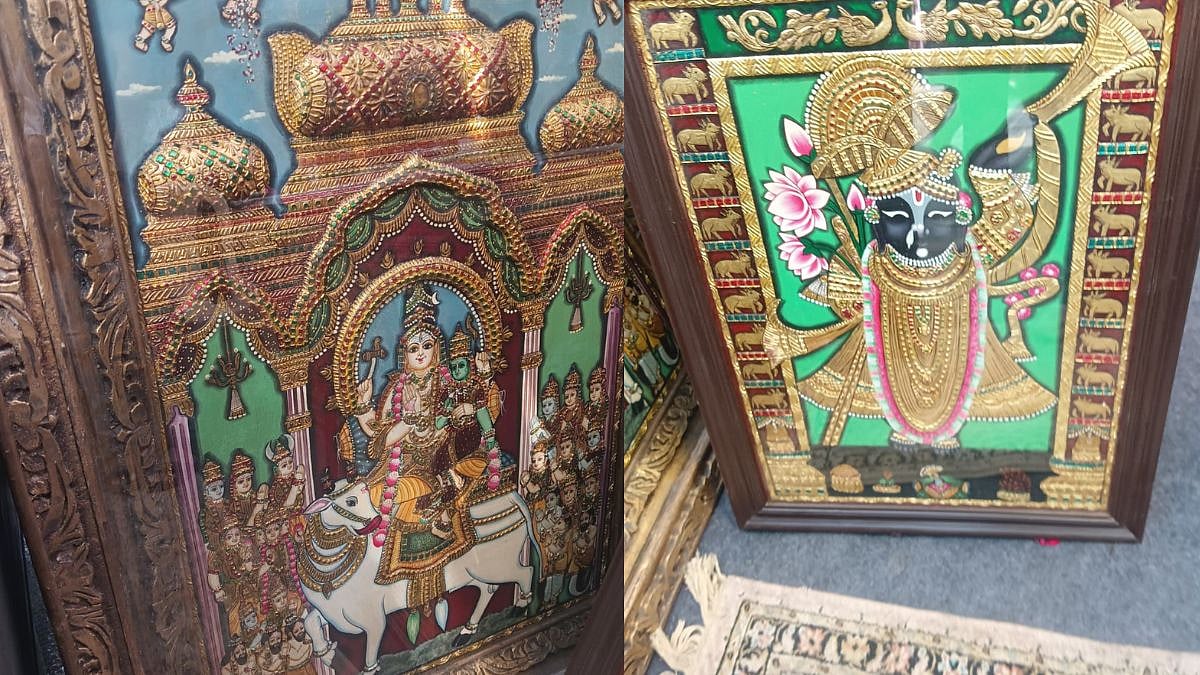
Mysore Kalam Art | FPJ/ Sunanda Singh
Paintings that are no longer made
One striking revelation is that many of the Mysore Kalam paintings on display are not newly created. “These are old pieces, some of the paintings are 40, 60, even 90 years old,” he shares. "The oldest painting here is around 90 years old, from a royal family. There were three such pieces, two of which have already been sold. This is the last one.”
The reason? The original artists no longer exist. "The next generation of artists could not continue this craft. Their handwork was never truly accepted. For the last 15 years, no original Mysore Kalam artist has been practicing this art," he explains.
What sets Mysore Kalam apart is its entirely handcrafted process. The base is solid Burma teak wood, intricately carved by hand. Over this, artists apply vegetable-based natural colours, followed by layers of 12-carat gold leaf, often mixed with silver.
This painting mastery comes with time. Even a small painting needs at least five artists to complete and takes one-and-a-half to two months. Larger works could take a full year.

