The unfortunate quote by a composer who has attained so many glories in India has compelled me to go back in time and look back at those sterling individuals who believed in serving the nation and Hindu culture through their skills and left indelible marks on India’s pluralism.
Actors
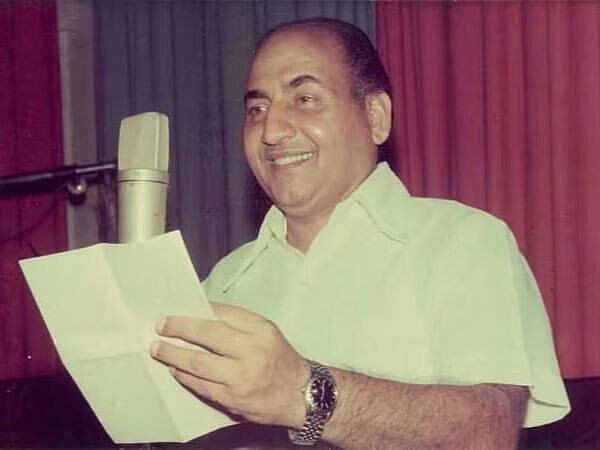
Mohammed Rafi |
Among the actors, Dilip Kumar was a trendsetter in adopting a Hindu screen names as was the convention in those British and neo-Independence times. Dilip Kumar not only enacted perennial bhajans and devotional songs in Hindi films, but along with lyricist Shakeel Badayuni, composer Naushad and singer Mohammed Rafi, formed a Muslim quartet that spun great devotional songs and Hindu ethos-suffused songs together or individually, like Madhuban mein Radhika (Kohinoor) and Insaaf ka mandir hai yeh (Amar). Outside this ambit, and again with Rafi, classics like Aana hair to aa (Naya Daur), Sukh ke sab saathi (Gopi) and O Shankar mere (Bairaag) each saw Dilip in the perfect pious mode. And Sanjay Khan produced, directed and co-scripted TV serials of great eminence, including Maharathi Karna, Jai Mahabharat and Jai Hanuman. Comedian-actor and filmmaker Mehmood was a devotee of Lord Shiva in particular and his own productions had devotionals like Nandlal Gopal daya karke (Sadhu Air Shaitan) and Jai Bholenath (Kunwara Baap).
Actresses
They enacted songs in the Hindu ethos with perfection included Madhubala (Mohe panghat pe Nandlal chhed gayo re in Mughal-E-Azam), another Shakeel-Naushad creation and Meena Kumari (Tora man darpan kehlaaye in Kaajal and Sansar se bhaage phirte ho (Chitralekha), which encompassed the full core of Hindu philosophy that the route to salvation passed through worldliness and not ascetism. With Jaago Mohan pyare (Jagte Raho), Maiya Yashoda ji tohar Kanhaiya (Aah) and Holi aayi re Kanhai (Mother India), Nargis epitomized the Hindu heroine in devotional mode. Waheeda Rehman (He rom rom mein basne wale Ram in Neel Kamal) and Saira Banu (Kanha Kanha aan padi main tere dwaar from Shagird) also never thought twice about playing such roles.
Writers
Though an ardent Muslim, writer Dr. Rahi Masoom Reza was entrusted with the screenplay and dialogues of Mahabharat by B.R. Chopra, writing it with a pure finesse that was matchless. 94 episodes, each of 45 minutes, hypnotized the nation for over a year and Chopra’s judgement at choosing him was vindicated. A prominent idol of Lord Ganesh adorns the Salim Khan home as soon as one enters. Salim Khan is a true secular and celebrates every festival from Holi, Ganesh Festival, Diwali and Christmas besides those of his own religion.
Lyricists
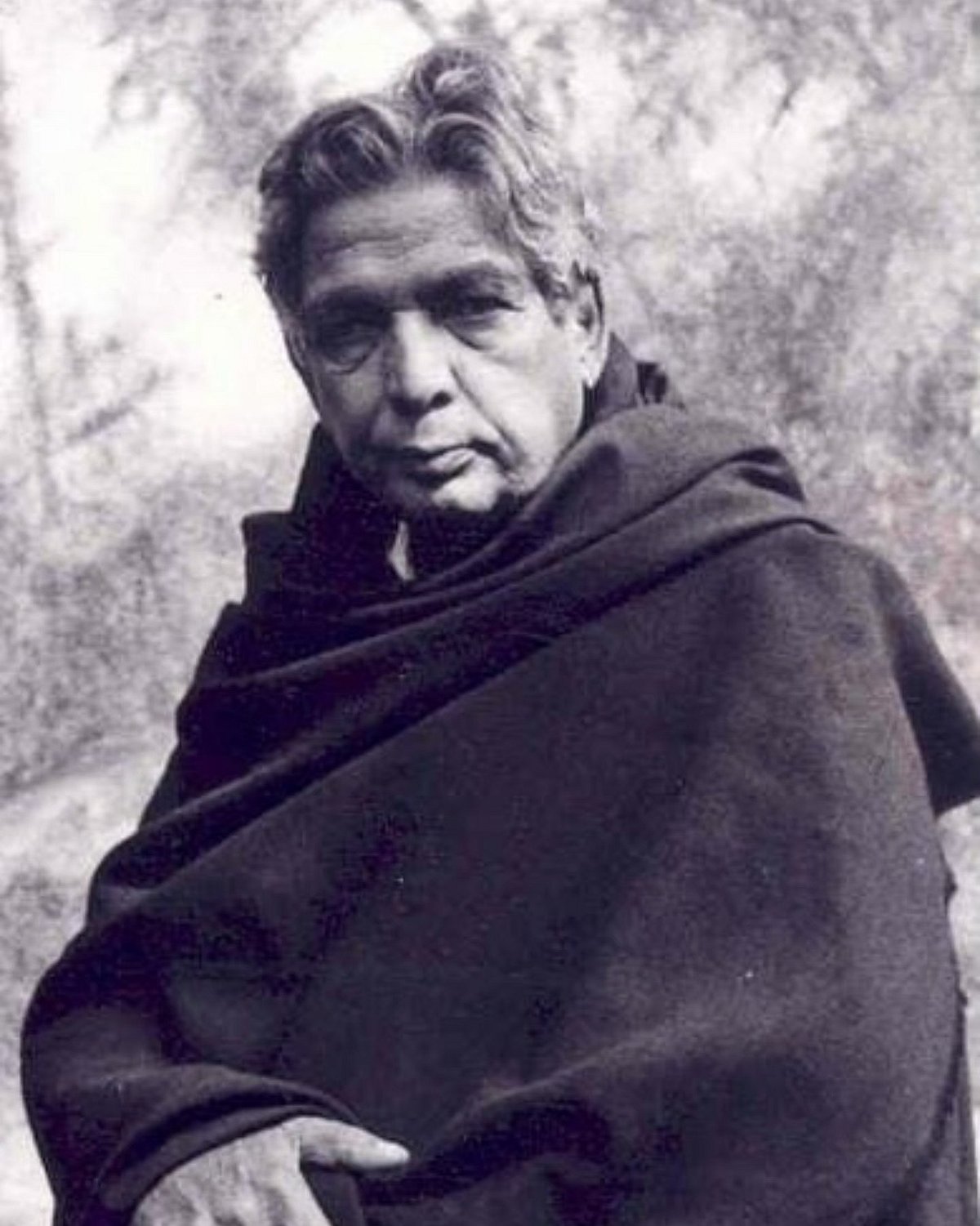
Kaifi Azmi |
A simple romantic genius, Hasrat Jaipuri passionately believed that Hindi and Urdu were “two inseparable sisters”. His first and undeclared real-life love, Radha, from his neighborhood in Jaipur, spawned his classic, Yeh mera prem patra padhkar in Sangam. That apart, he also wrote songs with a devotional tenor in Banwari re (Ek Phool Char Kante), Sapne Suhane, Kanhaiya and Mera Vachan Geeta Ki Kasam. Kaifi Azmi is known for writing the timeless Tu hi sagar hai tu hi kinara (Sankalp). When his son, cinematographer Baba Azmi, wanted to marry actress Tanvi Kiran (yesteryear actress Usha Kiran’s daughter) and faced objection from the actress’ family, the poet visited them and even promised a temple in his house so that Tanvi could continue practising her faith!
The peerless lyricist, Majrooh Sultanpuri, for whom situation was the true God, wrote evergreen bhajans like Dukhi jano ke pita tumhi ho (Badi Bahen) and Kaahe apnon ke kaam nahin aaye tu (Raampur Ka Lakshman), Kanha Kanha aan padi (Shagird), Jai Bholenath jai ho prabhu (Kunwara Baap) among many more.
Naushad had informed me that Shakeel Badayuni was the son of a moulvi, who had educated him to understood that all religions led to the same God and that he must study them all. From here came the classic Shakeel depth in bhajans as well as in songs like Mohe panghat pe Nandlal chhed gayo re (Mughal-E-Azam).
Sahir Ludhianvi ranked next to Shakeel as a lyricist who excelled in writing songs with a Hindu ethos. Prabhu tero naam and Allah tero naam (Hum Dono), Aana hai to aa (Naya Daur), Tora man darpan (Kaajal) and of course the songs of Chitralekha adorned his oeuvre, and as per lyricist Indeevar, Sahir came to the latter to check whether his lyrics for the last film had any deviation from what was needed in language or in thought. “I told him that they were perfect!” Indeevar told me. Even the small-time Tajdar Taj penned that masterful melody, Jai jai jai mata Jagadambe maa in Bahaar Aane Tak.
Singers
It is truly superfluous to mention the mammoth contribution Mohammed Rafi made to devotional songs across genres, timeframes, composers and more. The world knows that Rafi (alongside Manna Dey) sang the maximum timeless songs in this genre and made them achieve that immortal quality, from the 1940s to the end of his life. Even outside cinema, there were many immortal compositions.
Talat Mahmood sang just a few such songs, and among them the non-film Jaago jaago Devaki Nandan is loved to this day. Yesudas, a true Indian, sang devotionals in praise of Lord Ram, Lord Krishna, Swami Ayyappa and more both in films and outside, in multiple languages apart from Christian devotionals. Shyam rang ranga re (Apne Paraye) and Bole to bansuri kahin (Sawan Ko Aane Do) were among the popular ones from Hindi cinema. And Shamshad Begum’s contribution as artiste to songs as varied as Mohan ki muraliya baje (Mela), Jamuna ke paar kahin baje bansuriya (Hamari Shaan), Mere devta lo meri aarti (Chal Chal Re Naujawan) or Swami tere darshan ko aayi brijbala (Chandrakanta) cannot be ignored.
Composers
Ismail Darbar and lyricist Mehboob were chosen by the late production designer Nitin Chandrakant Desai to compose music for his devotional production, Desh Devi, on the goddess Maa Ashapura Madhwali, who is worshiped in the Kutch region of Gujarat. Though the film did not do well, the music was superlative. The lyricist’s roots were in Kopergaon, a hamlet near Shirdi.
As for Khayyam, this remarkable human being and acclaimed composer married a Sikh (Jagjit Kaur) and they both acceded to their son wanting to rename himself Pradeep. A giant picture (gifted by ISKCON) of Radha Krishna adorned his sitting room, where the wall unit had idols of Hindu gods (and diyas) and Jesus and similar religious paraphernalia on Islam and Sikhism. The Quran, Bhagwad Gita, Bible and Granth Sahib were prominent and he informed me that they read a page of each book every day.
Radha ke pyare Krishna Kanhai (Amar) probably was the chronological first of multiple songs composed by Naushad in the devotional ethos, not just for Dilip Kumar but for others as well. An early high was Baiju Bawra (1952) with gems like Man tadpat Hari darshan ko aaj and O duniya ke rakhwale. Classical musicians Bade Ghulam Ali Khan and Ustad Amjad Ali Khan were also into Hindu devotionals. More significantly, like Ustad Amjad Ali Khan and his family, many a Muslim classical luminary first prays to the Goddess of music, Saraswati, before beginning the day’s work.

