
As the financial world braces for its next inflection point, two technologies once treated as curiosities are now quietly converging into a multi-trillion-dollar force. Artificial intelligence and blockchain-based crypto are no longer fringe experiments, they are rewiring the plumbing of global capital. From AI-driven trading algorithms parsing massive tokenized data sets, to crypto rails enabling programmable money and on-chain settlement, this fusion is recasting how liquidity, trust, and value flow in financial markets.
What was once speculation and hype is rapidly becoming structural change. Institutions that once dismissed crypto as reckless are now layering AI-powered strategies onto distributed-ledger infrastructure. Meanwhile, crypto innovators are harnessing machine-learning models to turn the loosely defined world of digital assets into a programmable ecosystem of predictable utility. Together they are reshaping everything from payments and custody to capital-markets infrastructure, clearance, and beyond.
The implications are vast, and the timing critical. With trillions of dollars under management, financial institutions are weighing whether to adapt or risk being marginalized. In this moment of transition, those who grasp the AI-crypto convergence may not just ride the wave, they could help steer it.
A Growing Intersection in Digital Innovation
Capital markets today are already shaped by vast flows of money coursing through payments, trading, and banking infrastructure every day. On the technology side, the AI industry surged to roughly $1.8 trillion in valuation, while the blockchain economy climbed to more than $4 trillion in 2025. These parallel advances have set the stage for an even larger convergence.
Both technologies have moved far beyond their speculative origins. Big Tech and major financial institutions have ramped up AI investments, recognizing its ability to transform fields such as risk modeling, credit scoring, trading analytics, and portfolio construction. Simultaneously, blockchains have matured into resilient, transparent settlement layers capable of handling global-scale financial activity in real time.
Together, AI and blockchain create a mutually reinforcing system. AI brings predictive intelligence, while blockchains provide verifiable, tamper-resistant data structures. The result is a financial architecture that can scale faster, operate more transparently, and allocate capital more efficiently than legacy systems designed decades ago.
AI Dominates Trading
AI-driven systems remain dominant in the trading sector. Data shows that artificial intelligence is set to reduce operational costs by 25%. Additionally, 85% of financial institutions have used AI to streamline trading efficiency and improve fraud detection.
Supporting this trend, Binance's VP of Product Jeff Li emphasized that "Binance has been actively exploring and integrating AI technologies across our products and services for some time now. We have been leveraging AI in multiple areas, from assisting with customer queries and enhancing platform and market surveillance to detecting and deterring misconduct and fighting scams."
A key rationale for advancing innovation in trading lies in improving execution speed. Unlike humans, AI can process millions of signals simultaneously, acting as a multitasking trader skilled at predicting outcomes and uncovering overlooked patterns.
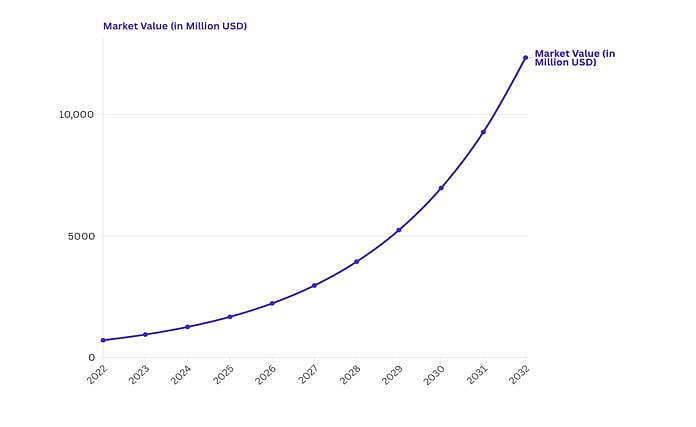
Thus, modern trading is redefined through AI. It helps function as a reactive assistant that enhances decision-making and execution speed. In the banking sector, AI is expected to increase to over $27 billion by 2027.
Saurabh Pandey
Moreover, institutional entities are offering blockchain-driven AI solutions. SoSoValue has integrated its AI platform on-chain and enabled auto-crypto relancing. Additionally, Binance has developed an AI Token Report that provides an overview of a digital asset in 30 seconds, driven by spot volumes, whale account transfers, and buy/sell orders. Thus, AI in trading and crypto developed as both an analytical and operational layer.
Blockchain Powers AI Trust
A PWC report emphasizes that the global market for tokenized RWAs could exceed $16 trillion by 2030. AI technologies have demonstrated strong effectiveness in areas such as fraud detection, credit scoring, and algorithmic trading, establishing connections to blockchain applications and helping reduce certain operational risks.
Moreover, the synergies between AI and blockchain are creating new opportunities capable of redefining financial participation. One clear example is the advancement of smart contract automation. By design, smart contracts are self-executing, and continued AI development enhances their inherent capabilities, improving accuracy, adaptability, and operational efficiency. Thus, AI Agents are early iterations of complete automation, though fully autonomous control systems have yet to be implemented in practice.
A McKinsey report on AI shows growing interest in AI Agent experimentation, with only 10% of respondents actively scaling their AI agent operations. The profound impact of AI and crypto on financial markets remains largely underestimated. However, institutions are actively advancing innovations powered by AI, signaling an imminent transformation in financial markets.
Disclaimer: This is a syndicated feed. The article is not edited by the FPJ editorial team.
