
Mumbai: The government on Monday unveiled India’s first comprehensive counter-terrorism policy, “Prahaar”, outlining a multi-layered strategy rooted in “zero tolerance”, intelligence-led prevention and disruption of extremist violence, aimed at denying terrorists, their financiers and supporters access to funds, weapons and safe havens. The policy emphasises prevention, swift response and a whole-of-government approach to deal with evolving terror threats, while reiterating India’s longstanding position that there can be “no justification whatsoever for violence in the world.”
Unveiled by the Union home ministry, it is built on seven key pillars — prevention, response, aggregation of internal capacities, human rights and rule-of-law-based processes, addressing conditions enabling terrorism including radicalisation, aligning and shaping global anti-terror efforts, and ensuring recovery and resilience through a whole-of-society approach. The document notes that instability in India’s immediate neighbourhood has often created ungoverned spaces and that some countries in the region have used terrorism as an instrument of state policy, without naming any nation.

At the same time, it stresses that India does not link terrorism to any religion, ethnicity, nationality or civilisation and has “unambiguously and unequivocally” denounced its use by any actor. India has long been affected by sponsored cross-border terrorism, with jihadi terror outfits and their frontal organisations continuing to plan and execute attacks. Global groups such as Al-Qaeda and the Islamic State have also targeted India and attempted to incite violence through sleeper cells. The policy highlights how handlers operating from foreign soil use emerging technologies, including drones, to facilitate terror activities in Punjab and Jammu and Kashmir.
It warns that terrorist organisations are increasingly leveraging organised criminal networks for logistics and recruitment. Social media platforms and instant messaging applications are widely used for propaganda, communication and funding, while encryption, the dark web and crypto wallets allow them to operate anonymously. Disrupting attempts to access Chemical, Biological, Radiological, Nuclear, Explosive and Digital (CBRNED) material remains a major challenge. The misuse of drones, robotics and cyber-attacks by criminal hackers and hostile actors has also emerged as a growing threat.

India’s prevention strategy is described as proactive and intelligence-guided, with primacy given to intelligence gathering and dissemination. The Multi Agency Centre and the Joint Task Force on Intelligence under the Intelligence Bureau serve as nodal platforms for real-time sharing of counterterror inputs. Law enforcement agencies focus on dismantling online terror networks, disrupting over-ground worker modules and choking terror funding through legal mechanisms. Special attention is also being given to counter the emerging nexus between terror groups and illegal arms syndicates.
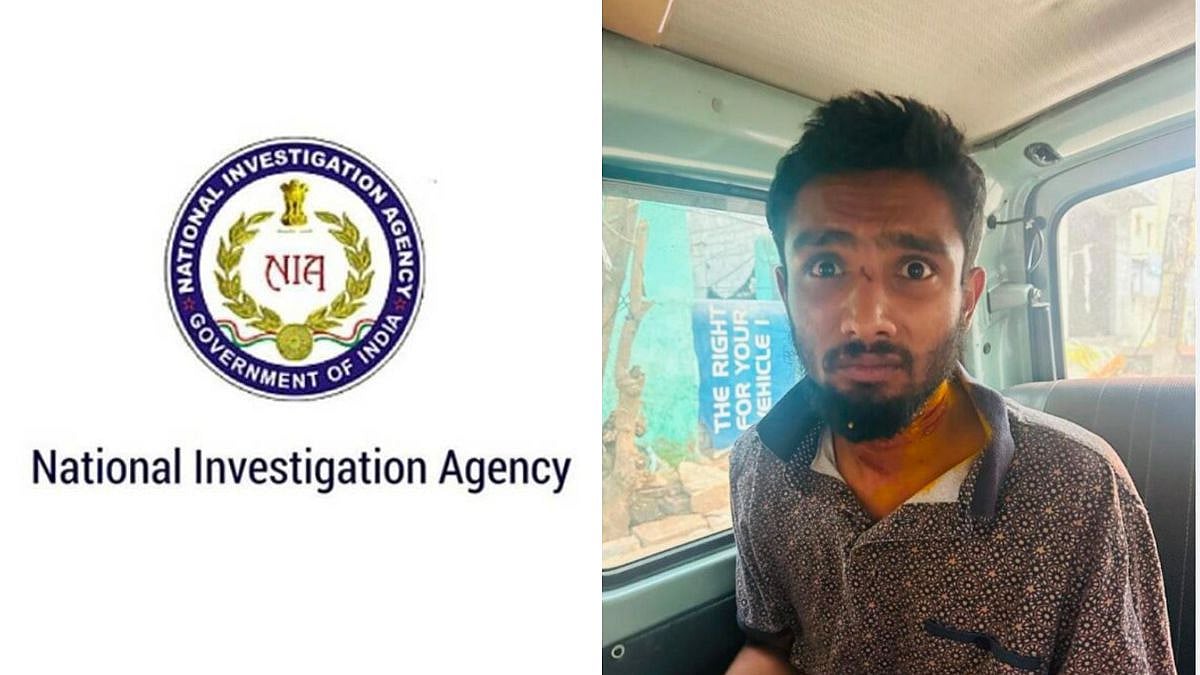
The policy states that terror threats exist across land, air and water, prompting enhanced security at borders and in critical sectors such as power, railways, aviation, ports, defence, space and atomic energy. Local police are designated as first responders to terror attacks, supported by specialised state and central forces, including the National Security Guard and Central Armed Police Forces. Investigations are led by the National Investigation Agency and state police, with high conviction rates seen as a key deterrent.
The government has emphasised modernisation and capacity building of security agencies through advanced technology, training and weaponry, while working towards a more uniform counter-terror structure across states. It also underlines that Indian anti-terror laws, including the Unlawful Activities (Prevention) Act and new criminal codes, adhere to human rights and the rule of law, with multiple levels of legal redressal available. Recognising the role of social conditions, the policy calls for counter-radicalisation programmes, including engagement with community leaders, NGOs and moderate religious voices. Government schemes addressing poverty, unemployment and social exclusion are also seen as key to preventing radicalisation.

International cooperation remains central to the strategy, with India entering into extradition treaties, mutual legal assistance agreements and joint working groups to pursue terrorists and secure global action. The policy also highlights the need for partnerships with the private sector and technology firms to tackle emerging threats, including misuse of digital platforms. Prahaar further stresses recovery and resilience, with civil society, medical professionals, psychologists and legal experts involved in supporting affected communities and rebuilding after attacks.
Looking ahead, the government has called for continuous legal reforms, technological investment and closer coordination among agencies. It emphasised that national action, backed by regional and global cooperation, will remain crucial to counter transnational terrorism, as India moves to fully implement its new counter-terror doctrine under Prahaar.

