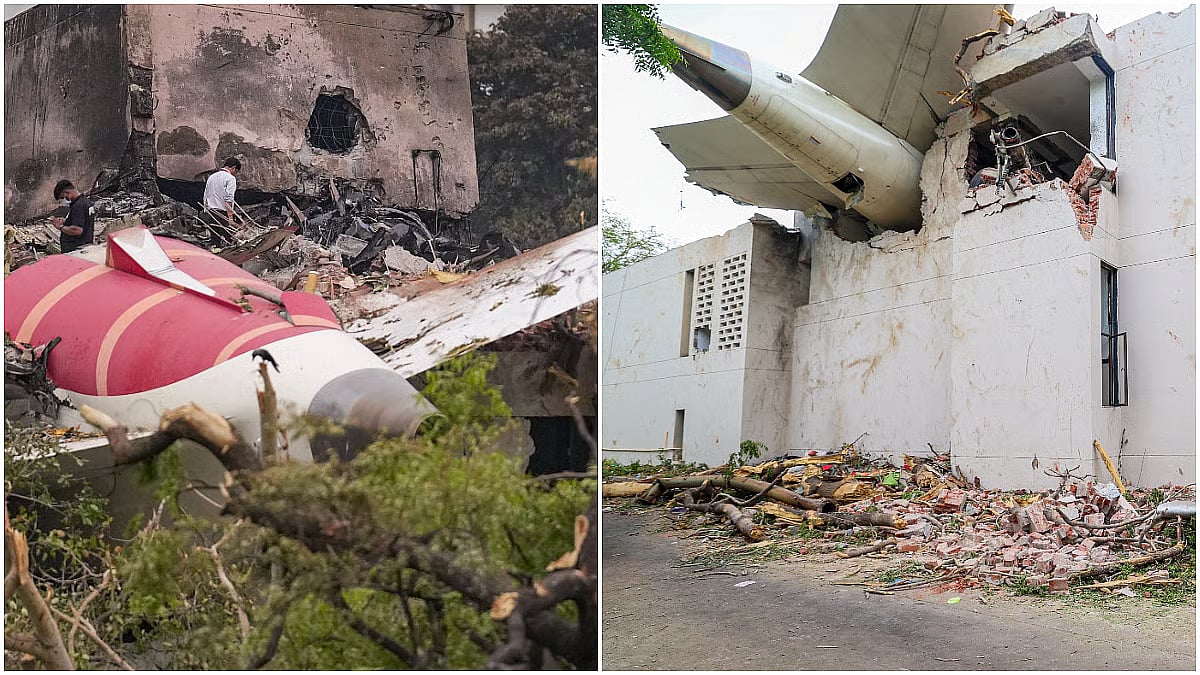
Air India’s Boeing 787 Dreamliner fleet is under renewed scrutiny following a serious technical occurrence of the fuel cut-off switch on flight AI-132 from London Heathrow to Bengaluru. The incident has sent shockwaves through the aviation community, as it involves the exact same mechanical failure suspected in the catastrophic AI-171 crash in Ahmedabad last June.
Fuel Switch Malfunction Reported
The cockpit crew of the Boeing 787-8, registered as VT-ANX, reported that the left engine fuel control switch exhibited abnormal behavior during operation on Monday. According to internal sources, the fuel control switch – which regulates the flow of fuel to the engine – bypassed its mechanical lock to remain locked in the run position and moved toward the cutoff position without pilot intervention. The crew managed to stabilise the switch and prevented an uncommanded engine shutdown, continuing to a safe landing in Bengaluru at 11.58am.
Air India Grounds Aircraft
Air India acknowledged the incident and said that the aircraft has been grounded upon landing and is looking into the incident. “We are aware that one of our pilots has reported a possible defect on the fuel control switch of a Boeing 787-8 aircraft. After receiving this initial information, we have grounded the aircraft and are involving the OEM to get the pilot’s concerns checked on a priority basis. The matter has been communicated to the aviation regulator,” said an airline spokesperson.
Echoes AI-171 Crash
This incident directly mimics the final seconds of Air India Flight AI-171, which crashed on June 12 last year, killing all 260 people on board. According to the preliminary investigation report, the switches of the ill-fated AI-171 moved to the cutoff position just 32 seconds after takeoff, despite the ‘lift-and-throw’ safety guard designed to prevent accidental activation. The cockpit voice recorder captured a haunting exchange where one pilot asked, "Why did you cut-off?" to which the other replied, "I didn't."
FAA Had Flagged Risk
In 2018, the US Federal Aviation Administration (FAA) had identified the risk on a series of Boeing models, including the 787-8 and 787-9 models of the potential for disengagement of the fuel control switch locking feature. After the AI-171 crash, the DGCA had directed all the Indian airlines to carry out mandatory checks of the fuel control switches on its Boeing aircraft, following which Air India had also checked the switches and stated that it found no issues.
Experts Demand Independent Probe
Aviation experts have raised serious concerns over the AI-171 crash, which is reportedly moving towards deliberate pilot error, and have demanded for an independent probe as the new malfunction on AI-132 provides the first tangible evidence of a potential systemic mechanical flaw. The Federation of Indian Pilots (FIP) and deceased Captain Sumit Sabharwal’s father have already filed petitions demanding an independent inquiry.
Calls for Transparent Disclosure
Following the AI-132 incident, New Delhi-based Safety Matters Foundation has called for an immediate and transparent disclosure by the DGCA and Air India of the findings from the inspection of VT-ANX, re-evaluation of the earlier precautionary checks and an urgent regulatory review by the DGCA to determine if this is an isolated incident or indicative of a fleet-wide issue requiring immediate airworthiness direction action.
Concerns Over Precautionary Checks
The organisation’s founder Capt. Amit Singh said, “What makes this event deeply troubling is not only that it happened but that it occurred after Air India publicly stated that it had conducted precautionary checks across its 787 fleet and found no issues. This discrepancy raises urgent questions: Were the checks thorough? Is this a new, recurring defect? Passengers and crew deserve unambiguous answers.”
The pilot defect report, accessed by The Free Press Journal, reads, "Left fuel control switch slips run to cutoff when pushed down slightly. It does not lock in its position."
Also Watch:
Whistleblower Report Raises Questions
A whistleblower report submitted to the US Senate Permanent Subcommittee on Investigations on January 12 highlighted that VT-ANB, which crashed in Ahmedabad last year, had a long history of electrical and computing system faults, including a major electrical fire in 2022. Aviation experts from across the country have now raised concerns over the narrative about deliberate pilot error.
Pilot Error Narrative Challenged
"The AI-132 incident proves that the pilot error narrative was premature and perhaps convenient. We are looking at a potential design flaw in the locking mechanism that Boeing and the DGCA claimed was perfectly fine after inspections last July,” said a senior aviation safety consultant, on condition of anonymity.
Conflict of Interest Allegations
Experts have also highlighted a conflict of interest in AAIB’s investigation of the AI-171 crash, suspecting that the probe body includes DGCA officials and they might try to shield themselves from oversight regarding past maintenance audits.

