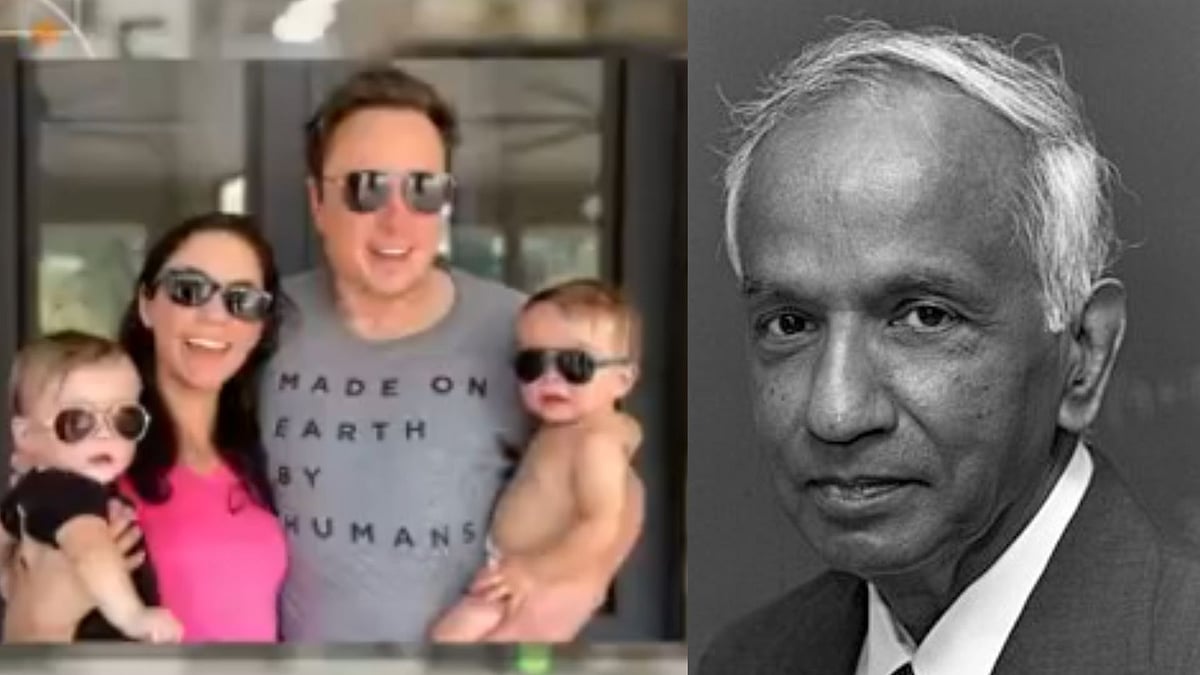
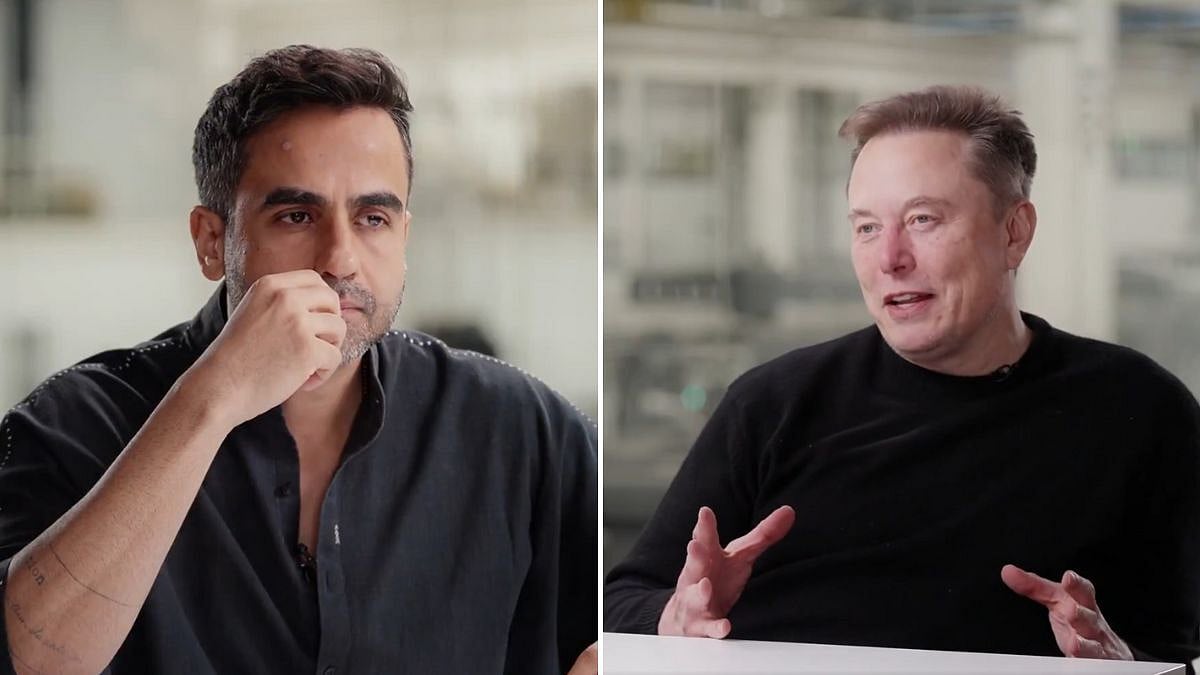
One of the richest men in the world, and Tesla and SpaceX CEO, Elon Musk has revealed personal details about Shivon Zilis, one of his partners, during a recent appearance on Zerodha co-founder Nikhil Kamath’s podcast People by WTF. During the conversation, Musk claimed that Zilis is half Indian, noting that her heritage influenced the naming of one of their children.
Musk said that one of the sons he shares with Zilis has the middle name Sekhar, chosen in tribute to renowned Indian-American astrophysicist and Nobel laureate Subrahmanyan Chandrasekhar. He emphasised that the name was intended as a nod to Chandrasekhar’s scientific contributions and as a subtle recognition of Zilis’s Indian roots.
Shedding light on Zilis’s early life, Musk said she was raised in Canada and had been adopted shortly after birth.
According to Musk's account, her birth father was a university exchange student, although he acknowledged uncertainty regarding the full details of her biological family background. He confirmed, however, that she entered her adoptive family as an infant and grew up in Canada.
Zilis’s working relationship with Musk began in 2017 when she joined Neuralink, his brain–computer interface company, in an executive role. She now serves as the Director of Operations and Special Projects at the firm. Her academic credentials include a Bachelor of Arts in Economics and Philosophy from Yale University, reflecting the interdisciplinary foundation of her career in technology and artificial intelligence.
The couple has four children together: twins named Strider and Azure, along with daughter Arcadia and son Seldon Lycurgus. Musk's podcast comments offered a rare glimpse into their family life, which he typically keeps out of the public eye.
Who Was Subrahmanyan Chandrasekhar?
Indian-American physicist Subrahmanyan Chandrasekhar was one of the most influential astrophysicists of the 20th century, best known for his groundbreaking work on the structure and evolution of stars. Born on October 19, 1910, in Lahore (then British India), he displayed exceptional brilliance from an early age and later pursued higher studies at the University of Cambridge. At just 19, Chandrasekhar formulated what would become the Chandrasekhar Limit, the maximum mass (about 1.4 times that of the Sun) a white dwarf star can have before collapsing under its own gravity. Despite initial resistance from leading scientists, the theory eventually reshaped modern astrophysics.
Chandrasekhar later emigrated to the United States, where he spent decades conducting research and teaching at the University of Chicago. His contributions spanned stellar structure, black holes, radiative transfer, and fluid dynamics. In 1983, he was awarded the Nobel Prize in Physics for his theoretical studies of the physical processes governing the structure and evolution of stars. Known for his meticulous scholarship and humility, Chandrasekhar left an enduring legacy through his research, books, and the generations of scientists he mentored. He passed away in 1995, but his pioneering work continues to define key principles in astrophysics today.

