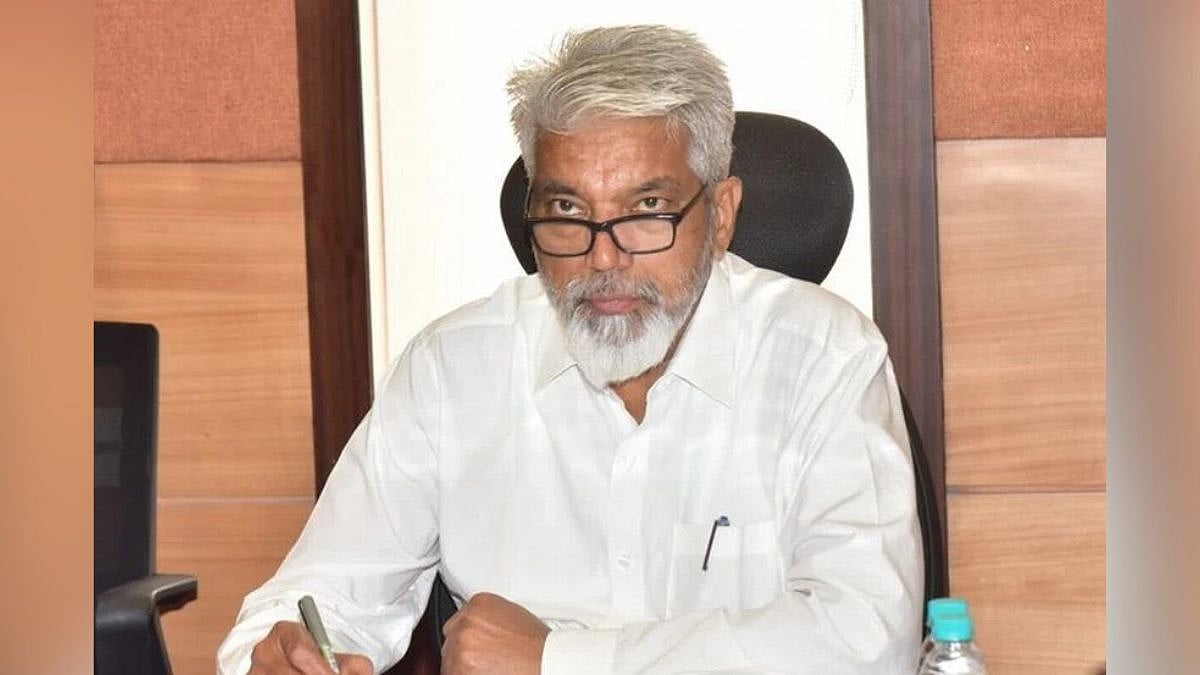
Mumbai: Maharashtra minister Dada Bhuse on Monday said teaching of Marathi language and conduct of examination of the subject have been legally made mandatory in schools of all mediums across the state, and those institutions that fail to comply could face cancellation of recognition.
Replying to a debate during Question Hour in the legislative assembly, Bhuse, who is School Education Minister, said Marathi has been made compulsory from Classes 1 to 10 in schools of all mediums in the state under the Maharashtra Compulsory Teaching and Learning of Marathi Language in Schools Act, 2020.
Schools must also appoint qualified Marathi teachers and that compliance would be monitored through regular inspections, he said.
"If a school does not implement the provisions, it will first be asked to rectify the violation. If it still fails to teach Marathi, a fine of up to Rs 1 lakh can be imposed. If there is continued non-compliance, the school's recognition can also be cancelled under the government decision issued on April 17, 2026," the minister said.
Responding to members' queries, Bhuse clarified that Marathi would not remain merely a compulsory subject on paper.
"Marathi examinations will definitely be conducted for every class," he said.
During the discussion, BJP member Atul Bhatkalkar sought clarification on whether Marathi, though compulsory, would be treated like optional subjects, such as art and handicrafts or whether students would have to appear for examinations. He also asked whether Marathi exams would be conducted from Classes 1 to 10.
Members further urged the government to revive an international-standard Marathi education board, saying a similar board set up by a previous state government had later been dissolved.
On the demand, Bhuse said the government would examine the proposal and take a positive decision after due consideration.
The minister also said the phased implementation envisaged under the 2020 Government Resolution has been completed and Marathi teaching is now compulsory from Classes 1 to 10 in all schools across Maharashtra, irrespective of their medium of instruction.

Replying to a debate during the Question Hour, Bhuse said teaching Marathi is mandatory in all schools, irrespective of the education board, under provisions brought into force in 2020.
"If any complaint is received that a school is not teaching Marathi, an inquiry will be conducted. If the violation is established, the school will first be issued a notice imposing a penalty of Rs 1 lakh. If it still fails to comply, the government's new 2026 GR empowers us to cancel the school's recognition," he said.
Bhuse said the provision to withdraw recognition has been introduced for the first time through the 2026 government resolution, making enforcement of the Marathi language policy more stringent.
Opposition members like Varun Sardesai (Shiv Sena-UBT) and Nitin Raut (Congress) questioned the effectiveness of the policy, asking how many schools had been found violating the rules, how many had been fined or derecognised, and why the government waited nearly five years after making Marathi compulsory in 2020 to introduce stricter enforcement measures.
Sardesai also sought the names of schools against which action had been taken and asked whether institutions that had received government land at concessional rates but failed to teach Marathi would face additional action.
Some legislators like Sunil Prabhu (Shiv Sena-UBT) demanded that the existing penalty of Rs 1 lakh be increased to Rs 10 lakh.
Appealing to legislators to support enforcement, Bhuse urged MLAs to visit schools in their constituencies and ensure that Marathi is being taught in every institution, regardless of the medium of instruction.
He also warned that officials failing to enforce the law could themselves face action.
The minister said schools are also expected to sing the state song "Jai Jai Maharashtra Majha" with due respect, similar to the National Anthem, and that the government would continue creating awareness about the requirement.
The discussion also focuses upon school textbooks, with members alleging historical inaccuracies, including references to Savitribai Phule and Mahatma Phule and errors in chapters dealing with different religions.
Responding, Bhuse said the state government had urged the Centre to expand the coverage of Chhatrapati Shivaji Maharaj in CBSE textbooks. He said Union Education Minister Dharmendra Pradhan had accepted the request and the content on Shivaji Maharaj had now been expanded to 22 pages, enabling students across the country to learn more about his contribution.
The minister added that the state was revising textbooks and would restore lessons on eminent personalities that had been omitted from earlier editions.
(Except for the headline, this article has not been edited by FPJ's editorial team and is auto-generated from an agency feed.)

