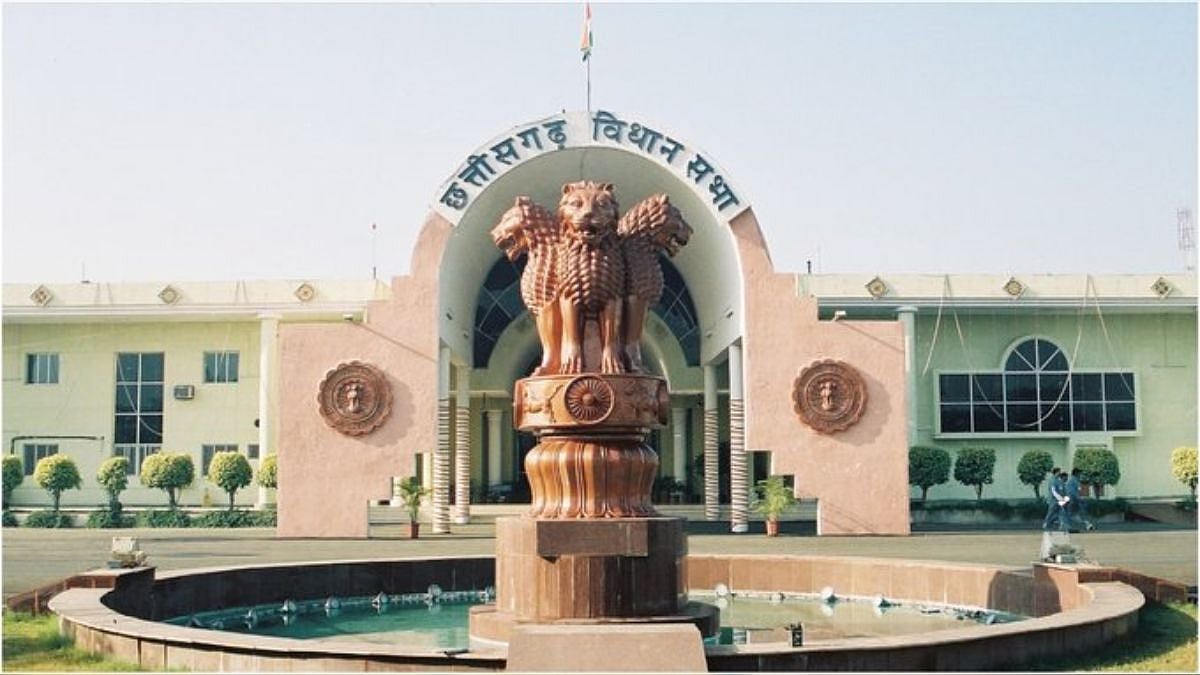
Raipur: The Chhattisgarh assembly on Friday passed a bill to curb paper leaks and malpractices, proposing up to 10 years imprisonment and a fine of up to Rs 1 crore to ensure transparency in public recruitment and professional entrance exams.
The Chhattisgarh (Lok Bharti evam Vyavsayik Parikshao me Anuchit Sadhano ki Roktham) Vidheyak 2026 (Chhattisgarh Public Recruitment and Professional Examinations Prevention of Unfair Means Bill), was passed after a detailed discussion in the House.
Chief Minister Vishnu Deo Sai said the legislation sends a strong message against those involved in examination-related malpractices.
He alleged that the previous government had "crushed the dreams of youth", referring to alleged irregularities in recruitment processes and scams such as the Chhattisgarh Public Service Commission (CGPSC) issue.
The CBI is investigating the alleged scam in the CGPSC recruitment unearthed during the previous Congress government.

"This law sends a strict message to the exam mafia. Whoever is involved in cheating or irregularities in examinations will face stringent action," Sai said.
He said that his government had promised to strengthen and make the examination system transparent.
"This is not just a law to punish offenders, but one aimed at securing the future of youth," he said.
Leader of Opposition Charan Das Mahant expressed support for the bill, stating that strict provisions against those who facilitate cheating or assist organised malpractice are necessary.
However, he criticised the government for repeatedly blaming the previous regime in the state.
"Governments come and go. The issue should be viewed seriously. With time passing, focus should now be on delivering good governance rather than dwelling on the past," he said.
In the statement of objects and reasons, Sai said that the state government is committed to enhancing transparency, integrity and fairness in public examinations conducted for recruitment and admission to higher educational institutions.
The bill seeks to instil confidence among candidates that their genuine efforts will be duly recognised and their future safeguarded, and aims to effectively deter individuals, organised groups or institutions involved in unfair practices for monetary or undue advantage, he said.
Sai said the proposed law includes provisions to protect whistleblowers who expose the use of unfair means, ensuring confidentiality of their identity and offering legal protection to encourage reporting of such offences.
The chief minister said that the bill defines key terms such as "candidate," "conduct of public examination," "unfair means," "organised crime," and "service provider", covering all stages of the examination process, from preparation and printing of question papers to evaluation and declaration of results.
The legislation strictly prohibits the use of unfair means in any public examination and bars individuals or groups from facilitating or conspiring in such activities. Unauthorised entry into examination centres and interference in the conduct of exams are also prohibited.
The bill further mandates that only approved examination centres be used, except in unavoidable circumstances such as natural disasters or emergencies, subject to later notification by the examination authority.
Under the proposed law, both individuals and institutions involved in offences will be held accountable, and in cases where a company, firm or organisation commits an offence, those responsible for its operations at the time will also face prosecution.
Candidates found guilty of malpractice will have their results withheld and will be barred from appearing in public examinations for a minimum of one year, extendable up to three years. However, after the ban period, they will not be permanently disqualified from future exams or public employment.
For others (apart from candidates), the bill prescribes stringent penalties, including imprisonment, ranging from three to 10 years and fines of up to Rs 10 lakh.
Violations such as the unauthorised possession or disclosure of question papers, illegal entry into exam centres, misuse of locations, or tampering with evaluation records, will attract imprisonment of one to five years and fines up to Rs 5 lakh.

Service providers and institutions found guilty may face fines up to Rs 1 crore, recovery of examination proportional costs, and debarment from conducting public exams for a minimum of three years.
In cases involving organised crime, properties of the accused may be attached and confiscated as per provisions of the Bharatiya Nyaya Sanhita, 2023.
The bill also states that offences under the Act will be investigated by officers not below the rank of sub-inspector, with the state government being empowered to transfer probes to central or state agencies if required.
(Except for the headline, this article has not been edited by FPJ's editorial team and auto-generated from an agency feed.)
