New Delhi: The Federation of All India Farmer Associations (FAIFA) on Friday said the government's move to levy additional excise duty on tobacco products will hurt farmers' income and exacerbate smuggling in a market already grappling with illicit trade. The finance ministry last month notified excise duties of Rs 2,050-8,500 per 1,000 cigarette sticks depending on length, effective February 1, under the Chewing Tobacco, Jarda Scented Tobacco and Gutkha Packing Machines (Capacity Determination and Collection of Duty) Rules, 2026.
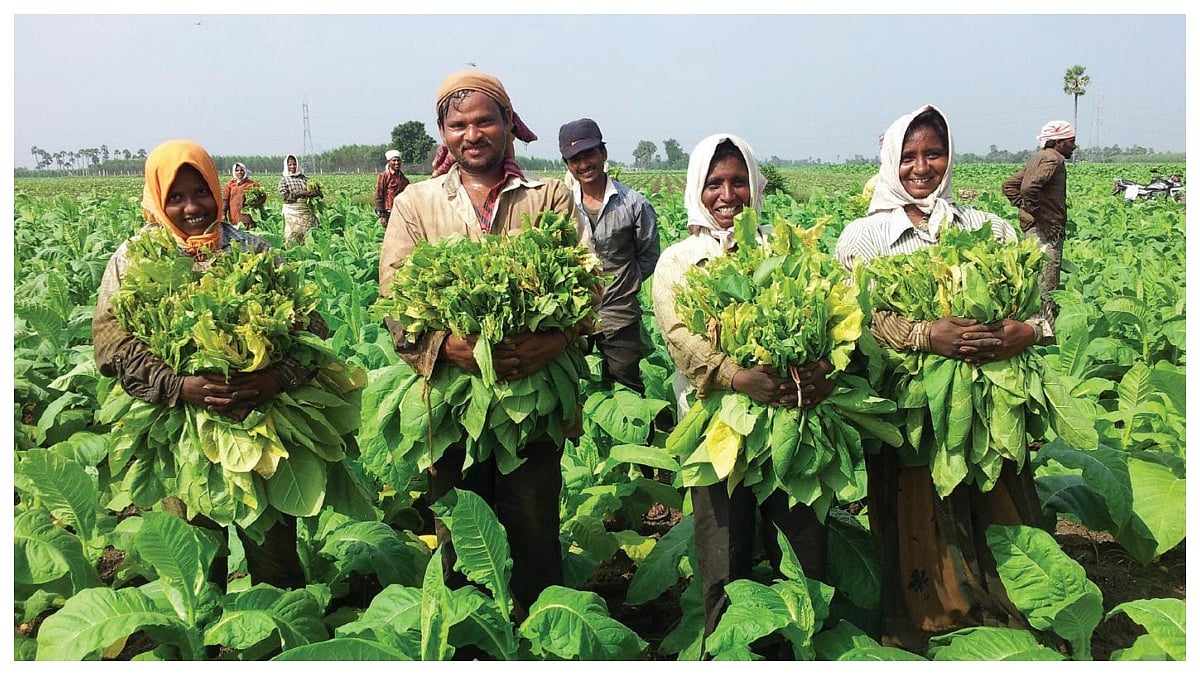
FAIFA, representing growers across Andhra Pradesh, Telangana, Karnataka and Gujarat, said the duty increase contradicts the government's assurances of revenue-neutral tax reform. "We are shocked to see that the promise has not been kept, and instead a sharp increase in taxes has been notified, at the cost of farmers' livelihoods," FAIFA President Murali Babu said in a statement.
The farmers' body warned that higher retail prices will reduce legal cigarette consumption, hurting demand for domestically-grown tobacco and potentially creating a glut in the crop market.

*TAX DISPARITY*




FAIFA also said that India's tax regime discriminates against Flue-Cured Virginia (FCV) tobacco used in cigarettes, with per-kilogram taxation over 50 times higher than for 'beedis' -- hand-rolled cigarettes popular among lower-income consumers -- and over 30 times higher than chewing tobacco. FCV tobacco attracts more than Rs 6 in tax per dose in finished products, while beedis and chewing products face less than one paisa per dose, the group said.
India has emerged as the world's fourth-largest illicit cigarette market, with illegal products accounting for roughly 26 per cent of total consumption, according to industry estimates cited by FAIFA. The organisation warned that tax-driven price increase will widen the gap between legal and smuggled products, undermining enforcement efforts and reducing government revenue.
*SECTOR UNDER PRESSURE*
FCV tobacco production has remained largely flat over the past decade, with auctioned quantities at 304.21 million kg in 2023-24 compared with 315.95 million kg in 2013-14, FAIFA data showed. Cultivation area has fallen from 2,21,385 hectares in 2013-14 to 1,22,257 hectares in 2020-21, resulting in an estimated loss of nearly 35 million man-days of employment across the farming and auction ecosystem.
Rising input costs have added to farmer distress. The World Bank's fertiliser price index rose 15 per cent since the start of 2025, with di-ammonium phosphate prices up 23 per cent, while notified agricultural wage rates increased 7 per cent in the 2024-25 fiscal year. FAIFA has urged the government to roll back the excise duty and implement revenue-neutral duties that support domestic agriculture while discouraging smuggling.
Disclaimer: This story is from the syndicated feed. Nothing has changed except the headline.