
Mumbai: India has recorded one of the world's fastest reductions in poverty, lifting approximately 49.6 crore people out of extreme poverty between 2011 and 2023, according to the World Bank's October 2026 Poverty and Equity Brief.
The report revealed that India's extreme poverty rate declined sharply from 27.1% to just 2.6% during the period, reflecting improvements in household consumption, employment and government welfare programmes.
Poverty Reduction
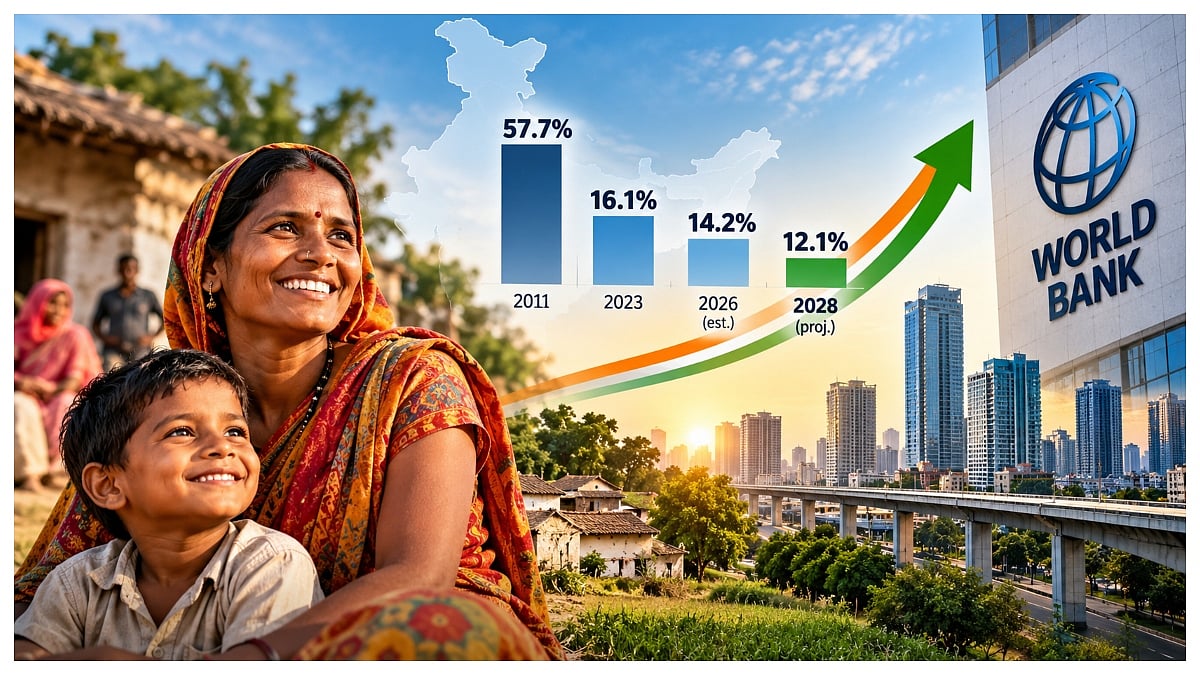
According to the World Bank, the proportion of Indians living below the lower-middle-income poverty threshold of $4.20 per day declined from 57.7% to 16.1%. The report attributed this progress to stronger consumption growth, increasing employment opportunities, particularly for women, and expanded government support through food subsidies and social transfers.
Future Projections
The World Bank expects poverty levels to decline further, although the pace could moderate. At the $4.20 daily poverty threshold, India's poverty rate is projected to fall from 14.2% in 2026 to 12.1% by 2028. However, these projections are indicative and may change depending on economic conditions and employment trends.
Regional Challenges
Despite significant progress, poverty remains concentrated in certain regions. Around 57% of India's poor population lives across a geographical belt extending from Uttar Pradesh to West Bengal. The report emphasised the importance of generating productive employment opportunities in these states.

Employment Trends
India added approximately 13.4 crore employed people between 2017 and 2023, with rural women accounting for a substantial share of the increase. However, youth unemployment rose from 14.6% to 15.9% between the first quarters of FY26 and FY27. Real earnings remained largely stagnant, while employment growth was concentrated in lower-productivity activities.
Broader Progress
India's multidimensional poverty rate also declined, falling from 53.8% in 2005–06 to 16.4% in 2019–21, according to the Oxford Poverty and Human Development Initiative. The World Bank cautioned that improvements in survey measurements may partly explain recent gains alongside genuine improvements in living standards.

