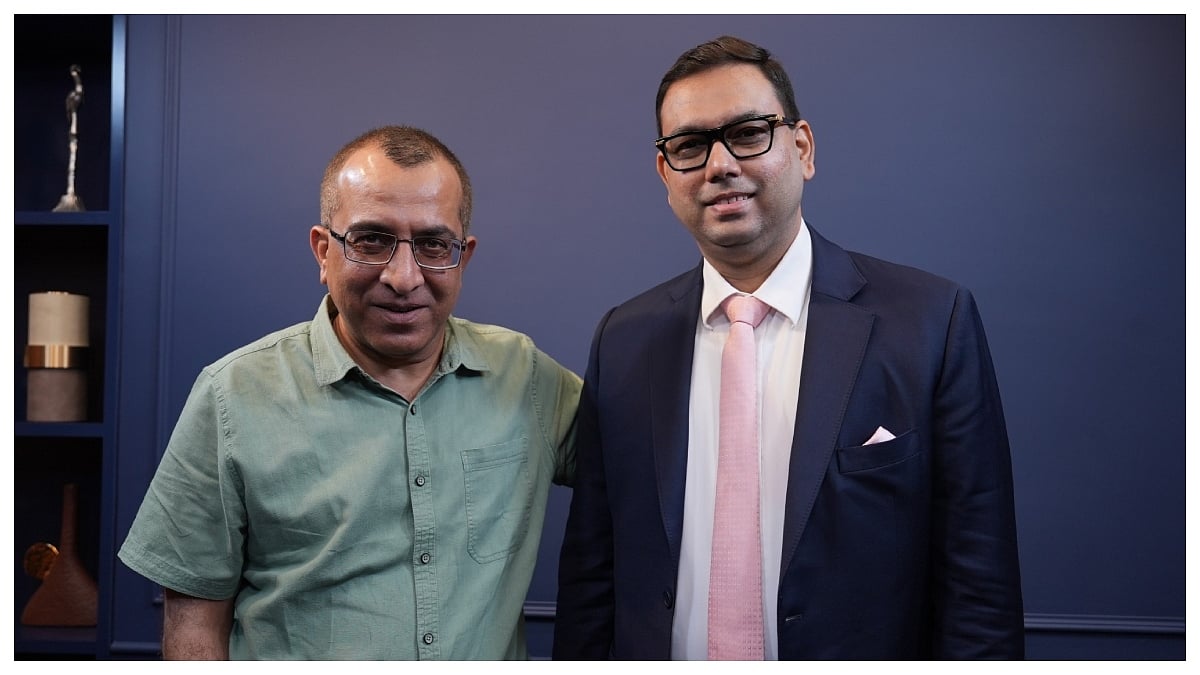
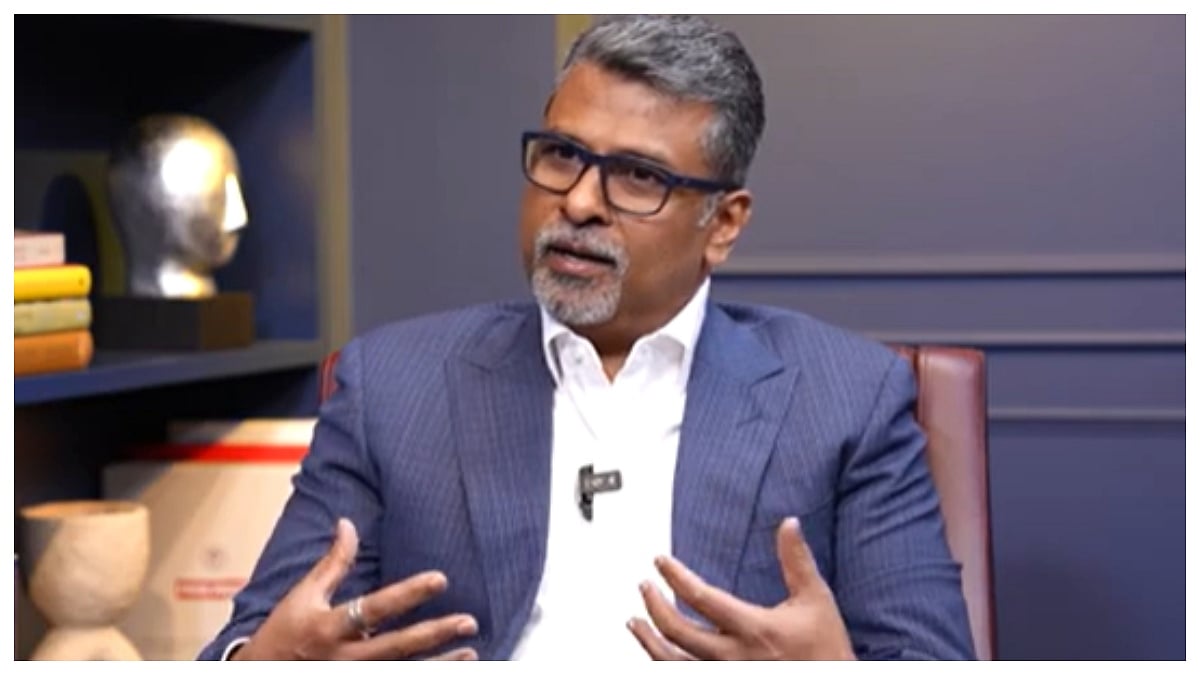
In the latest conversation with Vivek Law on Simple Hai!, Sadaf Sayeed, CEO of Muthoot Microfin, reflected on how India’s microfinance industry has evolved from a small rural lending initiative into one of the country’s largest financial inclusion networks. Drawing from nearly two decades of experience in the sector, Sayeed spoke about responsible lending, rural entrepreneurship, women borrowers and the growing role of technology in improving credit quality.
From Limited Access to Financial Inclusion
The conversation began with the broader evolution of financial inclusion in India. Sayeed noted that nearly two decades ago, microfinance portfolios in India were only a few thousand crores in size. Today, despite the slowdown seen over the last two years, the sector manages roughly Rs 3 lakh to Rs 3.5 lakh crore in loans and serves nearly 6.5 crore households across the country.
He explained that microfinance originally emerged to solve a basic access problem. Large sections of rural India had little or no access to formal banking systems, leaving borrowers dependent on informal moneylenders charging extremely high interest rates. In several regions, borrowers routinely faced annualised borrowing costs that were many multiples higher than formal lending rates.
According to Sayeed, the landscape changed significantly after initiatives such as Jan Dhan, Aadhaar and the expansion of credit bureau systems. Bank account penetration, which stood at nearly 30 percent before 2013-14, has now expanded to almost 90 percent of adult households. However, he argued that financial inclusion extends beyond opening bank accounts. Access to credit, insurance, remittances, financial literacy and digital literacy remain equally important.
Why the Microfinance Sector Faced Stress?
Law asked about the negative sentiment surrounding microfinance over the past two years and the concerns around rising distress in the sector. Sayeed acknowledged that the industry had gone through a difficult phase driven largely by over-lending and rising defaults.

As multiple lenders expanded aggressively into the same borrower segments, several customers accumulated loans beyond their repayment capacity. He explained that while credit access had improved significantly, financial literacy had not expanded at
the same pace. This created situations where borrowers took on excessive debt without fully understanding repayment risks.
He noted that regulators and industry bodies responded with stricter frameworks. One key change was the introduction of limits on the number of lenders that can finance a single borrower. According to Sayeed, borrowers with more than four active loans earlier accounted for nearly 20 percent of the industry. That figure has now fallen sharply after tighter regulations and more disciplined underwriting practices.
The Shift in Lending Models
The discussion also focused on how lending practices are evolving. Traditionally, microfinance relied heavily on the joint liability group model, where groups of women borrowers guaranteed each other’s loans through social accountability structures.
Sayeed explained that the system worked effectively when most borrowers lacked formal financial histories. However, the ecosystem today has become significantly more data-driven. Credit bureau records, banking histories and digital financial trails now allow lenders to assess borrowers individually rather than relying entirely on group guarantees.
As a result, the industry is gradually transitioning toward individual credit assessment models, particularly for repeat borrowers with established repayment histories. Sayeed said Muthoot Microfin has already shifted a large section of its repeat customers from group-based lending to individual loans, with encouraging portfolio performance.
Why Women Remain Central to Microfinance?
A major part of the conversation centred on the sector’s continued focus on women borrowers. Sayeed explained that microfinance institutions lend primarily to women because repayment behaviour and utilisation patterns have historically been far stronger among female borrowers.
According to him, women borrowers are more likely to use loans for productive purposes such as education, healthcare, household improvement and small businesses. The objective of microfinance, he said, is not merely lending but enabling entrepreneurship and financial empowerment at the bottom of the economic pyramid.
The loans themselves are relatively small, ranging from Rs 10,000 to Rs 1 lakh, and are typically unsecured and collateral-free. Sayeed explained that these loans are designed primarily for income-generating activities, including small retail businesses, cattle rearing and other local enterprises. Educational spending is also viewed as a productive use of credit. Pure consumption borrowing, however, is generally discouraged.
The Economics of Microfinance
Law also questioned whether interest rates in microfinance remain too high for low-income borrowers. Sayeed responded by explaining the economics of the sector in detail.
According to him, even large microfinance institutions borrow funds from banks at rates of 10 percent to 10.5 percent. Beyond borrowing costs, the sector carries significant operating expenses because servicing rural borrowers requires physical distribution, field verification and collection infrastructure. Operating costs alone account for roughly 6.5 percent of the lending structure.
He added that credit costs historically range between 3.5 percent and 4 percent across cycles. Once shareholder returns and regulatory requirements are factored in, lending rates in the range of 18 percent to 24 percent become necessary for the model to remain sustainable. Sayeed stressed that pricing frameworks are regulated and approved under RBI guidelines rather than determined arbitrarily.
AI and the Future of Underwriting
The conversation later turned to technology and AI-driven underwriting. Sayeed described AI as a significant positive force for the sector, particularly in reducing credit costs and improving underwriting accuracy.
He explained that Muthoot Microfin has partnered with technology firms that use vernacular voice interactions, image analysis and automated data processing to build real-time credit assessment models. Customer conversations conducted in local languages are converted into structured underwriting inputs, while business photographs and household images help estimate economic conditions and repayment capacity. According to Sayeed, these systems have materially improved underwriting quality and reduced credit costs sharply over the last year.
Responsible Borrowing and Financial Discipline
Towards the end of the discussion, Law asked what advice Sayeed would give young borrowers increasingly attracted to easy EMI-based consumption. Sayeed stressed that loans should be treated as financial leverage rather than free money. Borrowers must assess repayment capacity carefully and avoid taking debt purely for consumption.
He suggested a simple thumb rule: borrowers should ensure that total loan instalments remain within 50 percent of household income, leaving the remaining income available for essential living expenses. Productive borrowing that increases income or improves long-term financial capacity, he argued, is fundamentally different from borrowing for impulse consumption.
The discussion concluded with a broader reflection on credit culture in India. While acknowledging the risks of over-borrowing, Sayeed maintained that most rural borrowers remain highly creditworthy and committed to repayment. The long-term future of microfinance, he suggested, will depend on balancing financial inclusion with disciplined underwriting, responsible lending and deeper financial literacy.
