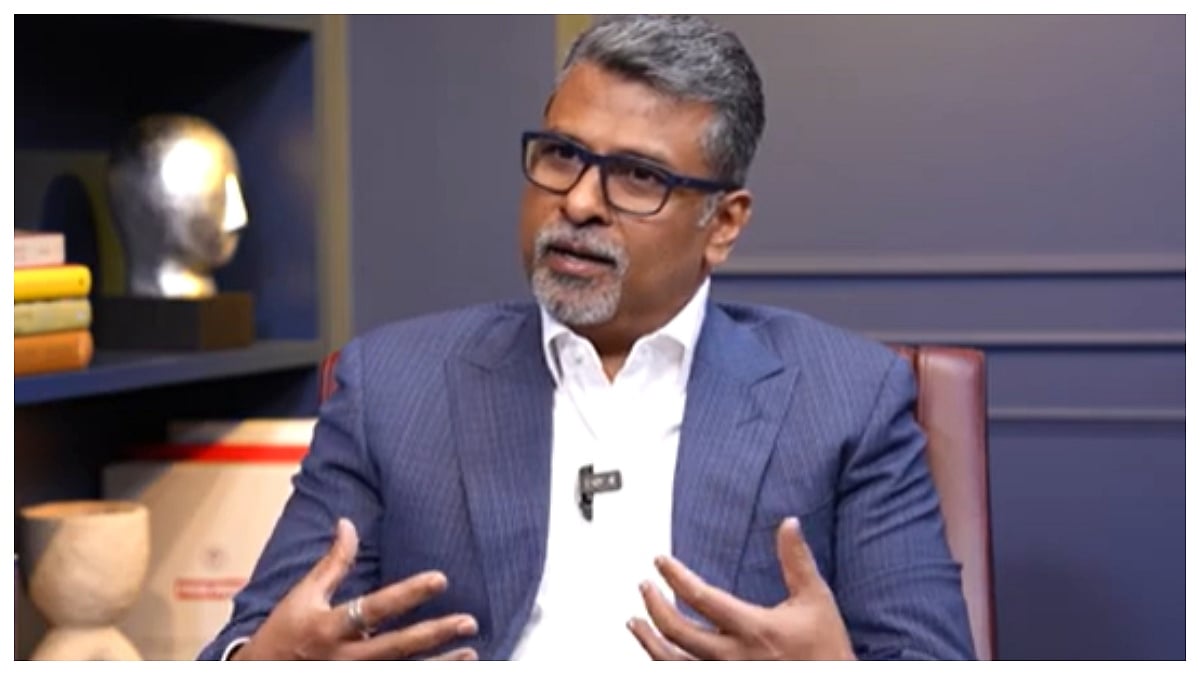
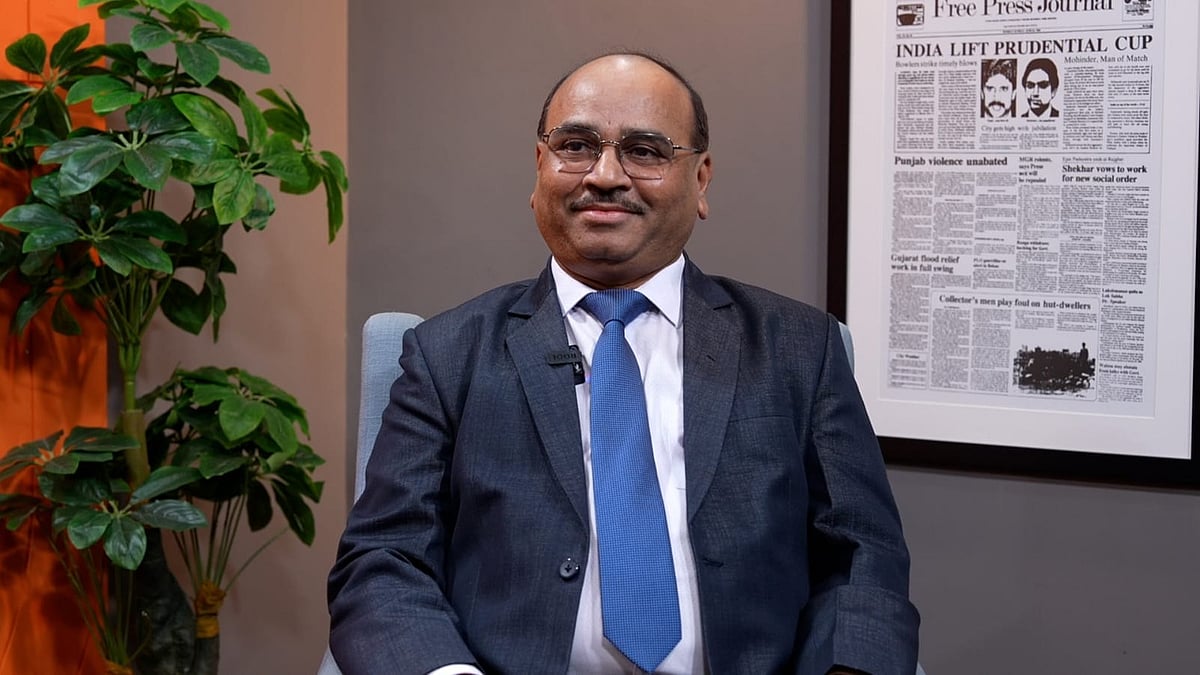
In an exclusive conversation with The Free Press Journal, Deepak Patkar, Managing Director and CEO of SMFG India Home Finance, shares how the company has built a robust and future-ready franchise in India’s affordable housing finance space. Speaking to Manoj Yadav, Business Editor (Digital), Patkar traces SMFG India Home Finance's journey from enabling first-time homeownership in emerging towns to scaling assets under management (AUM) to Rs 12,500 crore. He outlines the company’s governance-led and risk-disciplined growth strategy, strong grassroots market presence, technology-powered credit decisioning, people-first expansion model, and its focused approach to driving sustainable growth across underpenetrated regions in alignment with national housing initiatives.
SMFG India Home Finance has grown steadily since 2015. What stands out as the biggest milestone so far?
The most significant milestone for SMFG India Home Finance is the impact we have created by helping nearly 70,000 customers become homeowners. From a business perspective, as of H1 FY26, we have around 3,000 employees, crossed Rs 12,500 crore in assets under management, and established close to 200 branches across the country. We have also delivered consistent profitability and steady shareholder returns over the past three to four years.

You often describe the company as a ‘work in progress’. What are the key goals ahead?
Over the next five years, our vision is to transform SMFG India Home Finance into a pan-India, full-fledged housing finance company catering to customers across both urban and semi-urban markets. We aim to grow at a CAGR of 20–25 percent and expand our physical presence to approximately 500 branches across metro cities as well as Tier 2, Tier 3, and other smaller markets over the next five years. In terms of scale, we expect to double our assets under management during this period.
As a fully owned subsidiary of a global group, how does that backing help SMFG India Home Finance?
We have always been a foreign-owned organisation, and as a result, governance and risk management have been embedded in our culture from day one. The support from SMFG, a global systemically important financial institution, has helped raise our standards even further. We benefit from continuous oversight by an experienced and engaged board that reviews not only performance but also regulatory preparedness and sustainability. The backing of the SMFG Group provides access to patient capital, diversified funding sources, and global best practices, enabling us to build a stable and resilient housing finance franchise for the long term.
How do you balance growth with risk in affordable housing finance?
Housing finance, like any other retail loan, is fundamentally a risk-management business and not merely a volume-driven sales business. Affordable housing is expected to grow at 18–20 percent annually, supported by favourable demographics and government schemes aimed at increasing homeownership. However, the key challenge lies in assessing borrowers, many of whom are first-time home loan customers with limited formal income documentation. Sustainable growth therefore depends on how effectively we understand and manage risk, particularly over long loan tenures.
You’ve described credit assessment as both ‘science and art’. What does that mean in practice?
The science lies in data-credit bureaus, analytics, systems, and structured processes. The art lies in judgement, especially when incomes are uneven or informal. Home loans are typically given for 15–20 years, so income resilience is very important. Our credit teams combine analytics with on-ground insights, business understanding, and direct customer interaction. As our data pool deepens and technology evolves, decision-making will increasingly become data-led while continuing to rely on local judgement.

Why does SMFG India Home Finance focus more on Tier 2, Tier 3, and Tier 4 cities rather than metros?
Affordable housing demand is strongest outside metropolitan areas. Around 90 percent of our branches are located in Tier 2 and beyond, where “New India” or “Bharat” is emerging. In the affordable housing business, proximity to customers is critical-to understand the collateral, assess risk accurately, and develop a deeper understanding of local markets.
With affordability pressures in cities like Mumbai, what is your advice-rent or buy?
There is no one-size-fits-all answer. Cities like Mumbai are expanding outward, and infrastructure such as metro rail is improving connectivity. Buyers should take a long-term view, considering where employment hubs and residential development may shift over time. The decision should be driven by life stage, income visibility, and long-term plans.
Which customer segments are currently driving demand?
We have observed that demand is particularly strong among customers aged 30–40 years. We serve both salaried and self-employed borrowers, including those linked to micro and small enterprises.
Given India’s large self-employed base, with nearly 70 percent of income generated outside formal salaried employment, this segment-especially in Tier 2 and Tier 3 cities-is central to our growth strategy.
What makes lending to self-employed customers more challenging?
The key challenge lies in assessing true income when formal documentation is limited. We address this through a combination of local market knowledge, branch-level insights, industry understanding, and bureau data. While data insights, analytics, and credit scoring are helping significantly in sharpening customer selection, our biggest risk-mitigation tool-even in today’s digital world-remains on-ground customer interaction and verification.
How has your background across risk, audit, sales, and collections shaped your leadership style?
Starting my career in collections gave me first-hand exposure to customer behaviour and stress cycles. That experience shaped my belief that growth should never come at the cost of asset quality. Having worked across risk, audit, and business roles, I focus on building a durable institution with strong processes, governance, and accountability. Responsible growth, not ‘growth at all costs’, remains central to how we scale the franchise.
How are analytics and technology improving credit decisions and customer experience?
Technology is helping immensely in making processes more efficient for us and more frictionless for customers. We have invested heavily in digital platforms, applications, and customer communication tools to reduce manual intervention and keep customers informed at all times.
Analytics has evolved from basic spreadsheets to more advanced, data-driven decision tools, supporting both underwriting and early warning systems. This enables us to scale efficiently while maintaining strong credit discipline, even as we expand into new and underpenetrated geographies.
In a crowded housing finance market, how does SMFG India Home Finance differentiate itself?
Products are largely similar across lenders, so differentiation comes from customer experience. Our focus on affordable housing, a micro-market approach, faster decision-making, and clear communication helps us stand out.
This is supported by a strong branch-led operating model and in-house teams across credit, collections, and customer service, giving us tighter control over portfolio quality and customer outcomes.
How do you see the role of housing finance companies in India’s affordable housing push?
Housing finance companies play a critical role, particularly in serving underserved and deeper geographies where challenges such as property documentation still exist. There remain several underpenetrated regions where housing finance is expected to evolve alongside improvements in documentation and continued government support.

