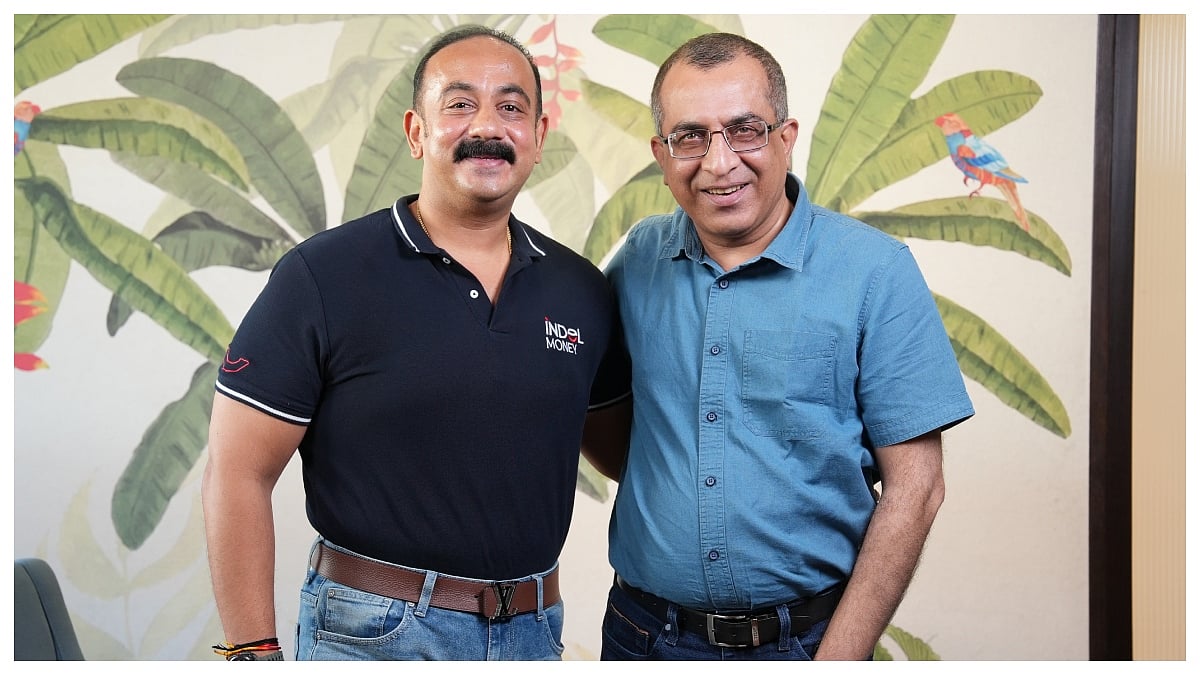
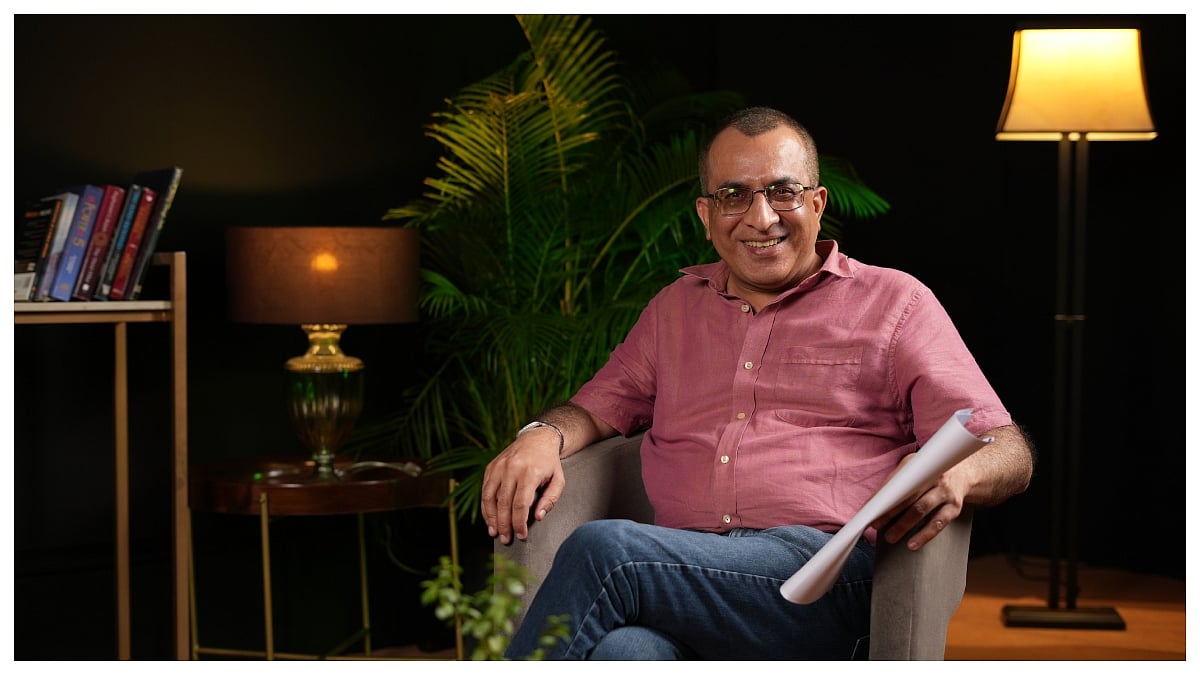
In the latest episode of Simple Hai!, host and Editor-in-Chief Vivek Law explored the economic and cultural significance of gold in India and its evolving role as a financial instrument. The discussion featured Umesh Mohanan, Executive Director and CEO of Indel Money, who shared insights on global gold price dynamics, the transformation of gold loans, and how structured lending against gold is driving liquidity and financial inclusion, especially in India’s smaller towns and rural markets.
The Cultural and Economic Weight of Gold in India
Law opened the episode by underlining India’s deep emotional and economic connection with gold. With an estimated 25,000 tons of gold held by Indian households, gold has long been viewed as an ancestral asset. The conversation, however, shifted the lens from sentiment to utility, questioning whether gold could actively support households during crises and generate cash flow when needed.
Mohanan contextualised this shift by explaining that while gold remains emotional, it is increasingly being recognised as a productive financial asset when channelled through formal lending mechanisms.
Changing Dynamics of Gold Prices
Mohanan explained that over the past 15 years, the forces influencing gold prices have fundamentally changed. Earlier, domestic demand driven by festivals such as Diwali and Akshaya Trittiya played a dominant role. Today, global factors shape gold prices, including the performance of the US economy, geopolitical tensions such as the Russia–Ukraine war, and economic uncertainty across Europe.
He also noted that global debt concerns, experiments with Bitcoin-linked mechanisms, and central banks converting dollar reserves into gold have reinforced gold’s status as a safe-haven asset. Ongoing geopolitical tensions in the Middle East further sustain global demand, making a sustained decline in gold prices unlikely in the near term.
Understanding the Untapped “Pledge Market”
A key focus of the discussion was the vast but underutilised gold loan market in India. Mohanan highlighted that only about 15 per cent of household gold currently enters the pledge market. More strikingly, of this pledged gold, only 37 per cent is handled by organised and regulated institutions such as banks and NBFCs. The remaining 63 per cent continues to be controlled by unregulated local moneylenders and pawn brokers.
Indel Money’s strategy has been to focus on Tier 2 to Tier 5 cities, where the unorganised sector is the most prevalent. By bringing household gold into the formal financial system, the company ensures transparency, regulatory oversight, and the reinjection of liquidity into local economies.
From Distress Activity to Lifestyle Financial Tool
Mohanan observed that gold loans were once viewed as a distress option, associated with social stigma and last-resort borrowing. Over the last seven to eight years, this perception has changed significantly. Gold loans have evolved into a lifestyle-oriented financial solution used for practical needs such as funding education while awaiting academic loans, supporting home improvements, purchasing business machinery, and managing agricultural cash flow cycles.
He emphasised that gold loans offer the fastest credit turnaround globally and are underwritten against the piece of jewellery rather than the borrower’s credit history. This feature provides a critical second chance to individuals excluded from traditional banking due to past defaults or limited credit profiles.
Indel Money’s Business Model and Innovation
Reflecting on his tenure since joining the company in 2019, Mohanan explained how he challenged the industry’s reliance on short-term gold loan schemes of three to nine months. He observed that many borrowers struggled to repay principal within such short durations, increasing auction risk and the potential loss of sentimental jewellery.

Indel Money addressed this by introducing 12-month loan schemes and focusing on customer education, encouraging monthly interest payments to keep debt manageable. This approach significantly improved repayment behaviour, with the company achieving a monthly interest collection rate of 65–75 per cent, compared to an industry average of around 28 per cent. As a result, the company prioritised long-term customer relationships over short-term margins, serving nearly 500,000 customers.
Regulation, Governance, Risk Management
Mohanan underscored the strict regulatory framework governing gold loans in India. RBI regulations permit lending only against gold ornaments, excluding bullion, bars, or digital gold. Indel Money’s non-performing asset ratio has remained below 0.5 per cent, reflecting conservative underwriting and strong risk management.
On governance, he highlighted the company’s nine-member board, which includes four independent directors who previously held leadership roles at institutions such as SBI, RBI, AMFI, and LIC. Despite being family-owned, only three family members sit on the board. The company has also partnered with PwC for strategic back-office functions, budgeting, and operational oversight.
Personal Philosophy and Leadership Journey
Mohanan shared that the company’s values were shaped by its origins in the 1980s, when his grandfather began the business to protect plantation workers from exploitation by moneylenders. From his grandfather, he learned transparency and integrity; from his father, he learned to focus on solutions rather than problems.
He also reflected on his personal health transformation. After experiencing stress-induced health issues during his early career as a CFO, he adopted a disciplined fitness routine, beginning each day at 5:30 am with rigorous exercise, a habit he maintained even while travelling.
The episode offered a comprehensive view of how gold loans are redefining liquidity, inclusion and financial resilience in India. Through structured regulation, customer-centric innovation, and strong governance, gold is no longer just a passive store of value but an active financial bridge for households and small businesses navigating gaps in the traditional banking system.

