
In a conversation with Vivek Law on Simple Hai!, Shridatta Bhandwaldar, CIO – Equities at Canara Robeco Mutual Fund, outlined why the current phase demands discipline, realistic expectations and a stronger focus on fundamentals rather than momentum-driven investing.
Bhandwaldar believes that investors are entering one of the most complex global environments in recent decades, where policy uncertainty, valuation resets and shifting capital flows are redefining market behaviour.

A Shifting Global Order
The discussion opened against the backdrop of heightened global volatility, driven in part by aggressive trade actions and policy shifts under Donald Trump. Bhandwaldar noted that the global economic and geopolitical system, which had remained relatively stable for decades, is now undergoing structural change. The earlier framework, largely led by the United States through economic and defence strength, is gradually giving way to a more fragmented and multi-polar world.
This transition, he explained, is not a short-term disruption but a longer-term phenomenon. Frequent policy changes, especially in trade, have reduced predictability for global businesses and investors. Agreements that were once expected to provide stability are now subject to revision, creating an environment where long-term planning becomes difficult.
The immediate consequence of this shift is slower global growth. As trade friction rises, export-driven economies face pressure, leading to disinflationary trends and uneven capital flows across regions. For India, while relatively less dependent on exports compared to economies such as China or South Korea, the impact cannot be ignored. Global slowdown inevitably transmits into domestic markets, even if indirectly.

Capital Flows and Emerging Market Dynamics
When quizzed on one notable development, Bhandwaldar, revealed that it is the gradual shift in global capital allocation. Over the past year, emerging markets have started outperforming developed markets, signalling early signs of capital reallocation. However, India has not been the primary beneficiary of this shift. He pointed out that valuation concerns and earnings moderation have made global investors more selective.
Markets, he emphasised, ultimately respond to the relationship between earnings growth and valuation. When earnings growth slows while valuations remain elevated, capital tends to move elsewhere. This adjustment, he suggested, is already underway. As expectations normalise and valuations correct, opportunities will begin to emerge more clearly.
Earnings Reality Versus Expectations
Law asked whether recent corporate earnings had disappointed the market. Bhandwaldar offered a measured perspective, noting that the perceived disappointment is largely a result of earlier over-optimism. At the start of 2025, consensus expectations for earnings growth were in the range of 12 to 14 percent. Actual growth, however, has been closer to single digits. This gap has forced investors to recalibrate expectations.

He highlighted that the slowdown in earnings was influenced by multiple factors, including reduced government capital expenditure during the election cycle, tight liquidity conditions, and regulatory measures that moderated credit growth. These conditions, however, have begun to reverse. Government spending has normalised, liquidity has improved, and credit growth is gradually recovering. As a result, earnings are now showing early signs of stabilisation rather than deterioration.
The challenge, he noted, lies not in earnings weakness alone but in the absence of supporting factors. Valuations are still adjusting, and global conditions remain unsupportive, leaving domestic flows as the primary stabilising force in the market.
Domestic Flows and Market Support
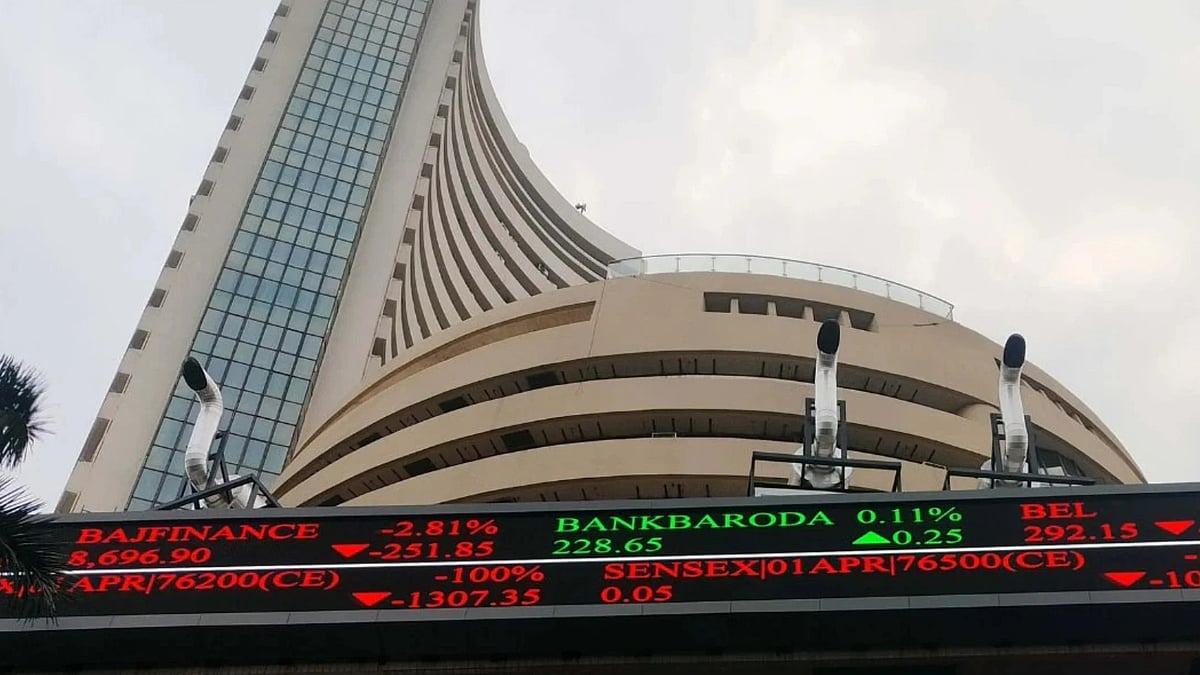
A key factor that has prevented sharper corrections in the Indian market has been strong domestic participation. Over the past year, domestic investors have contributed significantly more capital than foreign investors have withdrawn. This steady inflow has helped absorb valuation pressures and maintain market resilience.
However, Bhandwaldar cautioned that investor sentiment is gradually shifting. As returns moderate, particularly in mid-cap and small-cap segments, investors are beginning to reassess their expectations. He observed that market cycles often follow a predictable pattern. Strong past returns attract capital, which eventually leads to elevated valuations and lower forward returns. The current phase reflects this adjustment process.
Opportunity in Volatility
Despite the near-term uncertainty, Bhandwaldar suggested that such phases often create meaningful investment opportunities. Periods of correction and consolidation allow valuations to align more closely with fundamentals. For long-term investors, this environment can provide better entry points compared to momentum-driven rallies.
He maintained that India’s long-term earnings growth trajectory, typically in the range of 12 to 13 percent, remains intact. As long as this base case holds, markets are likely to deliver corresponding returns over time. The key, he emphasised, is to avoid excessive allocation to segments where valuations remain disconnected from underlying earnings potential.

The Barbell Strategy: Investment and Consumption
When Law questioned the sectoral positioning, Bhandwaldar described the next phase of market leadership as a “barbell” approach, balancing investment-led and consumption-led themes. Over the past four years, government-led capital expenditure has driven growth across sectors such as infrastructure, defence and industrials. This created a strong rally in investment-linked stocks.
However, consumption, particularly in mass segments, lagged during this period. As fiscal measures, tax adjustments and interest rate changes begin to support household demand, consumption is expected to recover gradually. This shift could bring broader participation across sectors, creating a more balanced market structure. Rather than relying on a single growth driver, portfolios may need exposure to both sides of the economy.
Hybrid Funds and Investor Behaviour
Law asked whether hybrid and asset allocation funds could address the persistent challenge of investor behaviour. Bhandwaldar acknowledged their growing relevance, particularly for investors who lack the time or expertise to manage allocation actively. Such products provide automated diversification across asset classes, reducing the risk of emotional decision-making.

However, he cautioned that no single product fits all investors. Investment decisions must align with individual risk appetite, return expectations and financial goals. For younger investors with longer time horizons and limited liquidity needs, equities continue to offer superior compounding potential. For others, especially those seeking stability, diversified or hybrid approaches may be more appropriate.
Behaviour, Discipline and Market Cycles
A recurring theme in the discussion was investor behaviour. Bhandwaldar noted that access to information has increased significantly, but perspective has not kept pace. This often leads to excessive trading and short-term decision-making, driven by recent performance rather than long-term fundamentals. Over time, however, market cycles tend to correct such behaviour. Investors either learn through experience or refine their approach through better understanding.
Encouragingly, he observed that awareness around asset allocation and long-term investing has improved compared to a decade ago, suggesting that future cycles may see more disciplined participation.

The Core of Investing: Business, Management and Valuation
At the heart of Bhandwaldar’s investment philosophy lies a consistent framework built on three pillars. First is the quality of the business, including scalability, capital efficiency and competitive advantage. Second is the quality of management, particularly its track record, governance standards and alignment with minority shareholders.
Third is valuation, assessed through intrinsic value rather than conventional metrics alone. He emphasised that market movements are beyond an investor’s control, but evaluating businesses and management quality is not. Focusing on these controllable factors improves the probability of long-term success.
A Cycle That Demands Patience
As the conversation concluded, markets are transitioning from a phase of easy returns to one that requires greater discipline and realism. Global uncertainty, valuation adjustments and evolving economic dynamics are likely to persist in the near term. However, these same conditions are also creating opportunities for investors willing to remain patient and focused on fundamentals.
In Bhandwaldar’s view, the path forward is not about predicting short-term movements but about maintaining consistency in approach. In a complex market, that discipline becomes the most valuable advantage.

