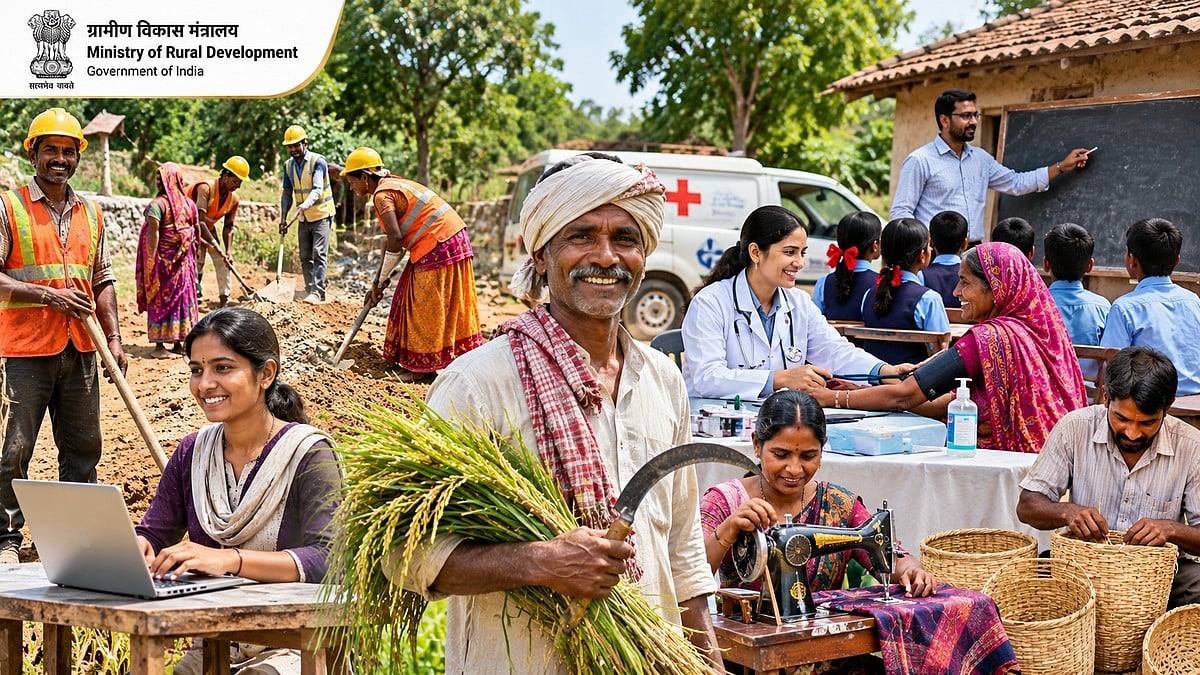
New Delhi: The Ministry of Rural Development has introduced fresh guidelines for Ombudspersons and Appellate Authorities under the Viksit Bharat–Guarantee for Rozgar and Ajeevika Mission (Gramin) Act, 2025, aiming to strengthen transparency, accountability and grievance redressal in rural employment programmes.
The revised framework seeks to protect workers' statutory rights while making complaint resolution more accessible and transparent.
District-Level Complaint Mechanism
Under the new guidelines, dedicated district-level Ombudspersons will handle grievances involving job cards, employment opportunities, wage payments and delayed compensation. Complaints concerning worksite facilities, muster rolls and denial of statutory benefits will also fall within their jurisdiction.
The framework additionally covers discrimination, harassment and violations of workers' rights, particularly those affecting women and vulnerable communities.
Digital Tracking Of Complaints
The ministry will introduce a dedicated digital platform allowing complaints to be registered and tracked online. The system will record proceedings, upload decisions and monitor action taken on grievances.
Geo-tagged and time-stamped photographs captured during field inspections will help improve documentation and accountability. These measures are intended to make grievance redressal more transparent and traceable.
Mandatory Community Engagement
Ombudspersons must attend at least three social audit public hearings or Gram Sabhas every month. These meetings will allow rural workers to raise concerns directly and seek follow-up action. Social audit findings and community feedback will also help identify irregularities in programme implementation.
Wider Eligibility For Ombudspersons
The revised guidelines expand eligibility to professionals experienced in rural development, administration, law, academics, social work and management. Provisions concerning tenure and remuneration have also been revised to support continuity.
Stronger Oversight Of Rural Employment
The Ombudsperson and Appellate Authority framework will complement existing digital monitoring, public disclosure and social audit mechanisms.
The government expects these changes to strengthen oversight, improve complaint handling and ensure rural employment benefits reach eligible workers through a more accountable system.

