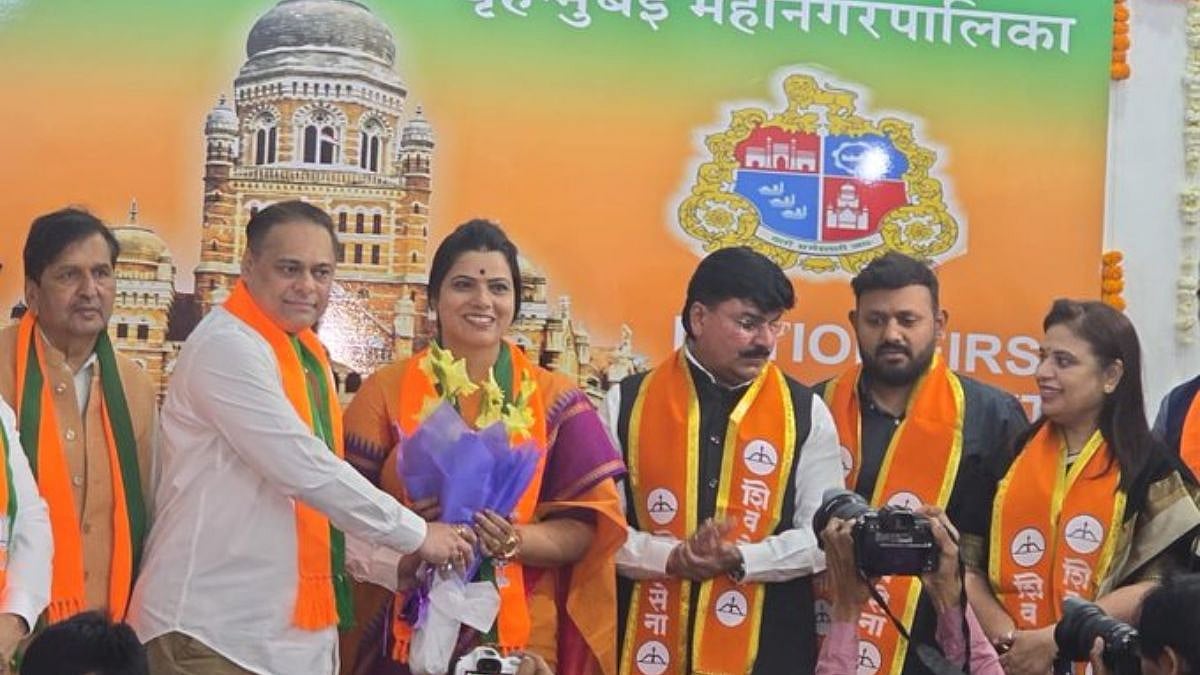
It is now a matter of formality for Ritu Tawde of the Bharatiya Janata Party, elected from a ward in Ghatkopar, to occupy the post of the mayor of Mumbai. Hers was the only nomination after Uddhav Thackeray’s Shiv Sena (UBT) decided, in a turnaround, to not contest for the post. It will be the first time since 1997 that the Shiv Sena, now led by deputy chief minister Eknath Shinde, will not have its mayor in Mumbai. Shinde had to settle for the post of the deputy mayor. This, in a bid to keep his flock together and somewhat satisfied with the spoils of the office, will be rotated among four elected corporators. Sanjay Ghadi will be in the chair first.
The mayor of Mumbai is prestigious for its own sake—a largely ceremonial post that offers a face to the Brihanmumbai Municipal Corporation (BMC) but holds little executive power over its governance. While comparisons are frequently drawn with the mayor of New York, especially when Zohran Mamdani was elected, the scope and authority of the two positions could not be more dissimilar. At best, Tawde can hope to influence the municipal administration and direct its attention to issues she, or her party, believes should be addressed. Besides, she gets to preside over the 227-strong General Body, or the House, where each corporator can bring issues to the attention of the administration. Given that the BMC executive is appointed by the Maharashtra government, also led by the BJP, it is anybody’s guess how much weight her words or agenda will hold.

Therein lies the rub. The ruling combine of BJP-Shiv Sena, which now holds power in the BMC besides other significant municipal corporations, has been indirectly governing these cities for the past 4-5 years since the terms of the last general body ended and elections were indefinitely postponed. The BMC administration has been remote-controlled from the state headquarters.
For all practical purposes, Mumbai has had the famous ‘triple engine sarkar’ for years before the BJP became the largest party in the BMC. Even its ardent advocates say that the city has been turned into one gargantuan construction site with not a thought given to its ecology and carrying capacity. Urban governance continues to be complex, with nearly 15-16 agencies holding jurisdiction over different aspects and areas. The BMC should have been the leader, but its powers remain limited even when it comes to claiming rights over the land it holds across the city. Within this, the mayor can do little other than ceremonial tasks and gives the BJP-led governance a relatable Marathi face. Restoring the city—its built environment, natural environment with its remaining water bodies and forests, ensuring affordable housing, and vibrant social and cultural life—would need a bold re-imagination.
