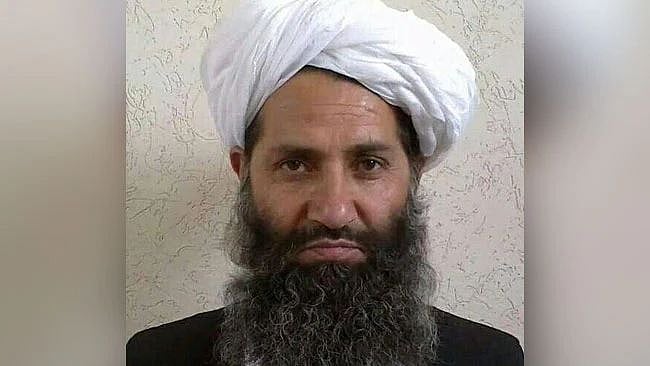
The Taliban has formally entrenched a class-based justice system in Afghanistan under a newly enacted Criminal Procedure Code signed by its supreme leader, Hibatullah Akhundzada, triggering widespread condemnation from human rights organisations and renewed international concern over the country’s legal order.
Issued on January 4, 2026, and circulated to courts across Afghanistan, the 119-article code was obtained by Rawadari, an Afghan human rights organisation that monitors violations and advocates for accountability. Critics say the document marks a fundamental shift in the country’s justice system by legally embedding social hierarchy and privilege into criminal law.
Class-Based Punishment Replaces Equality Before Law
At the centre of the controversy is Article 9, which formally divides Afghan society into four categories: religious scholars (ulama or mullahs), the elite (ashraf), the middle class and the lower class. Under this framework, punishment for the same crime is determined by the accused’s social status rather than the nature or severity of the offence.
According to the code, crimes committed by Islamic religious scholars are addressed only through advice. Members of the elite face a court summons and advice, while individuals categorised as middle class are punished with imprisonment. Those placed in the “lower class” face the harshest penalties, including both imprisonment and corporal punishment.
Human rights groups say the provision effectively grants clerics near-total immunity from criminal accountability while exposing poorer and marginalised Afghans to harsher and more violent punishments. “This is not a justice system; it is a legally codified hierarchy of privilege,” Rawadari said, warning that the code dismantles the principle of equality before the law and replaces it with institutionalised discrimination.

Also Watch:
Legal Recognition of Slavery Raises Alarm
Another deeply contentious aspect of the code is its repeated distinction between “free” persons and “slaves.” Several articles, including those governing punishment, explicitly recognise slavery as a legal category.
Human rights advocates argue that this amounts to the legalisation of slavery, which is absolutely prohibited under international law and banned under all circumstances. The Taliban’s recognition of enslaved status, critics say, places Afghanistan in direct violation of peremptory norms of international human rights law.
Legal experts note that by treating slavery as a normal legal condition, the code further entrenches social inequality and strips vulnerable populations of legal protection.
Due Process Removed, Corporal Punishment Expanded
Beyond class hierarchy and slavery, the new Criminal Procedure Code removes key safeguards of due process. It does not recognise the right to legal counsel, the right to remain silent or the right to compensation for wrongful punishment. Guilt is primarily established through “confession” and “testimony,” with no requirement for independent investigation or clearly defined sentencing limits.
Rights groups warn that these provisions significantly increase the risk of torture and forced confessions, particularly in a system with no judicial oversight or accountability. The code also expands the use of corporal punishment, including flogging, and introduces vaguely defined offences such as “dancing” or attending “gatherings of corruption,” giving judges sweeping powers to punish ordinary cultural and social behaviour.
Calls for International Intervention
Observers say the formalisation of class-based justice signals that the Taliban is reshaping Afghanistan’s legal system around religious authority and loyalty rather than equal rights. “By placing clerics and religious elites above the law, the Taliban has effectively announced that some people are untouchable, while others are permanently disposable,” Rawadari said.
Also Watch:
The organisation has called for the immediate suspension of the code’s implementation and urged the United Nations and the international community to use all available legal and diplomatic mechanisms to prevent its enforcement. It has also pledged to continue monitoring developments and publishing regular reports on how the new legal framework is applied in practice.
As Afghanistan becomes increasingly isolated and internal repression deepens, critics say the new criminal code sends a stark message: under Taliban rule, justice is no longer blind, it is stratified, selective and aligned with power.

