
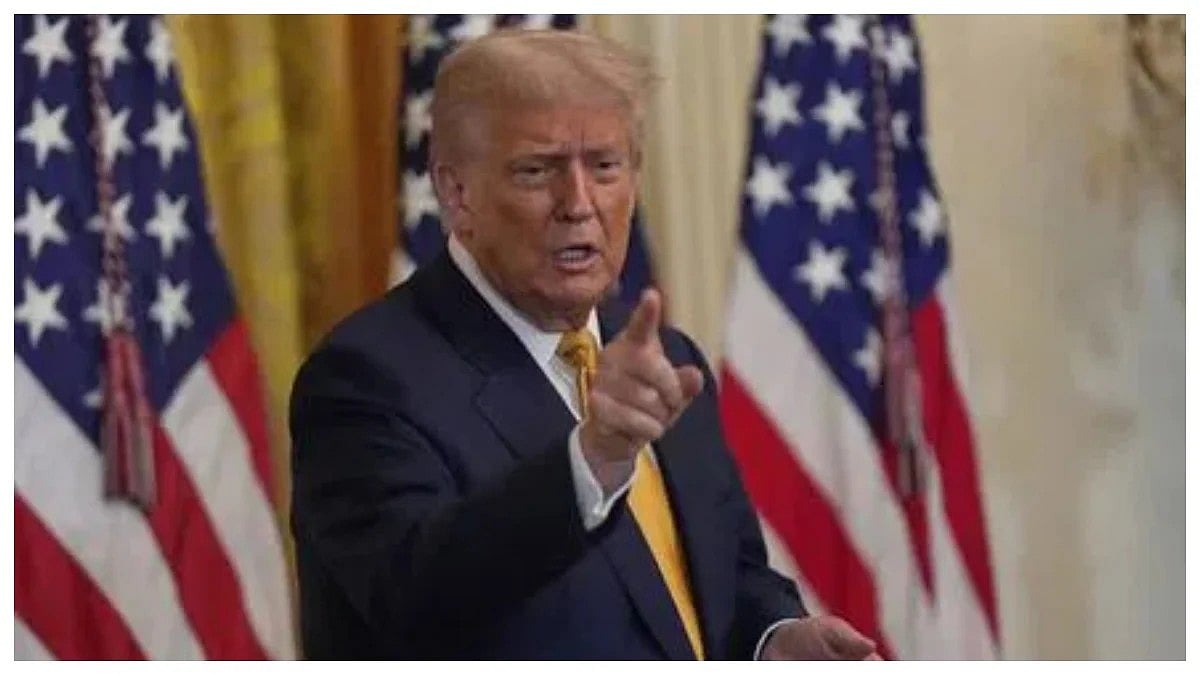
Washington: US President Donald Trump on Friday slammed Iran over its control of the strategic Strait of Hormuz as leverage in their negotiations for a peace deal, noting that Tehran does not have any "cards" in their hands apart from the critical waterway.
In a post on Truth Social, Trump criticised Tehran's proposal to impose transit fees on vessels crossing the Strait, stating that "the only reason" the US did not obliterate the Islamic Republic is to negotiate.
"The Iranians don't seem to realize they have no cards, other than a short term extortion of the World by using International Waterways. The only reason they are alive today is to negotiate!" the post read.
In a separate post, he also took aim at Iran's communication strategy, saying, "The Iranians are better at handling the Fake News Media, and 'Public Relations,' than they are at fighting!"
The remarks come amid renewed debate over transit policies through the Strait of Hormuz, a critical global energy shipping route.
Earlier, Head of Iran's Parliament National Security Commission, Ibrahim Azizi, said that under a parliamentary proposal, transit fees through the Strait of Hormuz could be required to be paid in Iran's national currency, the rial.
Also Watch:
According to a post on X by the Consulate General of Iran in Mumbai, Azizi stated that under the Strategic Action Plan for Security and Sustainable Development of the Strait of Hormuz, the Iranian government may, if necessary, sign an agreement with Oman. However, he clarified that this is a secondary provision and not the core element of the plan.
"Under a parliamentary proposal, transit fees through the Strait of Hormuz would be paid in Iran's national currency, the rial. In the Strategic Action Plan for Security and Sustainable Development of the Strait of Hormuz, the government may, if necessary, sign an agreement with Oman; though this is a secondary provision, not the core of the plan," the post read.
The Strait of Hormuz remains one of the world's most strategically important maritime chokepoints, with any regulatory or fee-related changes drawing global attention due to its impact on international oil and trade flows.
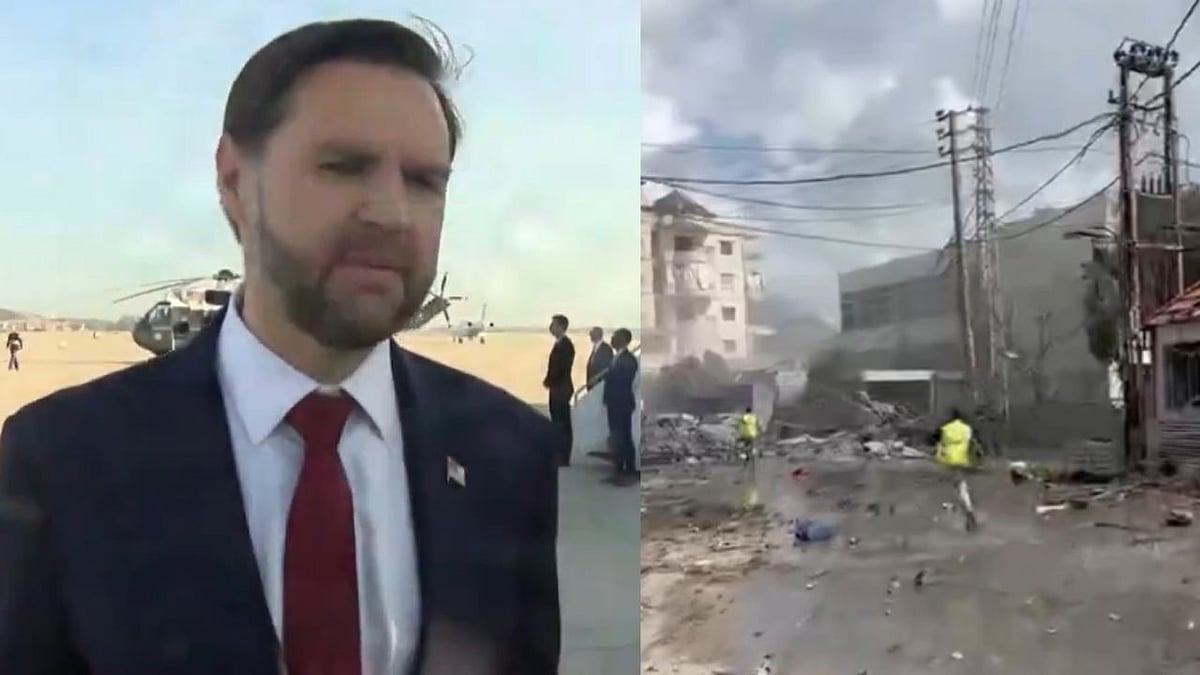
Meanwhile, US Vice President JD Vance, earlier in the day, departed for Pakistan's capital of Islamabad to take part in talks with Iran, expressing optimism about the negotiations while warning against any lack of sincerity from Tehran.
Addressing reporters before departure, Vance said the United States is open to constructive engagement if Iran approaches the discussions in good faith.
"We're looking forward to the negotiation. I think it's going to be positive. As the president of the United States said, if the Iranians are willing to negotiate in good faith, we're certainly willing to extend the open hand," he said.
However, he cautioned that Washington would not respond favourably if Iran attempts to act in bad faith during the talks.
"If they're going to try to play us, then they're going to find that the negotiating team is not that receptive," Vance added.
Vance will be leading the US delegation to Islamabad for talks this weekend.
Also Watch:
According to White House Press Secretary Karoline Leavitt, along with Vance, US Special Envoy Steve Witkoff, and the son-in-law of US President Donald Trump, Jared Kushner, will be part of the delegation.
The first round of those talks will take place on Saturday morning, local time.
The meeting between the two sides is set to take place to end the over-month-long conflict in West Asia and follows an immediate ceasefire agreement between the US and Iran for two weeks.
(Except for the headline, this article has not been edited by FPJ's editorial team and is auto-generated from an agency feed.)

