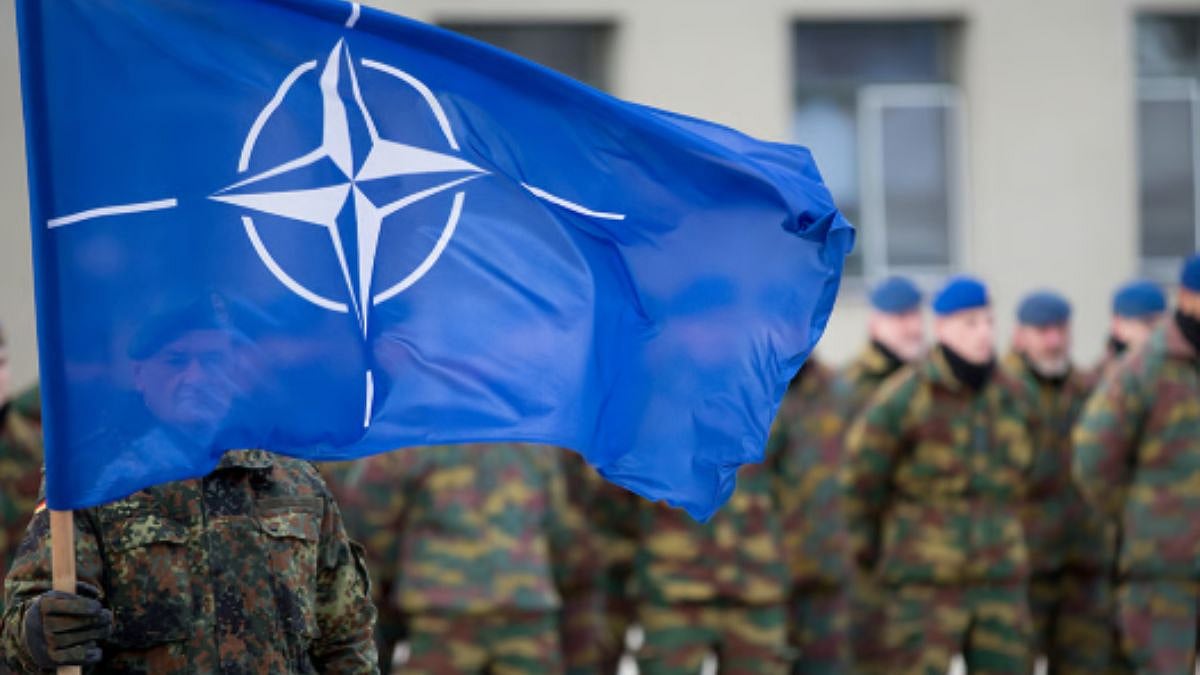
Brussels: NATO Military Chief Giuseppe Cavo Dragone on May 19 rejected the idea of creating a standalone European army separate from NATO, arguing that such a concept misunderstands how military forces are organised within the alliance.
Responding to a question about Spain’s recent proposal for a common European army, Cavo Dragone said the idea was impractical because European nations already maintain their own sovereign armed forces and contribute them to NATO when required.
The discussion comes after remarks by Spain’s foreign minister suggesting the creation of a European army, reigniting a long-running debate over Europe’s strategic autonomy and its dependence on NATO for collective defence.
Addressing the proposal, Cavo Dragone stressed that NATO itself does not possess a permanent army. Instead, member states retain full control over their national militaries and provide forces to the alliance for specific missions when needed.
“We need to start from two basic points: a single set of armies and sovereignty,” he said. “Every nation has one army, and those nations are force providers.”
According to the NATO military chief, each country decides independently how its armed forces are used, preserving national sovereignty over military decisions. These same forces can then be assigned to NATO operations when required to fulfil alliance objectives.

Rejecting the notion of a separate European military structure, Cavo Dragone described the concept as “an oxymoron” and “nonsense,” noting that if NATO itself does not maintain its own standing army, creating an entirely distinct European army would be difficult to justify.
He further explained that the European Union should be viewed as NATO’s European pillar rather than as a competing military organisation. Any military operation conducted under the EU framework would still rely on the same national armed forces that member states make available to NATO.
“We cannot think about a European army,” he said. “NATO doesn’t have an army, and individual nations keep sovereignty over their armed forces.”

His comments underscore NATO’s long-standing position that European defence efforts should complement, rather than replace, the alliance’s existing security architecture. The remarks also highlight ongoing tensions within Europe over how far the continent should pursue independent defence capabilities amid evolving global security challenges.
While advocates of greater European military integration argue that the continent should be capable of acting independently when necessary, NATO officials continue to emphasise that collective defence remains rooted in cooperation among sovereign national militaries operating through the alliance framework.
