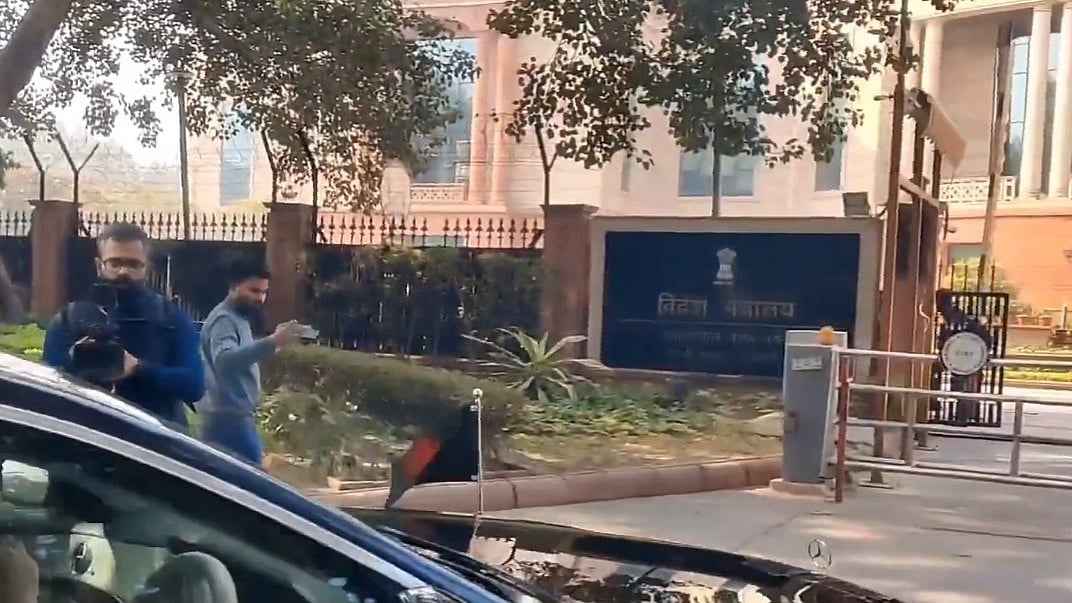
New Delhi: The Ministry of External Affairs (MEA) on Wednesday (December 17) summoned Bangladesh’s High Commissioner M Riaz Hamidullah over the security of the Indian High Commission in Dhaka after a threat was received, Reported ANI. The Bangladesh's envoy was called a day after an anti-India statement made by National Citizen Party (NCP) leader Hasnat Abdullah. The MEA also reportedly lodged a formal protest with the Bangladesh High Commissioner over Abdullah's "Seven Sisters" remarks.
On Monday Abdullah made a public speech threatening to isolate the India's "Seven Sisters" (seven northeastern states) and providing refuge to separatists if Bangladesh is destabilised. He is known for his anti-India stand.
Earlier, Bangladesh's Victory Day was celebrated with a cultural programme at the Embassy of Bangladesh in New Delhi. Hamidullah emphasised Bangladesh's commitment to fulfilling its people's aspirations, particularly those of the younger generation, and highlighted the country's young population.
Meanwhile, Abdullah on Monday, while addressing a gathering at Dhaka’s Central Shaheed Minar, stated that Bangladesh could extend support to forces working against India, implying that such moves could lead to the fragmentation of India’s northeastern states. His remarks reportedly drew loud applause from sections of the audience.
India's seven sisters are Arunachal Pradesh, Assam, Manipur, Meghalaya, Mizoram, Nagaland and Tripura. Of these, Assam, Meghalaya, Tripura and Mizoram share a direct border with Bangladesh.
For the unversed, the Siliguri Corridor, often dubbed the "Chicken's Neck", with the narrowest section being 20–22 km, is the sole terrestrial connection between India's mainland and its northeastern states.

In October this year, the interim head of Bangladesh's government, Muhammad Yunus, stirred a controversy by gifting a book to the Pakistan Army's Joint Chiefs of Staff Committee chairperson, General Sahir Shamshad Mirza, as netizens pointed out that the gift featured a purported map of Bangladesh, which also included some northeastern regions of India.
After the ouster of Sheikh Hasina, Bangladesh witnessed a rise in radical forces.

